

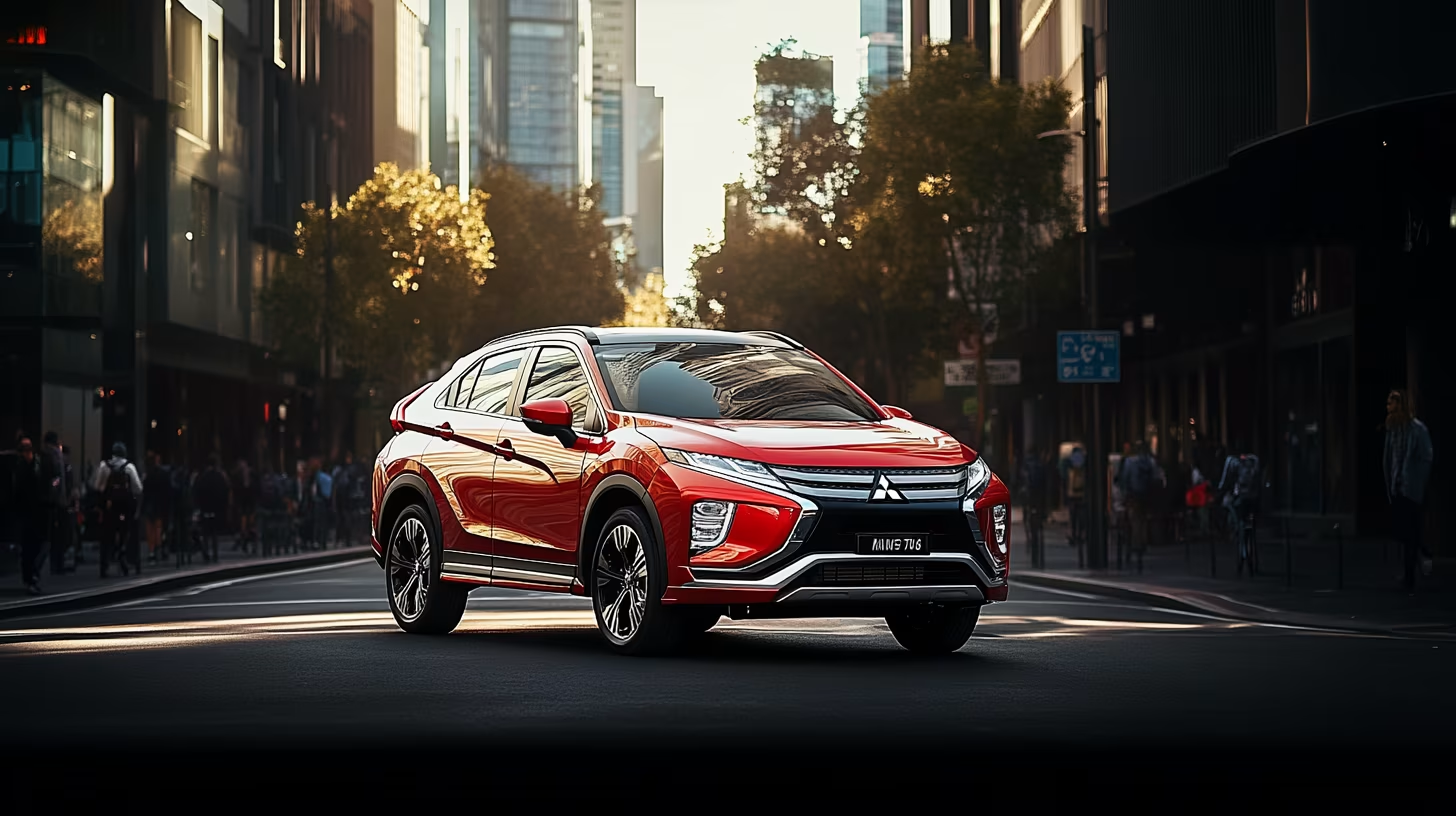
Eclipse Cross
MITSUBISHI
Eclipse Cross Introduction
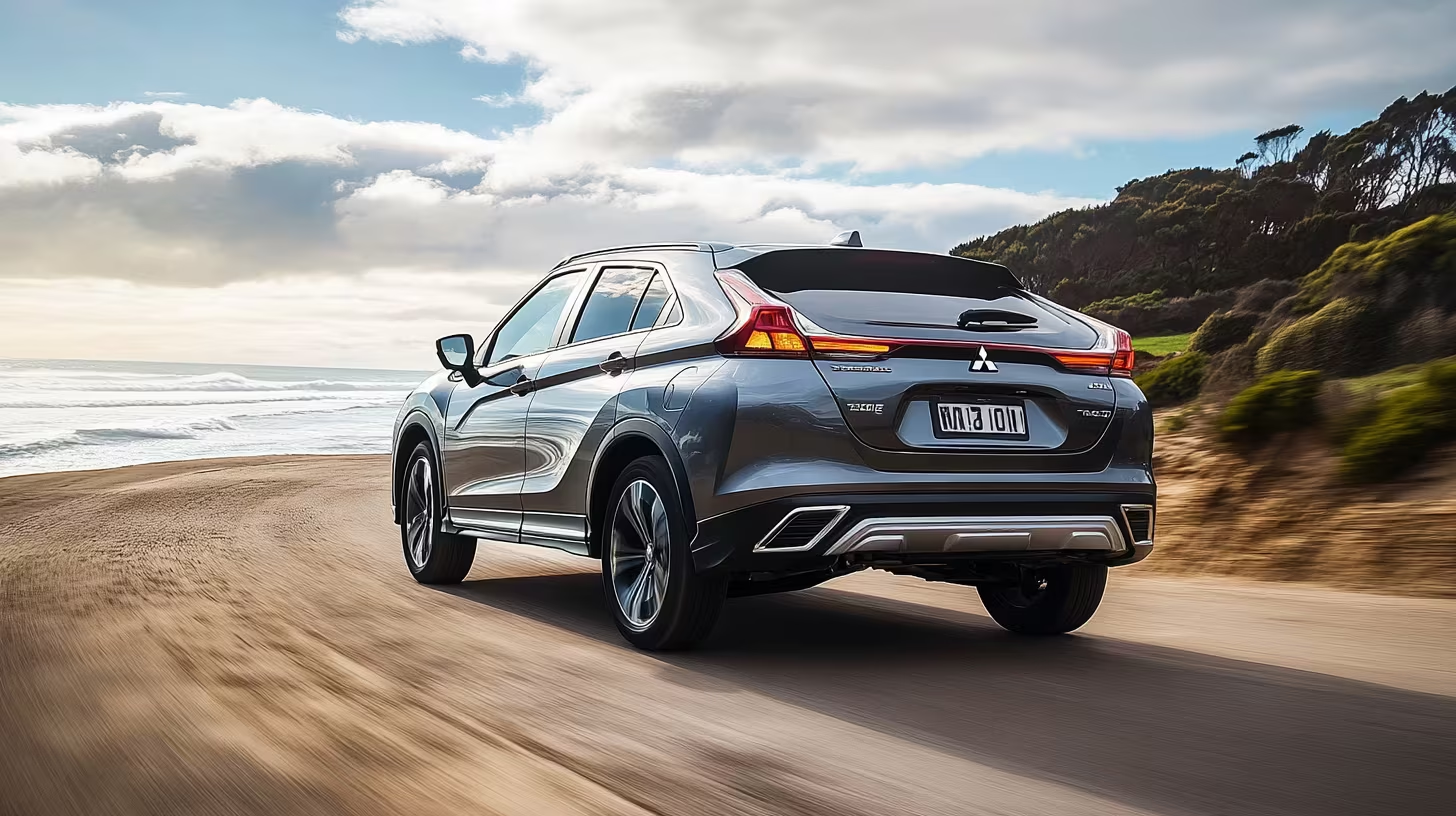
The Mitsubishi Eclipse Cross is a compact SUV loved by Australians for its blend of value, efficiency, safety, and everyday practicality—all wrapped in a coupe-inspired design. Available in multiple trims, from petrol ES and Aspire up to Exceed and Black Edition, and offering conventional turbo or plug-in hybrid (PHEV) power, the Eclipse Cross holds strong appeal for commuters, tech-savvy families, and business fleets. Its PHEV variant delivers up to 55 km of silent electric commuting before switching to petrol AWD for longer journeys, while petrol models combine a punchy 1.5L turbo four, responsive steering, and a soft, family-friendly ride.
Inside, every Eclipse Cross features Apple CarPlay/Android Auto, touchscreen infotainment, a roomy second row, and a boot (359–405L) that swallows prams, shopping, or camping gear with ease. Safety is a headline feature: all models boast forwards collision mitigation, lane departure warning, blind spot monitoring, and a recent five-star ANCAP score (2020+). Mitsubishi’s 10-year/200,000 km warranty and affordable capped-price servicing make running costs easy to budget. With best-in-class towing for the segment and features like a panoramic sunroof (Exceed) and remote app (PHEV), the Eclipse Cross is one of the best-rounded small SUVs for Aussie buyers in 2024 and beyond.
Available models

Want Solar Finance Options?
Compare lenders and get tailored loan offers.
Eclipse Cross Performance & Power
Australian Eclipse Cross buyers choose between a 1.5L turbo petrol (110 kW/250 Nm, FWD or AWD) connected to an 8-speed CVT and a 2.4L PHEV system (dual motor electric AWD, 157kw combined). “Compact SUVs with orthodox petrol engines can feel pretty weak accelerating away from the lights…but not the Eclipse Cross PHEV,” writes Bruce Newton (Carsales). The petrol’s smooth CVT and light body make for brisk city response, though reviewers call its higher-speed acceleration only average.
PHEV models offer quick throttle off the line and lively launches, feeling nimbler than their ~1.9t curb weight suggests, with the electric motors masking much of the weight in day-to-day driving. Handling and ride get positive marks for comfort and composure on rough roads, though cornering sees more roll than sportier rivals. Towing capacity is up to 1,600kg braked (petrol) or 1,500kg (PHEV); all versions are safe, practical and responsive for most buyers’ commutes and holiday runs.
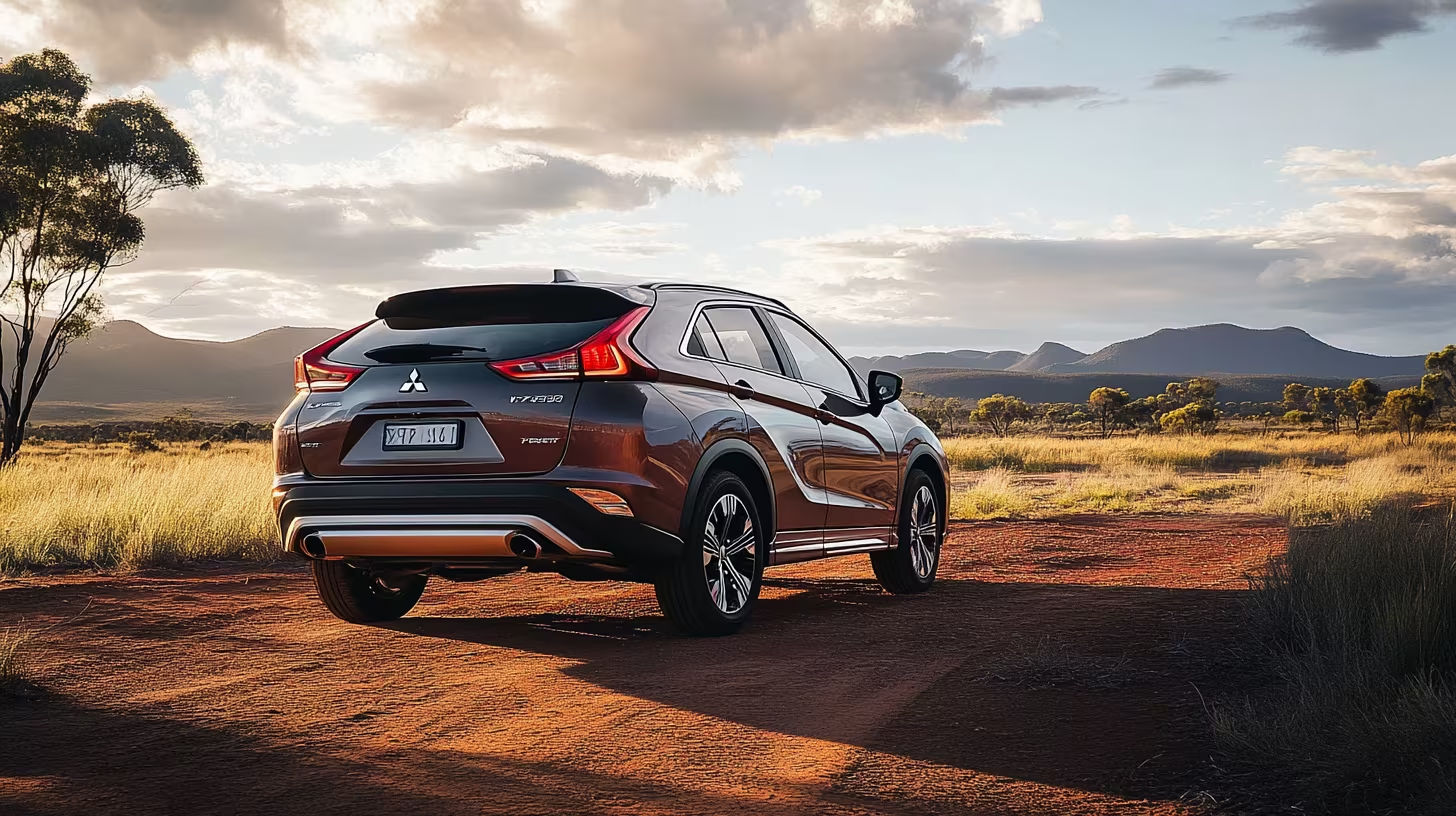
Eclipse Cross Interior & Design
The Eclipse Cross balances sporty-coupe lines with a family SUV’s practicality: the cabin is roomy, visually uncluttered and offers “more premium cabin touches than the price suggests” (Bruce Newton, Carsales). Top trims get panoramic sunroof, leather/suede trim, soft dash, and electric seat options, while all grades feature a simple touchscreen, digital cluster, and plenty of storage. Boot space measures 359L (PHEV) or up to 405L (petrol), folding to more than 1,100L with the rear seats down.
Reviewers find the driving position airy and easy to adjust; rear seat comfort is strong for two adults or three kids. Materials range from soft cloth to stitched leatherette, with gloss and metal highlights in higher specs. Dash layout is easy to use but called “button-heavy” and a bit dated by newer rivals (Kez Casey, Drive), and rear vision can be pinched by the sloping rear glass. For families and commuters, the Eclipse Cross interior is practical and user-friendly, even if not the flashiest.
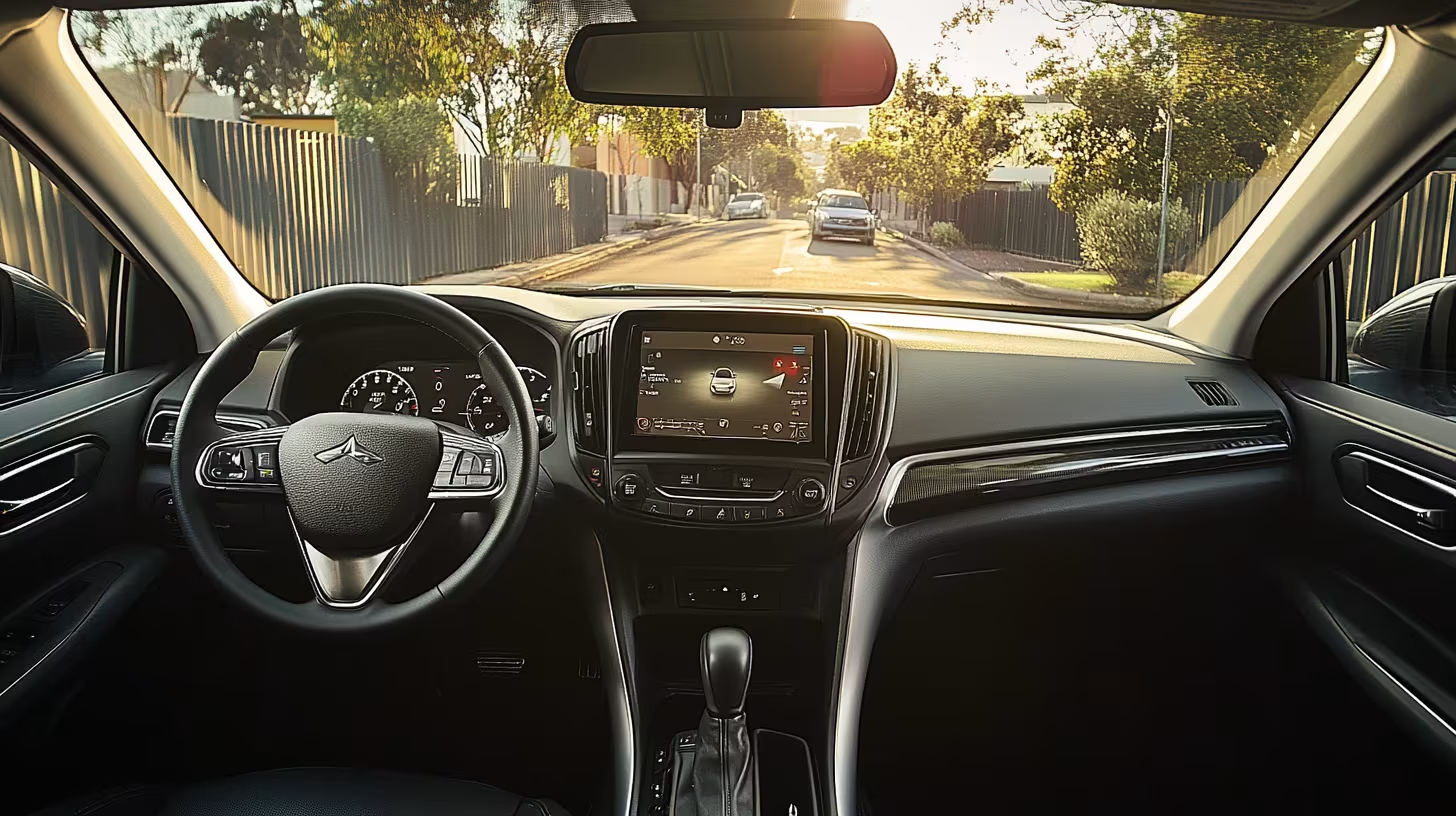
Eclipse Cross Technology & Safety
All variants pack an 8" touchscreen infotainment with Apple CarPlay/Android Auto, and core MG/Mitsubishi safety systems: AEB, blind spot warning, lane departure, and rear cross-traffic alert are standard, with adaptive cruise and a 360˚ camera on Exceed or PHEV. “That’s because it’s fitted with innovative charging tech called Vehicle to Load (V2L) and Vehicle to Grid (V2G)” (Bruce Newton, Carsales)—PHEV models can run small appliances directly, a unique plus for this class.
Buttons and dials make everyday operation simple, though graphic resolution and screen smoothness is considered “last-gen” by new-car reviewers. App integration (remote pre-cooling, checking charge) is available on PHEV. Safety is a major selling point: 2020+ models score 5-star ANCAP, with extensive airbag and active safety systems supporting strong family and business results.
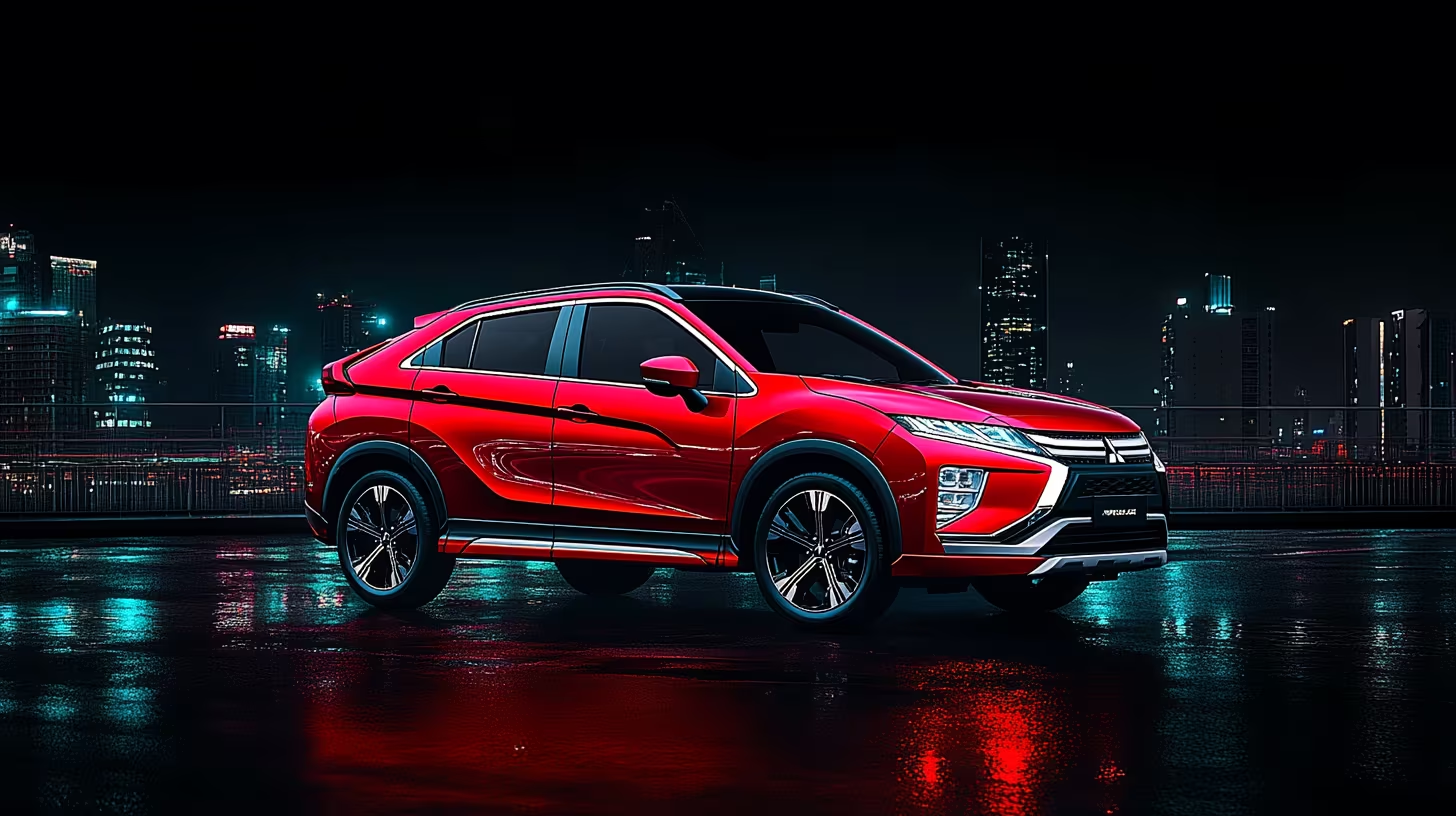
Eclipse Cross Range & Charging
Petrol models return an average 7.3 L/100 km, with most drivers achieving 650–700km per tank of regular unleaded. PHEV variants use a 13.8kWh battery and dual-motor system to deliver 35–55km of electric city range, matching Mitsubishi’s claim or beating it on urban commutes. “On test, I saw 48km of range before the petrol motor kicked in” (Matt Campbell, CarExpert). Home AC charging (3.6 kW) covers 0–100% in about 4.5 hours; CHAdeMO DC fast charge can refill to 80% in under 30 minutes.
After the battery is depleted, real-world fuel use bumps to 4–7 L/100 km (petrol engine only), so nightly charging is key to savings. The PHEV’s official claim is just 1.9 L/100km with regular top-ups. Towing and holiday loads reduce electric range, so the backup petrol engine is reassuring for longer trips beyond city limits.
Eclipse Cross & Solar Power
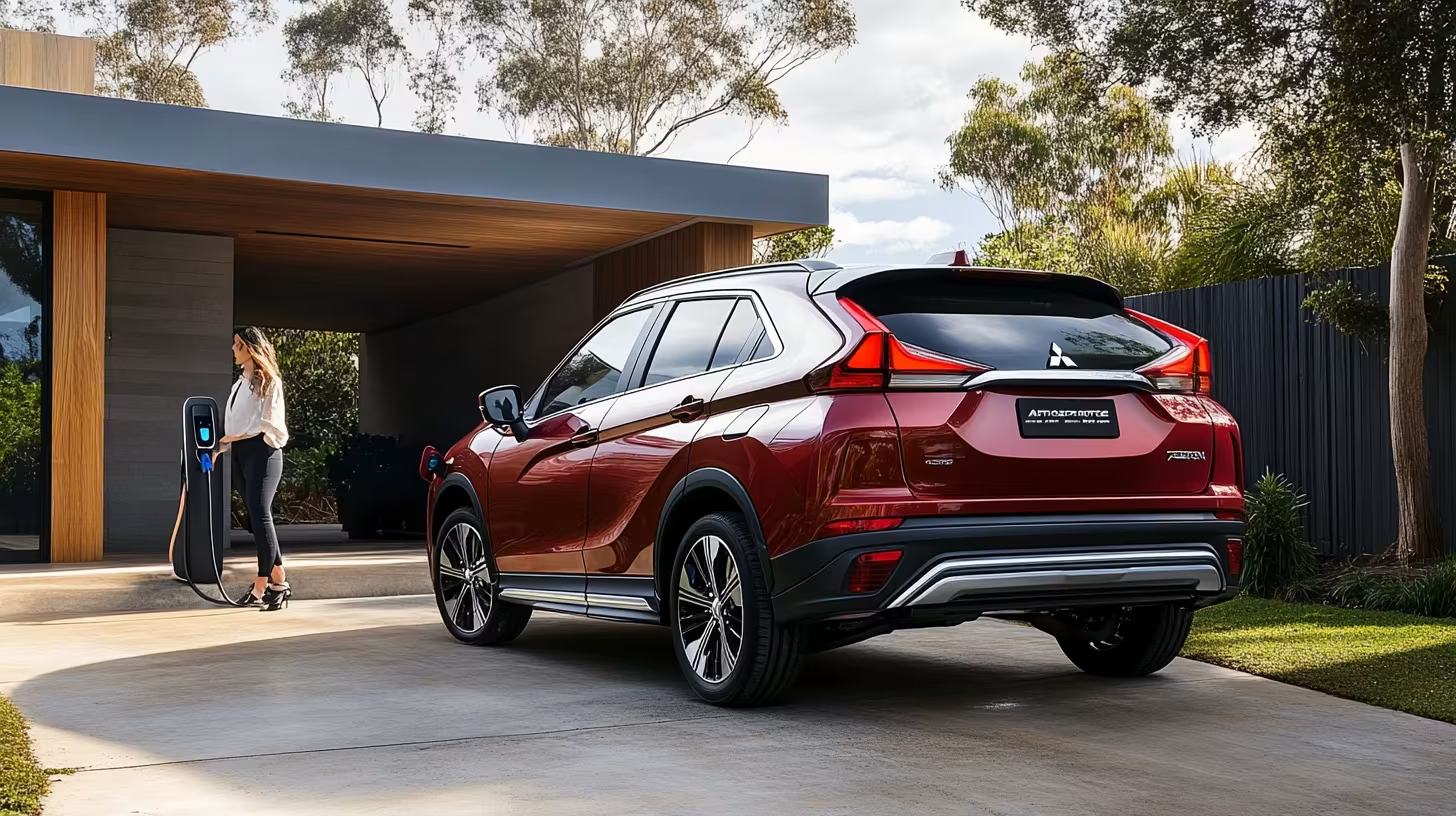
More Australians now pair PHEV Eclipse Cross models with solar panels at home, allowing school runs, commutes, or company business trips to be “fuelled by sunlight.” Regular plug-in charging via a solar EV charger cuts weekly fuel costs to almost zero, making the hybrid a lower-cost alternative to full petrol/EV options. Solar also reduces the grid reliance for appliances and hot water, prepping homes for full EV upgrades as the family or company fleet changes. Mitsubishi’s long warranty and battery support ensure the savings add up for years to come. For maximum efficiency, plug in overnight and use solar smart scheduling or mid-day fills.
FAQ - Mitsubishi Eclipse Cross
What is the price of the Mitsubishi Eclipse Cross in Australia?
Prices for the 2025 Mitsubishi Eclipse Cross start at $31,990 for the petrol ES, range up to $56,490 for the top PHEV Exceed, and vary by trim, drivetrain, and equipment chosen. “Mitsubishi eclipse cross price”, "PHEV price", and "for sale" are top buyer queries in the small SUV market. On-roads, paint choice, and accessories change the final drive-away. Leasing, demo, and novated lease discounts may be available, and government EV rebates help with PHEV cost. Always check with a local dealer for up-to-date pricing and discounts.
How far can the Eclipse Cross PHEV drive on electric power alone, and what’s the real economy?
Official claims are 55km electric-only in city use; testers regularly see 35–50km before the petrol engine starts. “Eclipse cross PHEV range”, “electric only”, and "hybrid fuel use" spike in family and fleet FAQ. Plugging in nightly and using electric mode for commutes keeps average tank fuel use under 2L/100km. Without regular charging or on longer trips, fuel consumption climbs to 5–7L/100km depending on load and driving. City commuters report a stress-free EV-like drive in the daily grind.
How quick, powerful, and smooth is the Mitsubishi Eclipse Cross (petrol and PHEV)?
The 1.5L turbo petrol gives 110 kW/250 Nm for brisk city/hwy driving (0–100 km/h in 9.0–10 seconds), while the PHEV offers a strong 157 kW/332 Nm with rapid torque from standstill (0–100km/h in about 10.5 seconds). “Throttle response is quick and smooth”, reviewers say (Bruce Newton, Carsales), and engine and gearbox tuning is smooth and quietly composed (Matt Campbell, CarExpert). The PHEV switches seamlessly between modes, feeling nimble in urban light. Acceleration drops on low battery for hybrid mode, but the back-up engine means no range stress.
How practical and roomy is the Mitsubishi Eclipse Cross, including boot size?
Seats five adults or growing teens; boot is 405L (petrol), 359L (PHEV), or up to 1,100L with rear row folded. “Boot space”, “dimensions”, and "interior" are hot FAQ terms for shoppers planning school drops or weekend escapes. High ride height eases loading, and the flat rear floor expands flexibility for bulky items. Cabin comfort and visibility are well praised; rear vision pinched by the stylish rear glass. Kids, prams, bikes, and shopping are all handled with ease.
What warranty and service support does Mitsubishi Eclipse Cross offer in Australia?
All new Eclipse Crosses are covered by a 10-year, 200,000 km warranty, including battery and EV elements on the PHEV, provided servicing is with a dealer. Service intervals are every 12 months/15,000 km with capped pricing for 10 years. "Warranty", “service cost”, and “battery warranty” are top concern queries for new buyers. Mitsubishi’s servicing network is one of the broadest in Australia. Roadside assist and a digital service history are included for all warranty years.
What safety tech and ANCAP rating does Eclipse Cross have?
2020+ Eclipse Cross models come standard with AEB, lane departure warning, blind spot, rear cross-traffic, and a five-star ANCAP crash rating. “Safety rating”, "ancap", and “driver assist” are must-search for families. Top trims add surround cameras, adaptive cruise, extra airbags, and traffic sign recognition. Rear-seat child anchors are standard, and auto emergency braking works in both city and highway conditions. Parents say peace of mind is high for everyday use.
Is the Eclipse Cross PHEV easy to charge at home, or with solar?
Yes—a standard 3.6kW EV charger or portable charger can refill the 13.8kWh battery overnight (~4 hours for a 0–100% charge), and CHAdeMO fast charging at compatible public stations can hit 80% in 25–30 minutes. “Eclipse cross charging”, "solar charging", and “EV charger” are trending for business buyers and home users. Solar-enabled chargers let owners maximise fuel savings. Mitsubishi’s smartphone app (PHEV) allows for timer-based pre-cooling/warming and charge scheduling.
How do PHEV and petrol Eclipse Cross models compare for running cost and value?
Plug-in buyers generally use less than 2L/100km with regular charging, making it competitive with any hybrid or small EV on daily cost. Petrol-only versions are cheaper up front but average 7.3L/100km, with more engine noise and regular maintenance. “Eclipse cross value”, “fuel economy”, and "running cost" are top search terms. For high-mileage or family users, PHEV proves—if you charge nightly—the more economic and flexible choice.
Does the Eclipse Cross have Apple CarPlay, Android Auto, and cabin tech I need?
All trims offer an 8-inch touchscreen, Bluetooth, digital radio, Apple CarPlay, Android Auto, and steering wheel controls. Aspires and Exceeds (and PHEV) add premium audio, heated seats, navigation, and a panoramic sunroof. “Infotainment”, "carplay", “touchscreen” and “features” are common queries. App and phone functions for PHEV owners improve pre-conditioning and battery cycle efficiency.
How reliable is the Mitsubishi Eclipse Cross and what are typical owner complaints?
Recent owner data and long-term reviews report good durability for both petrol and PHEV models. “Problems”, “reliability”, and “service cost” now rank in the most-searched buyer questions. The main issues relate to aged infotainment screens and slow EV charger compatibility (PHEV); warranty claims are generally resolved without drama. Routine servicing and using premium fuel ensure longest life for both engines and battery.
How much can I tow with the Eclipse Cross, and is it suited for caravan or trailer use?
Petrol models are rated for up to 1,600kg (braked), PHEV for 1,500kg (braked), both with standard tow bar/plug options. “Towing capacity”, “towbar”, and "caravan" spike for holiday and tradie planning. Towing will reduce electric-only range on PHEVs, but backup petrol ensures range isn’t a worry. Always check owner’s manual and dealer accessory fit for warranty compliance.
How does the Eclipse Cross PHEV compare to Toyota RAV4 Hybrid or Kia Niro?
Eclipse Cross PHEV plugs in for real EV commutes, RAV4 Hybrid is engine-only (non-plug), and Niro EV is pricier but pure electric. "Eclipse cross vs rav4 hybrid", “phev comparison”, and "vs kia niro" drive cross-brand decision searches. Mitsubishi wins on price and warranty, RAV4 for resale and space, Niro for all-electric range. For lowest total cost, plug-in is best for those who charge every day.
Can I fit roof racks, towbar, floor mats, and seat covers to the Eclipse Cross?
Yes—Mitsubishi and aftermarket dealers sell model-specific roof bars, towbars, mats, seat covers, dash cams, and more, all with warranty cover if dealer-fitted. “Accessories Australia”, “seat covers”, and “floor mats” are top research for family and rideshare drivers. Electric tailgate, sunroof, and spare tyre options also available. Always confirm fitment for PHEV compatibility.
How does the Eclipse Cross drive and park in cities?
Compact dimensions (4.55m), light steering and high ride make school runs and shopping centre parking easy. Camera and sensor systems on Exceed/PHEV help with tight spots. Light off-roading and gravel tracks are possible, but AWD models suit occasional adventure, not hardcore bush trips. Feedback from owners highlights minimal blind spots and strong outward vision.
What qualifies the Eclipse Cross as a good family car in Australia?
High safety, easy access, ISOFIX anchors, big rear seat, and a simple-to-use interior all bolster the Eclipse Cross’ family credentials. “Family SUV”, "seat comfort", and “boot” are the top queries. Wallet-proof running costs after the ten-year warranty contribute peace of mind. Many reviewers say it’s “peaceful, practical, and great for tall parents or growing kids.”
Can I use E10 or 91-octane petrol in my petrol Eclipse Cross?
Yes—petrol models run happily on regular 91 unleaded or ethanol blends (E10); no premium required for daily use. "Fuel type", “petrol consumption”, and “octane” are common buyer queries. PHEV models require unleaded; always check owner’s manual for any specification. Keeping tyres and oils properly serviced maximises economy.
Where is the Eclipse Cross made, and what local support is offered?
The Eclipse Cross is assembled in Japan, with full aftersales support via Mitsubishi’s nationwide dealer network. “Where is Eclipse Cross made”, "warranty support", and "parts" are trending questions. Owners praise fast parts delivery, reliable dealer fixes, and digital warranty tracking. Roadside assistance (with warranty) and included loan car (service) sweeten the deal.
Does the PHEV have any special features for charging or powering gadgets?
Yes—the Eclipse Cross PHEV offers Vehicle-to-Load (V2L), a 1.5kW 240V power outlet that runs small appliances or picnic gear from the car battery. Some models also support Vehicle-to-Grid (V2G) for future home energy integration. “PHEV V2L” and “power output” are popular with tech buyers and outdoor enthusiasts. This is a unique selling point among budget plug-in SUVs.
How often does the Eclipse Cross need servicing, and are costs affordable?
Service intervals are every 12 months or 15,000km, among the longest in the class. Capped price servicing locks in budget for a decade. “Service cost”, "interval", and “warranty” are primary maintenance FQ for new owners. Mitsubishi’s $200–$400 annual service cost is below most competitors. EV system checks are included on PHEV.
How does the Mitsubishi Eclipse Cross hybrid compare for reliability and battery life?
Hybrid and PHEV Eclipse Cross models hold up well so far, with battery and software fault rates matching ICE versions. “PHEV reliability”, “hybrid battery”, and “owner review” spike in search data. Warranty covers battery and EV gear for the full 10 years. Routine software updates and keeping the battery topped up help prevent issues. Overall, most buyers report reliable, trouble-free ownership.
Find EV Chargers & Solar Power by State
Discover charging infrastructure and solar power options for your MITSUBISHI Eclipse Cross in your state:
*Disclaimer: This page includes information, descriptions, and images that may have been created or enhanced with the assistance artificial intelligence, powered by our proprietary Ray-i (AI) technology system. While we do our best to ensure accuracy, specifications and details can vary between models, regions, and over time as manufacturers make updates. Images are for illustrative purposes, and the content is provided for general reference. For the most up-to-date specifications or features, we recommend checking directly with the manufacturer or your local dealer.