

Outlander
MITSUBISHI
Outlander Introduction
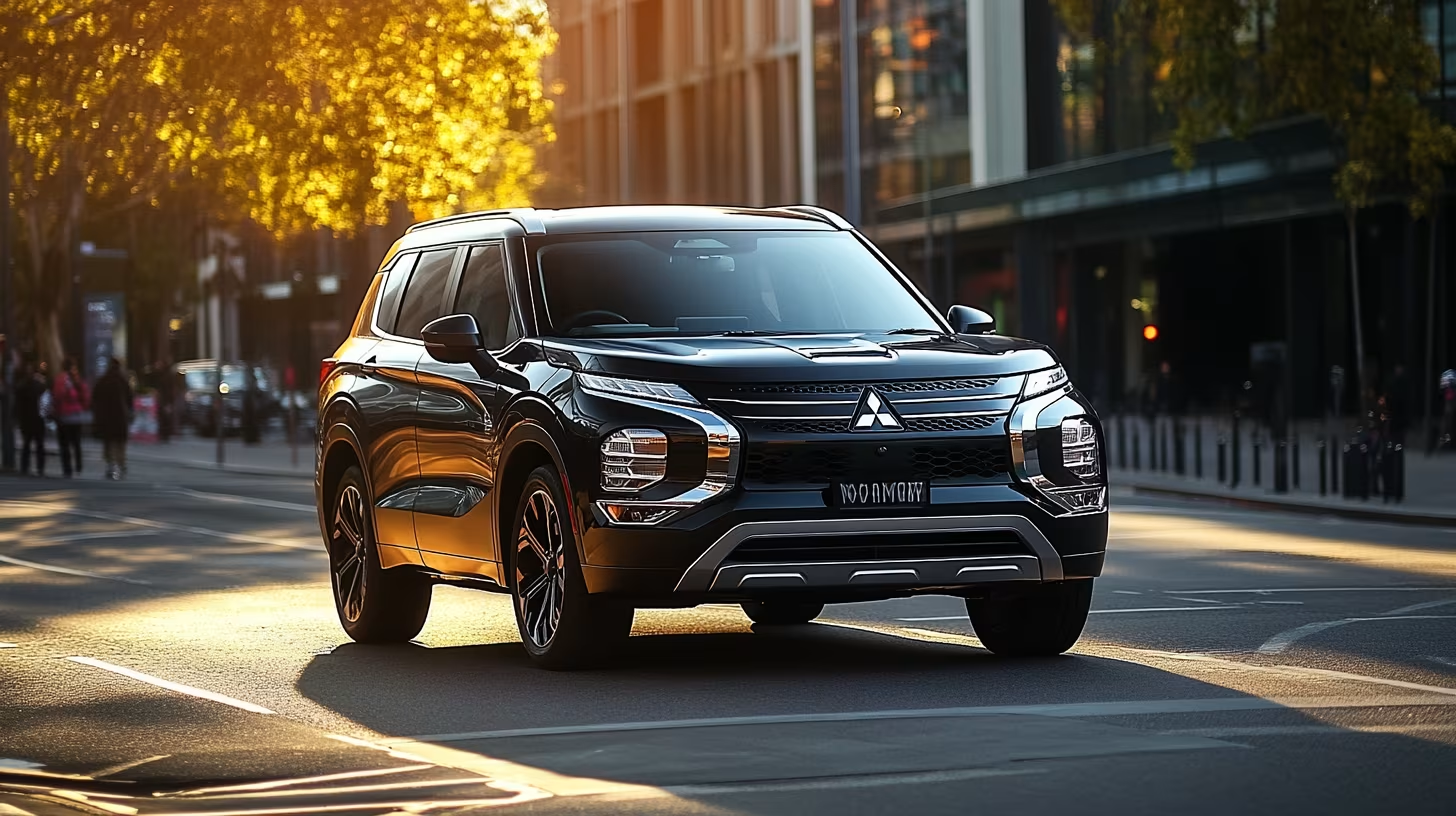
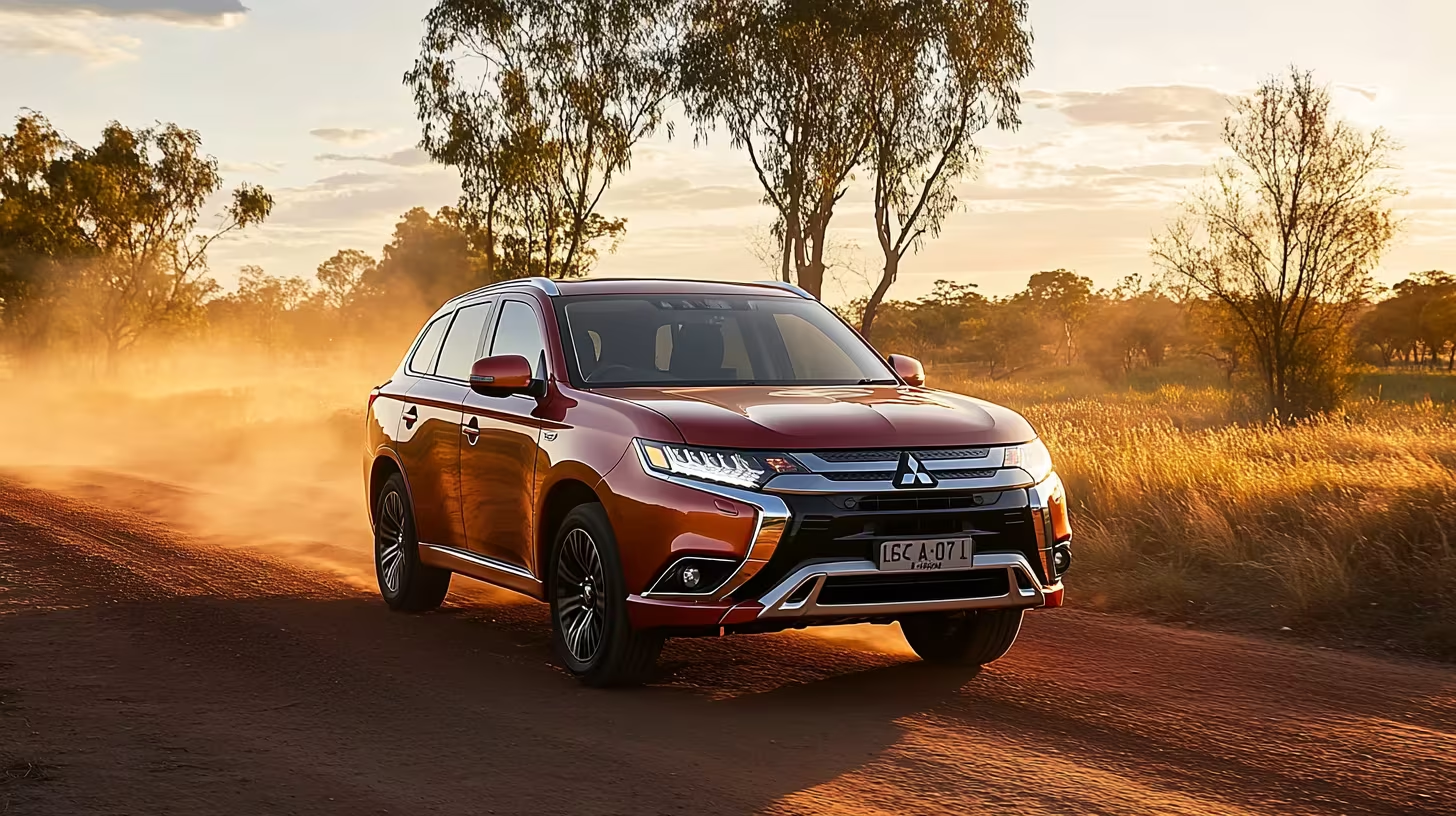
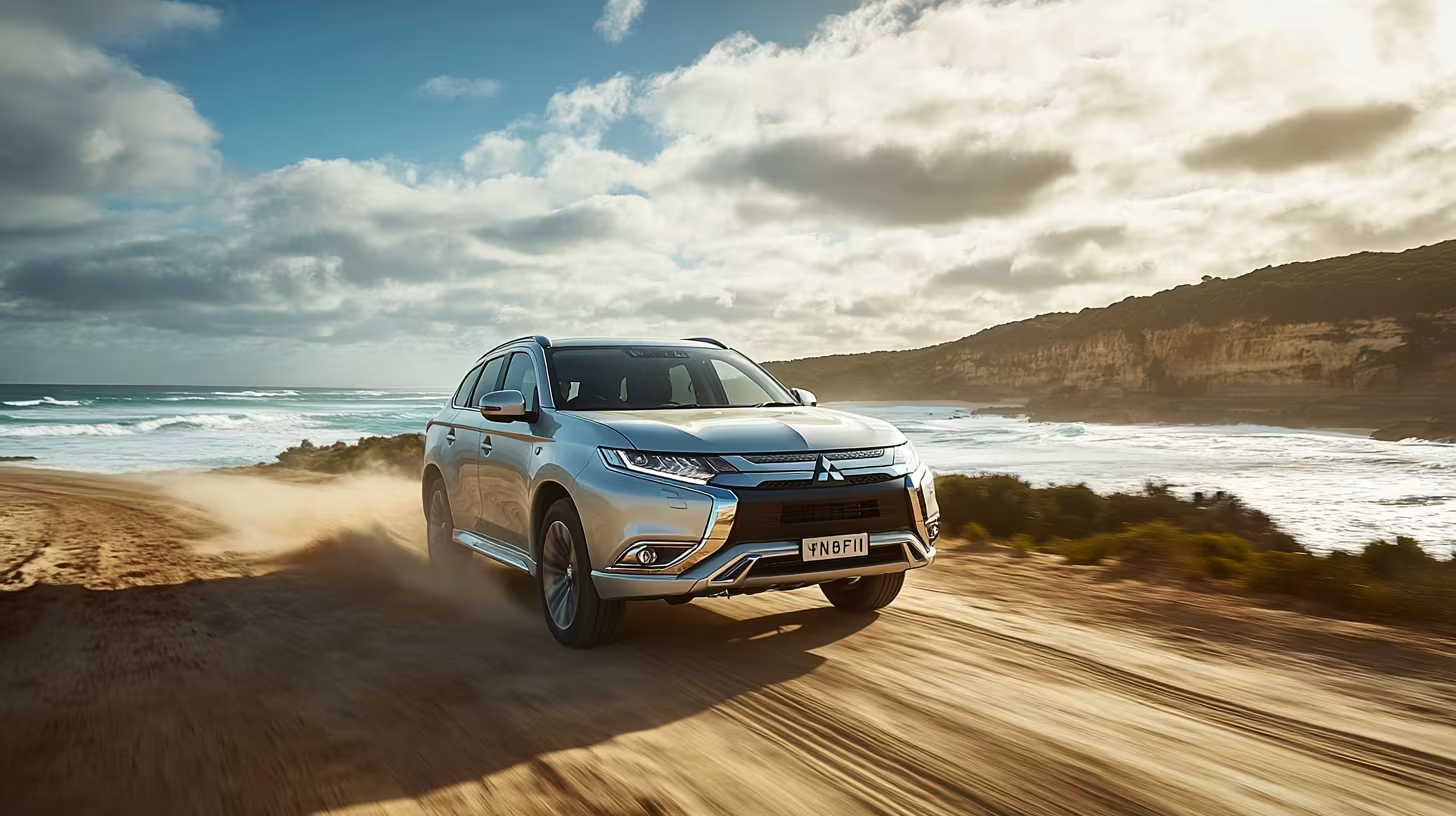
The Mitsubishi Outlander remains a favourite among Australian families and adventure-seekers, thanks to its spacious interior, competitive pricing, long warranty, and a full suite of efficient, future-ready powertrains. Now in its latest generation, the Outlander is offered as a petrol, plug-in hybrid (PHEV), and mild-hybrid SUV, all wrapped in a stylish, robust package that can seat up to seven passengers. The 2025 model-year brings refined looks, updated tech, and even more comfort options, such as quilted leather, panoramic sunroof, and advanced driver assistance systems.
With all-wheel drive available across the range and PHEV models providing up to 84 km of real-world electric-only driving, the Outlander remains one of the most versatile midsize SUVs you can buy. Towing is a strong point, with braked capacities up to 1,600 kg (petrol/AWD) and a host of accessories to suit camping, boating, and bike-carrying weekends. Safety is a highlight, with all variants rated five stars by ANCAP and boasting AEB, lane-keep, 360-degree camera (Exceed), and driver attention monitoring as standard or available. A 10-year/200,000 km warranty and affordable capped-price servicing lock in value for private and business buyers alike. With strong resale and a dealer network across Australia, the Outlander remains a class leader.
Available models

Want Solar Finance Options?
Compare lenders and get tailored loan offers.
Outlander Performance & Power
Australian buyers can choose between a 2.5L naturally aspirated petrol engine (135 kW/244 Nm), 8-speed CVT (FWD or AWD), and a 2.4L PHEV (dual motor AWD, 185 kW combined)—all offering strong take-off, smooth highway cruising, and impressive urban efficiency. “Throttle response is sharp and there’s plenty of punch off the mark as well as zippiness around town” (Marcus Craft, CarsGuide). The PHEV accelerates briskly on electric torque before petrol joins in for longer journeys, delivering genuine 0–100km/h in under 8 seconds (front motors 85 kW, rear 100 kW).
Ride comfort and NVH are well calibrated, with light steering and a supple chassis soaking up city bumps and rural potholes. Petrol models feel lively in urban traffic, while PHEV all-wheel drive masks two-tonne weight for quick commutes, even with a full load. Towing is flexible (up to 1,600kg petrol/1,500kg PHEV) and strong off-the-line torque makes light work of hills and merging—even when loaded up for a coast trip.
Outlander Interior & Design
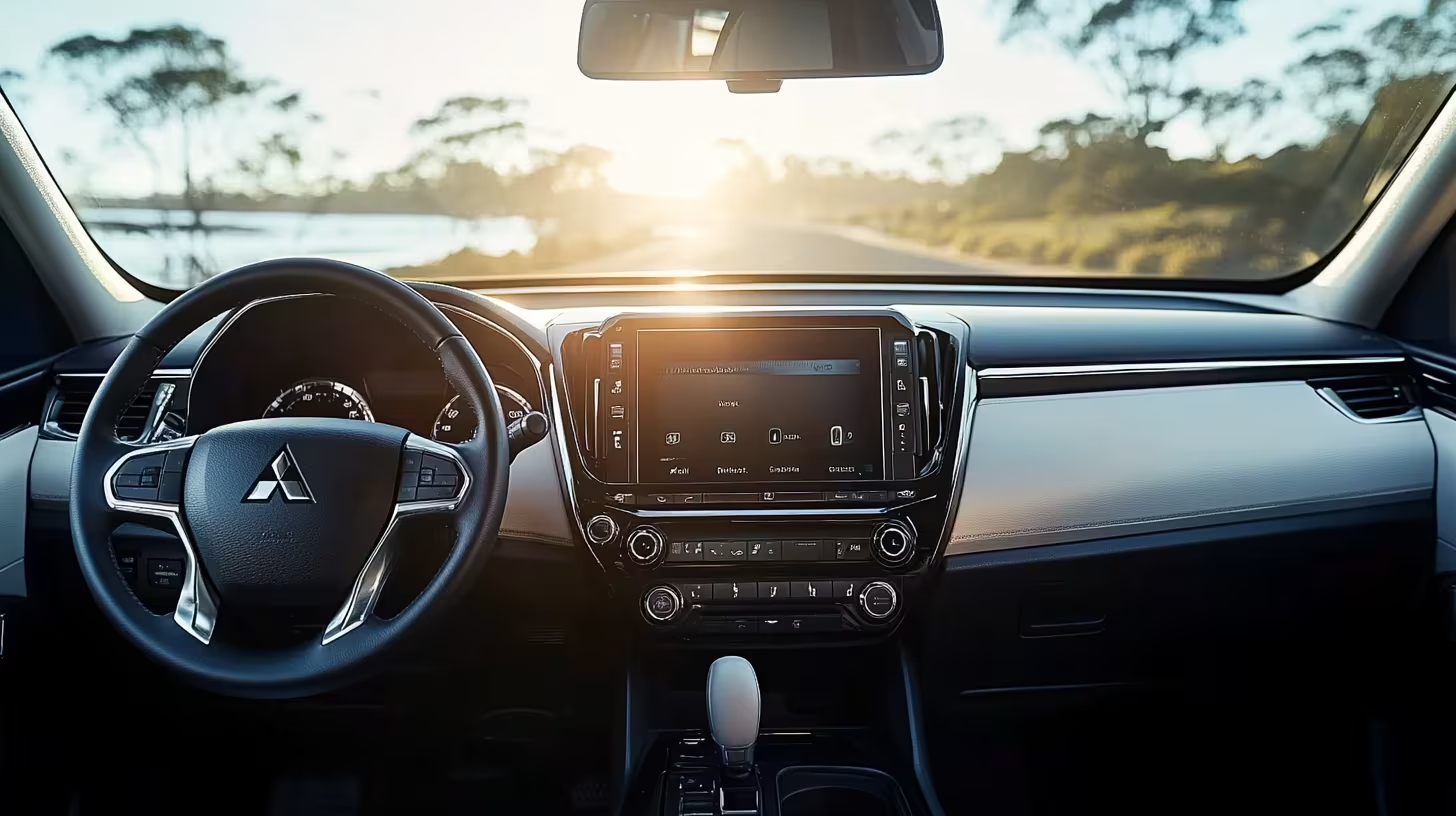
The Outlander's interior stands out for its blend of space, practicality, and premium design—“There are also quite a number of soft-touch materials which makes the car feel surprisingly high-end” (Jack Quick, CarExpert). Higher trims boast quilted two-tone Nappa leather, digital clusters, panoramic sunroof, and massaging front seats, making the flagship Exceed Tourer genuinely rival more expensive SUVs for cabin prestige. Boot size starts at 478L (PHEV) or 485L (petrol) and expands to nearly 1,500L with rear seats folded, giving families and adventurers room for everything.
Seating flexibility is one of the Outlander’s biggest strengths, with both five- and seven-seat versions (all with easy ISOFIX anchor access, split/fold seats, and air vents across the cabin). The upright command driving position and wide-opening doors make entry/exit a breeze, though some hard plastics at touchpoints remain in base models. Interior build scores well for noise suppression and comfort across city, highway, and gravel.
Outlander Technology & Safety
Every Outlander features at least an 8" touchscreen with wired Apple CarPlay/Android Auto, multiple USBs, AEB, lane-keep, blind-spot, and rear cross-traffic alert as standard. Higher trims add a bright 9" screen with sat nav, 12.3" digital display, 360º camera, HUD, adaptive cruise, and in PHEVs, remote monitoring via the My Mitsubishi smartphone app. “The digital instrument cluster has two main screen layouts, as well as countless informative pages to choose from,” reports Jack Quick (CarExpert).
PHEVs stand out for V2L power (powering appliances/camping), bi-directional charging future readiness, and a 1500W AC outlet in the boot. Eight airbags, ANCAP five-star (2022), and the MI-PILOT adaptive safety system ensure families and drivers can relax, whether stuck in traffic or out on the open road. Only minor gripes relate to dated small screens in base models and lack of third-row side airbags.
Outlander Range & Charging
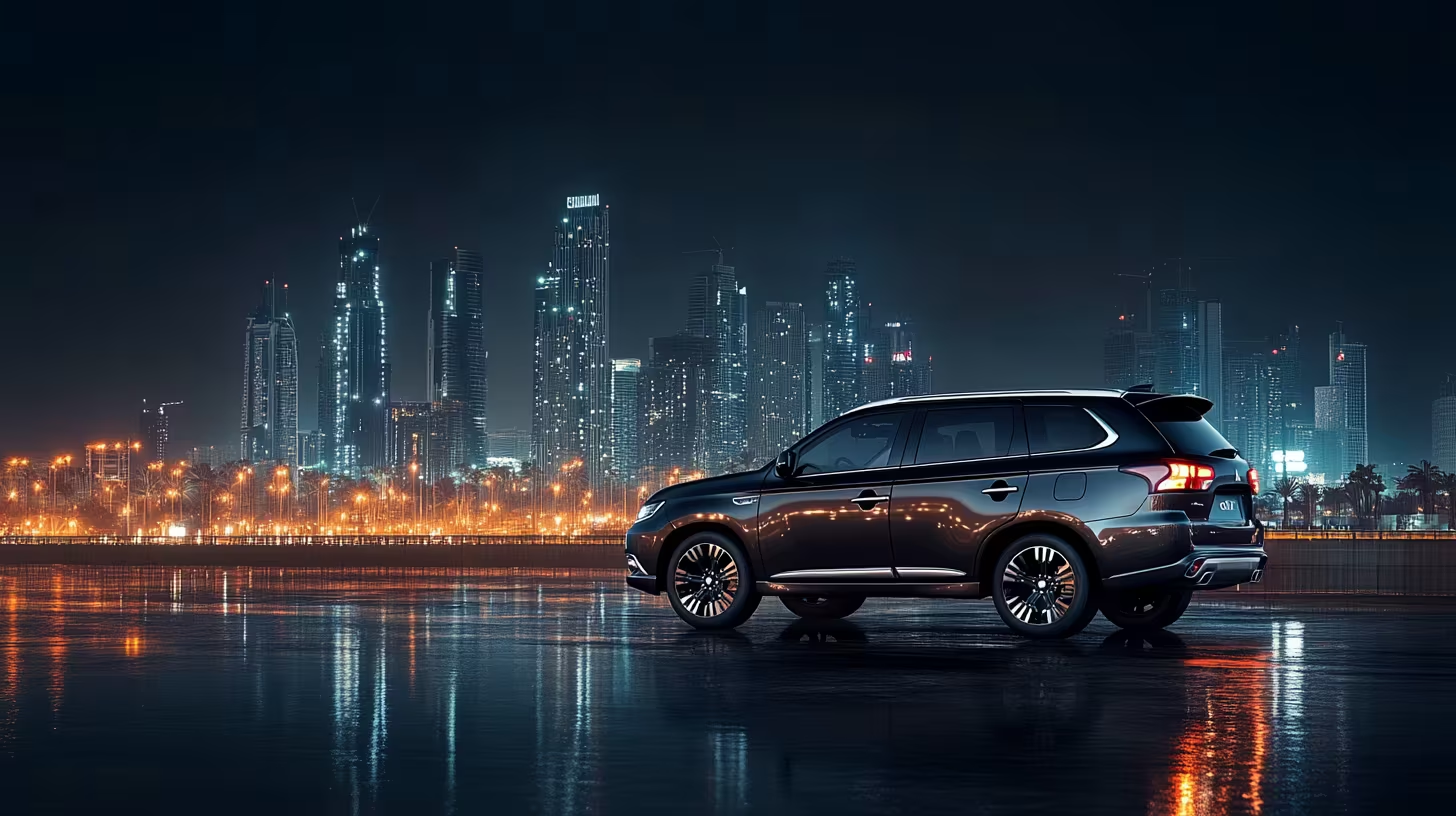
Fuel economy is strong: the PHEV achieves a combined 1.5 L/100 km (WLTP with daily charging) and up to 84 km real electric range—matching most commuters’ needs (with total range over 800 km). Petrol models return about 8.1 L/100 km average for city and highway running, comfortably above most rivals for the segment. Owners frequently praise the smooth transition between electric/petrol on the PHEV: “Throttle response is sharp, and there’s plenty of punch off the mark as well as zippiness around town” (Marcus Craft, CarsGuide).
Towing is a highlight: up to 1,600kg (braked) in AWD petrol, 1,500kg in PHEV, and Hill Descent Control make the Outlander camper- and boat-friendly. AC home charging (7kW) refills in 6.5 hours; CHAdeMO DC rapid charging can hit 80% in around 38 minutes. Routine fuel use can climb to 5–7 L/100 km on long trips or when the battery is depleted, so nightly charging is best for maximum economy.
Outlander & Solar Power
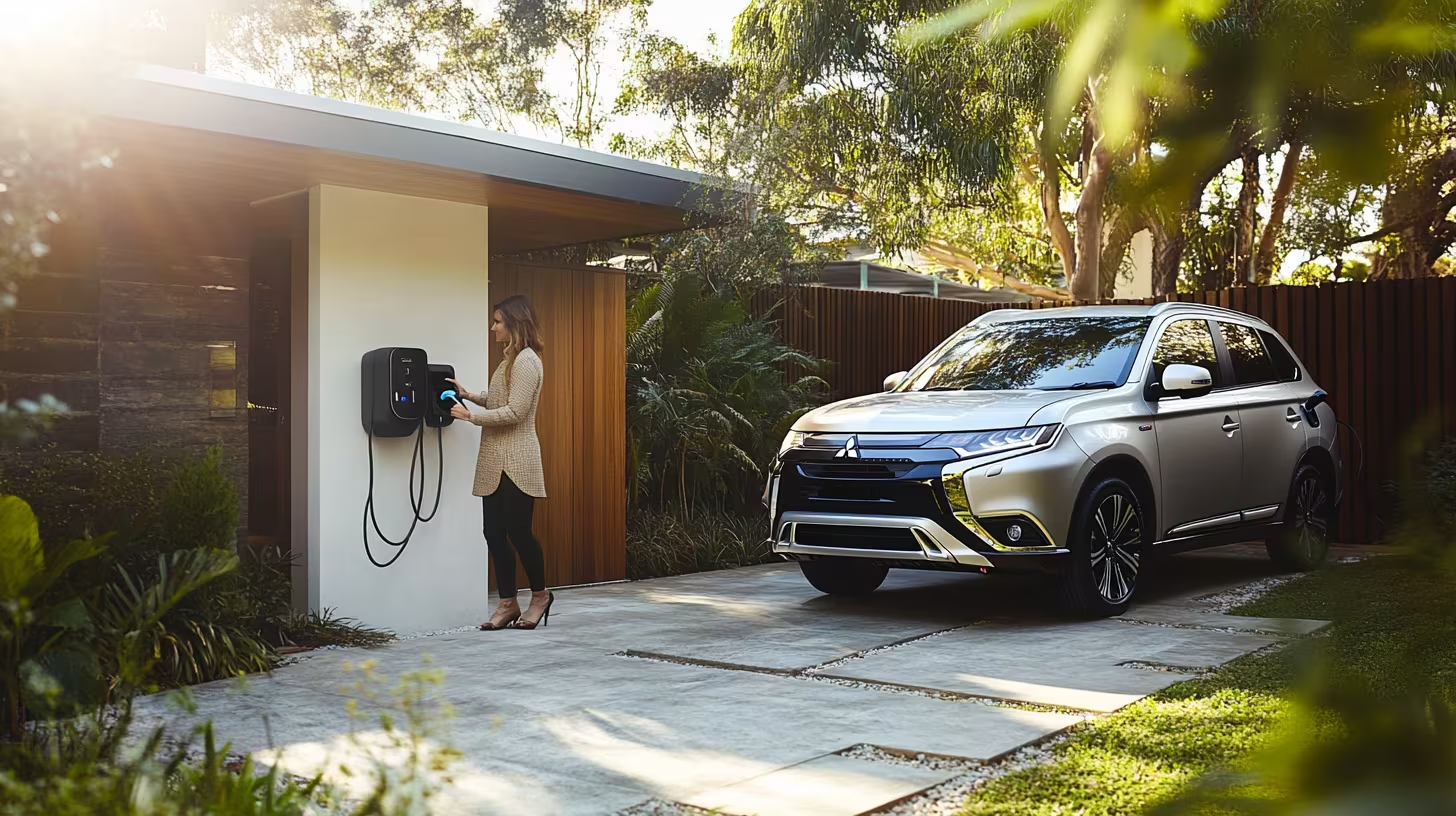
With many Outlander PHEV buyers pairing their SUV with solar panels, daily driving from home, work, or school is often completed on pure sunlight at almost zero cost. A solar-integrated EV charger shortens charging time, and helps large families, rideshare fleets, and business users future-proof for a full EV upgrade. Solar charging maximises Mitsubishi’s already strong PHEV and hybrid savings, reducing emissions, and offsetting grid power for everything from appliances to water heating. For maximum payback, maximising solar charging during the day (and off-peak on weekends) ensures the battery, warranty, and driving savings all add up over years of ownership.
FAQ - Mitsubishi Outlander
What is the price of the Mitsubishi Outlander in Australia?
The 2025 Mitsubishi Outlander starts at around $31,990 for ES petrol models, $60,238 for base PHEV ES, and up to $81,806 for the GSR flagship PHEV, with drive-away price changing depending on trim, AWD, and option packs. “Mitsubishi Outlander price”, "cost", "for sale", and "price Australia" are hot search terms. Paint, seating, and dealer charges will shift the total; novated lease and corporate discounts may cut business costs. State rebates also apply to PHEV. Always ask your local dealer for special offers.
How many seats does the Mitsubishi Outlander offer and is it a true 7-seater?
Most petrol Outlanders in Australia come with seven seats (five+two with split-fold third row), while the PHEV is a roomy five-seater with a spacious boot. “Outlander 7 seater", "7 seats", and "boot space" are top queries for family buyers. Rear-most row works for kids and teens but suits only short adult trips; loading and folding are easy thanks to a flat floor. Five-seaters deliver more cargo and are easier for city parking. All rows offer child-seat anchors and air vents in higher trims.
How far can the Outlander PHEV go on electricity alone, and what’s the total range?
The Outlander PHEV’s 20kWh battery gives up to 84km of electric-only driving (WLTP); Australian drivers regularly see 70–80km (especially in city use). “Outlander PHEV range”, “electric range”, and "battery" lead EV searches. When the battery runs flat, the petrol engine adds more than 700km range—perfect for long trips or holidays. Most drivers recharge at home overnight. My Mitsubishi app helps track battery and fuel level.
What is the real-world fuel consumption for petrol and hybrid Outlanders?
Petrol Outlanders average 8.1 L/100 km (city/highway mixed), while PHEV users often see under 2 L/100 km with routine home charging (up to 84km pure electric per day). Hybrids climb to 4–7 L/100 km when unplugged or on long trips. “Fuel consumption of Mitsubishi Outlander", "hybrid fuel", and “cost” are key research queries for TCO buyers. Owners benefit from capped service pricing and long intervals for maximum savings.
What is the towing capacity of the Mitsubishi Outlander, and can it tow a caravan?
AWD petrol models tow up to 1,600kg (braked), PHEV up to 1,500kg—confident enough for camper trailers, small caravans, or jetskis/boat. “Outlander towing capacity", "tow bar", and “caravan” are frequent camping and grey nomad searches. Note: towing drops EV-only range for the PHEV. Always check local legislation and dealer-fitted warranty advice for heavy duty loads.
How practical is the Mitsubishi Outlander’s boot and how much fits inside?
With all seating up, the Outlander boot ranges from 478–485L; fold the third row (or all rear seats) and maximum cargo hits up to 1,471–1,466L—room for prams, luggage, bikes, or Bunnings runs. "Boot space", "boot size", and "interior outlander" are must-know for families or business. Flat floor and low lip make loading easy. Roof rails and cargo barriers are popular add-ons for big journeys.
What are the main interior and comfort features?
Across trims, expect an 8–9" touchscreen (sat nav on higher trims), Apple CarPlay/Android Auto, dual/trizone climate, massage/heated leather seats on Exceed/Tourer, panoramic sunroof, and digital cluster. “Interior”, “features”, "2024/2025", and "Exceed Review" are buyer validation queries. High trims add Bose audio and head-up display. Rear seat comfort, USBs, and air vents strong points in all grades.
What tech and safety features are available on the Mitsubishi Outlander?
All new models are five-star ANCAP with AEB, lane-keep, adaptive cruise, rear cross-traffic, blind-spot, traffic sign, and driver attention as standard. Exceed and PHEV models add a 360º camera, MI-PILOT lane/traffic assist, and advanced collision avoidance. “Safety rating", "ANCAP", and “child seat ISOFIX” are must-check queries for parents and fleet managers. Multiple airbags, Head-Up Display and digital cluster win tech points, but base models are simpler inside.
How reliable is the Mitsubishi Outlander—in both petrol and PHEV forms?
Long-term data for Outlander petrol and hybrid models is robust, with high reliability and low rates of serious failure. “Outlander reliability", "PHEV issues", and “problems” are the most-searched ownership questions. Warranty support is 10 years (petrol/hybrid) or 8 years on PHEV battery, with regular software updates and broad dealership support. Owners praise easy maintenance, low service costs, and strong resale. PHEV owners note battery reliability is solid, with rare early-life module issues covered by warranty.
Can I charge my Outlander PHEV at home with solar power?
Absolutely—plugging in your PHEV during the day on [solar power](https://topproperty.eco/solar-power) is the best way to cover commutes and errands at zero fuel cost. [Solar-compatible home EV chargeres](https://topproperty.eco/solar-installers) make charging simple, and My Mitsubishi app lets you schedule or pre-condition the car. Combining solar and PHEV drops energy bills and emissions dramatically. Some public DC CHAdeMO sites also accept Outlanders for faster top-ups. For best value, charge nightly and use solar/green energy plans.
What accessories are available: roof racks, mats, seat covers, etc.?
Mitsubishi and third-party stores offer roof bars, floor mats, seat covers, bike racks, cargo liners, bull/nudge bars, and dash cams—all fitted with warranty cover. "Accessories", "seat covers", and "roof racks" are common research topics for aftersales buyers. Most accessories are click-to-buy and available at delivery. PHEV buyers should confirm compatibility for power/cable management.
Is the Outlander easy to drive, park, and handle in the city?
Eclipse Cross is compact and easy, but even Outlander’s 4.7m length is manageable thanks to cameras, sensors, light steering, and clear sight lines. "Handling", "urban", and "city driving" are top FAQ for young families. Exceed and PHEV trims add parking tech for extra peace of mind. School-run and shopping-centre feedback is strong from real family owners.
How do Outlander petrol and PHEV variants compare for ride, comfort, and technology?
Both offer well-tuned soft rides and quiet cabins; hybrids are quieter under electric power but both versions now use Nissan/Mitsubishi’s shared interior with top-notch comfort seats and upmarket finishes on higher trims. "Outlander hybrid vs petrol", “ride”, and “technology” are high-volume decision points. High trims add third-zone climate, massage, and panoramic glass, enhancing family trips.
What are the Outlander’s service intervals, running costs, and is capped service available?
Service intervals are annual or every 15,000km, and ten years’ capped-price servicing lets buyers plan costs precisely. "Outlander service", "service cost", and "maintenance" are essential FAQs. Running costs are below average for the segment, with the PHEV offering major fuel savings if used as a commuter. All dealers nationwide honor schedules and track records online.
How does the Outlander PHEV compare to Toyota RAV4 Hybrid or Kia Sorento PHEV?
Mitsubishi’s PHEV stands out for pure-electric range (up to 84km), warranty, and pricing. The Toyota RAV4 Hybrid delivers similar cabin space and lower price, but shorter pure EV range; Kia Sorento’s plug-in packs three rows but costs more. “RAV4 hybrid vs Outlander PHEV”, “PHEV comparison”, and "Kia Sorento PHEV" are top cross-shop queries. Mitsubishi is the best pick for regular city charging, with full support for solar and at-home installs.
Can the Outlander tow a caravan or large trailer?
Yes—AWD petrol models tow 1,600kg (braked) and PHEV up to 1,500kg. "Outlander towing capacity", “caravan”, and “towbar” are constant holiday/tradie search terms. Towing drops PHEV’s EV range, but total range and power are more than enough for holiday travel. Always select proper towing packs and wiring.
Are Mitsubishi Outlander SUVs expensive to insure or maintain?
Insurance is typically $1,000–$1,500 per year, depending on state and profile, but below class average for features and value. "Service cost", "insurance", and "outlander value" are frequent owner-queries. PHEVs cost a bit more due to tech, but savings on fuel offset this for most users. Mitsubishi’s long warranty, cheap OEM parts, and dealer support minimise out-of-pocket surprises.
Is the Outlander petrol or diesel—and what fuel should I use?
Current Australian Outlanders are petrol only; there’s no diesel for the 2025 generation locally. All run fine on regular 91 unleaded, hybrid/PHEV models also take standard unleaded. “Outlander fuel type”, "is it petrol or diesel?" spike with buyers cross-shopping older models. Always refuel when the light comes on but regular is perfectly fine.
Is the Mitsubishi Outlander a good car for families—as a first SUV?
Absolutely—7 seats, easy boot, loads of air vents, and child-seat anchors make it practical and flexible. "Family car", "parent review", and “outlander for school run” are high-volume validation checks. Owners cite reliability, easy entry, and huge boot as their favourite assets. New owners also benefit from affordable insurance and proven resale value when the time comes to upgrade.
Find EV Chargers & Solar Power by State
Discover charging infrastructure and solar power options for your MITSUBISHI Outlander in your state:
*Disclaimer: This page includes information, descriptions, and images that may have been created or enhanced with the assistance artificial intelligence, powered by our proprietary Ray-i (AI) technology system. While we do our best to ensure accuracy, specifications and details can vary between models, regions, and over time as manufacturers make updates. Images are for illustrative purposes, and the content is provided for general reference. For the most up-to-date specifications or features, we recommend checking directly with the manufacturer or your local dealer.