

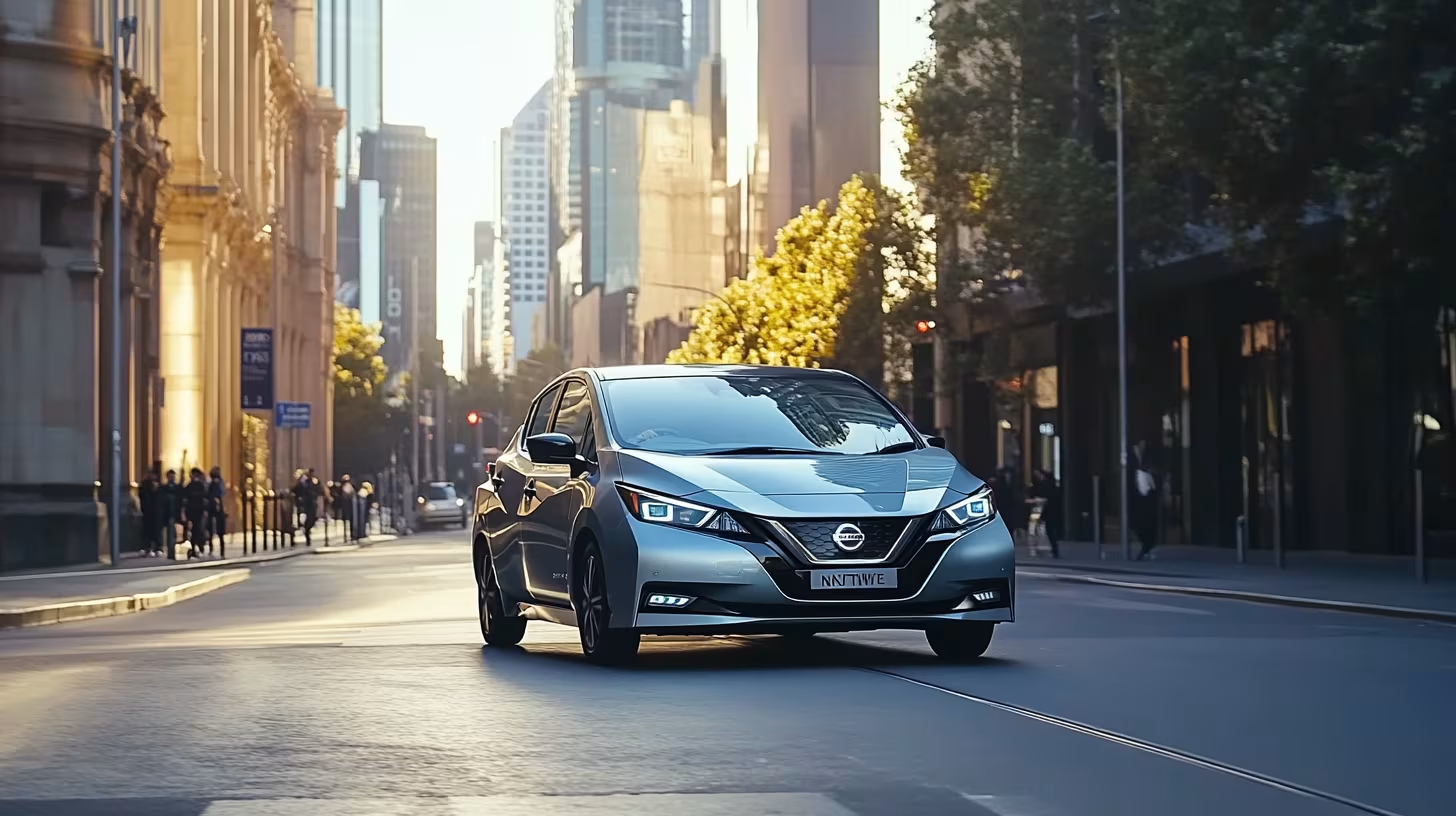
Leaf
NISSAN
Leaf Introduction
The Nissan Leaf is Australia’s most recognisable mass-market EV, famous for bringing electric motoring to suburbs across the country with a blend of tried-and-tested reliability, value, and efficient urban performance. The latest models—offered in both the original Leaf (40 kWh) and the more powerful Leaf e+ (62 kWh)—deliver solid real-world range, smooth and silent city driving, and a practical five-door hatchback format. With classic Nissan styling, a five-star ANCAP safety rating, and the peace of an 8-year/160,000 km battery warranty, the Leaf appeals to savvy urban commuters, eco-minded families, and first-time EV buyers.
Inside, you’ll find comfortable seating for five, a generously sized 435L boot, and user-friendly tech like Apple CarPlay/Android Auto, climate control, heated seats, and a digital driver display. DC fast charging and vehicle-to-grid (V2G) compatibility make the Leaf practical for both city and longer trips, while scheduled maintenance is limited to an annual or 20,000 km check. For buyers cross-shopping second-hand or new, the Leaf carries a strong support network, established resale, and a serviceable battery replacement ecosystem. If you want to go electric without spending Model 3 or Ioniq 5 money, the Nissan Leaf is a proven, affordable, and easy-to-live-with EV with Australia-wide support.
Available models

Want Solar Finance Options?
Compare lenders and get tailored loan offers.
Leaf Performance & Power
The base Nissan Leaf employs a 110 kW/320 Nm electric motor and 40 kWh battery for a WLTP range of up to 270 km, while the Leaf e+ jumps to 160 kW/340 Nm and up to 385 km range (WLTP) from its 62 kWh battery. “With 160 kW/340 Nm on tap, the flagship Leaf is no slouch...managing 0–100km/h in seven seconds flat” (Andrew Sluys, Chasing Cars). Off-the-line, the instant torque easily chirps the tyres, yet acceleration softens on highway merges or with low charge (Emily Agar, CarsGuide). Regenerative braking and one-pedal driving are standard, boosting efficiency and daily ease. While the Leaf can’t match newer EVs for outright performance, city acceleration is brisk and consistently smooth.
Leaf Interior & Design
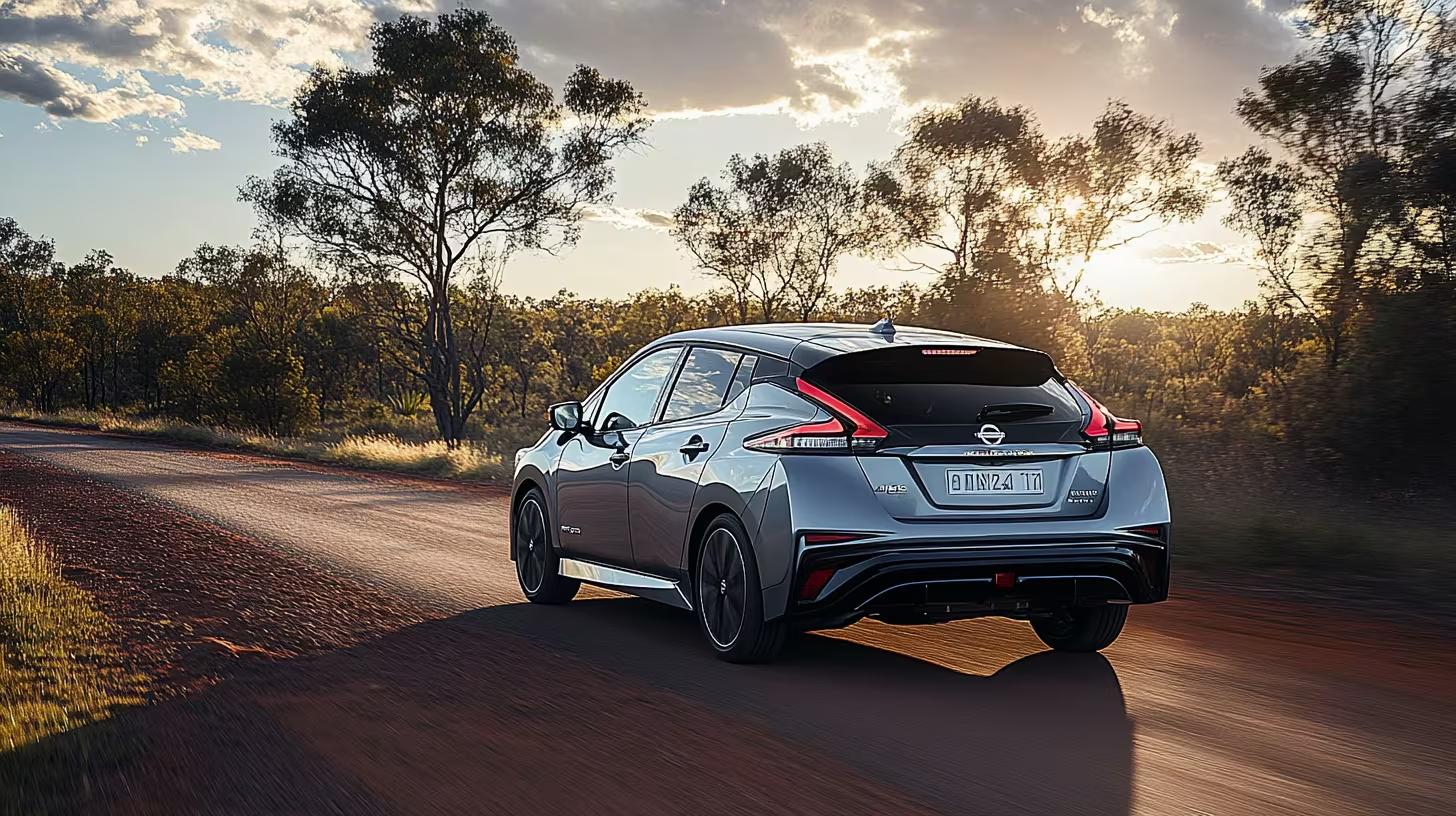
Nissan’s latest Leaf offers a “wheels-up redesign” with practical hatchback styling, 17” alloys, power-fold mirrors, and a subtle grille. “Honestly, it sort of looks like a Lego car” (Emily Agar, CarsGuide), but inside, the space is functional and upmarket for a $50k EV. The 8” touchscreen and 7” digital dash are easy to read, although graphics are starting to date. Rear seat comfort is solid for adults, cargo space is generous, and the cabin mixes soft-knit surfaces with harder, durable panels.
Heated front and rear seats, adjustable wheel, and high seating position make the car usable and easy for city errands; Bose audio (e+) and leather trim on upper grades lift the feel. Reviewers note that the cabin is quirky-chic but lacks the wow-factor of newer, flashier EVs. Owners consistently enjoy the practical layout, good sightlines, and deep boot.
Leaf Technology & Safety
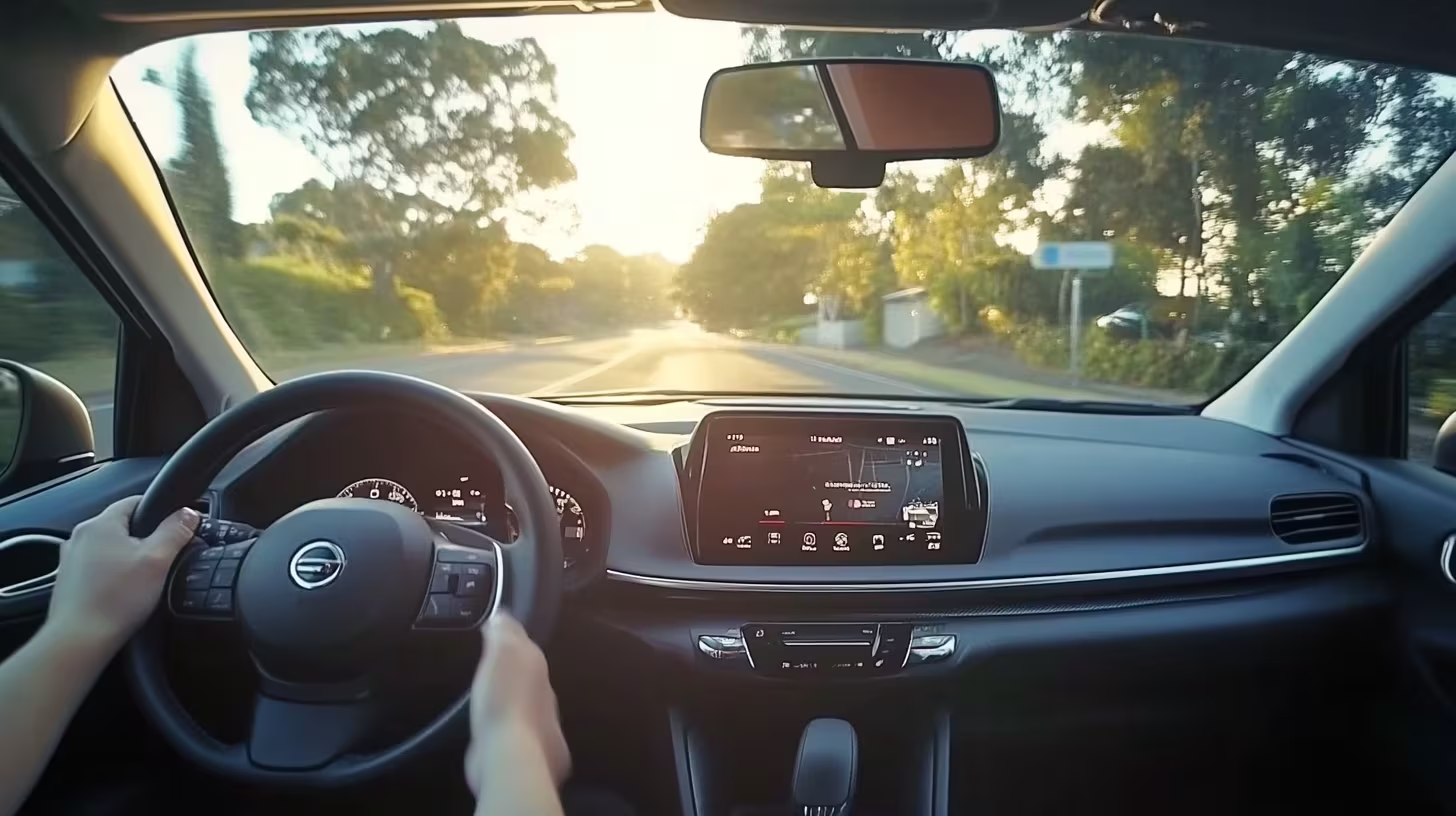
Every Nissan Leaf is now five-star ANCAP and comes with a full suite of driver assists: AEB with pedestrian detection, lane departure warning, blind spot monitor, rear cross-traffic alert, and adaptive cruise (e+ only). The infotainment offers an 8” touchscreen with wired Apple CarPlay/Android Auto, Bluetooth, climate, and trip energy stats—all easy to reach. “The safety suite includes adaptive cruise, automatic emergency braking, lane departure warning, blind spot and rear cross-traffic alert” (Andrew Sluys, Chasing Cars).
DC charging outlets, home AC socket, one-pedal drive with “e-Pedal”, and ProPilot semi-auto highway assist (e+) bring extra confidence. Around View 360 Camera and smart nav systems feature on higher trims. Owners only wish for more USB ports and higher-resolution displays, but routine updates and remote app tools keep usability fresh.
Leaf Range & Charging
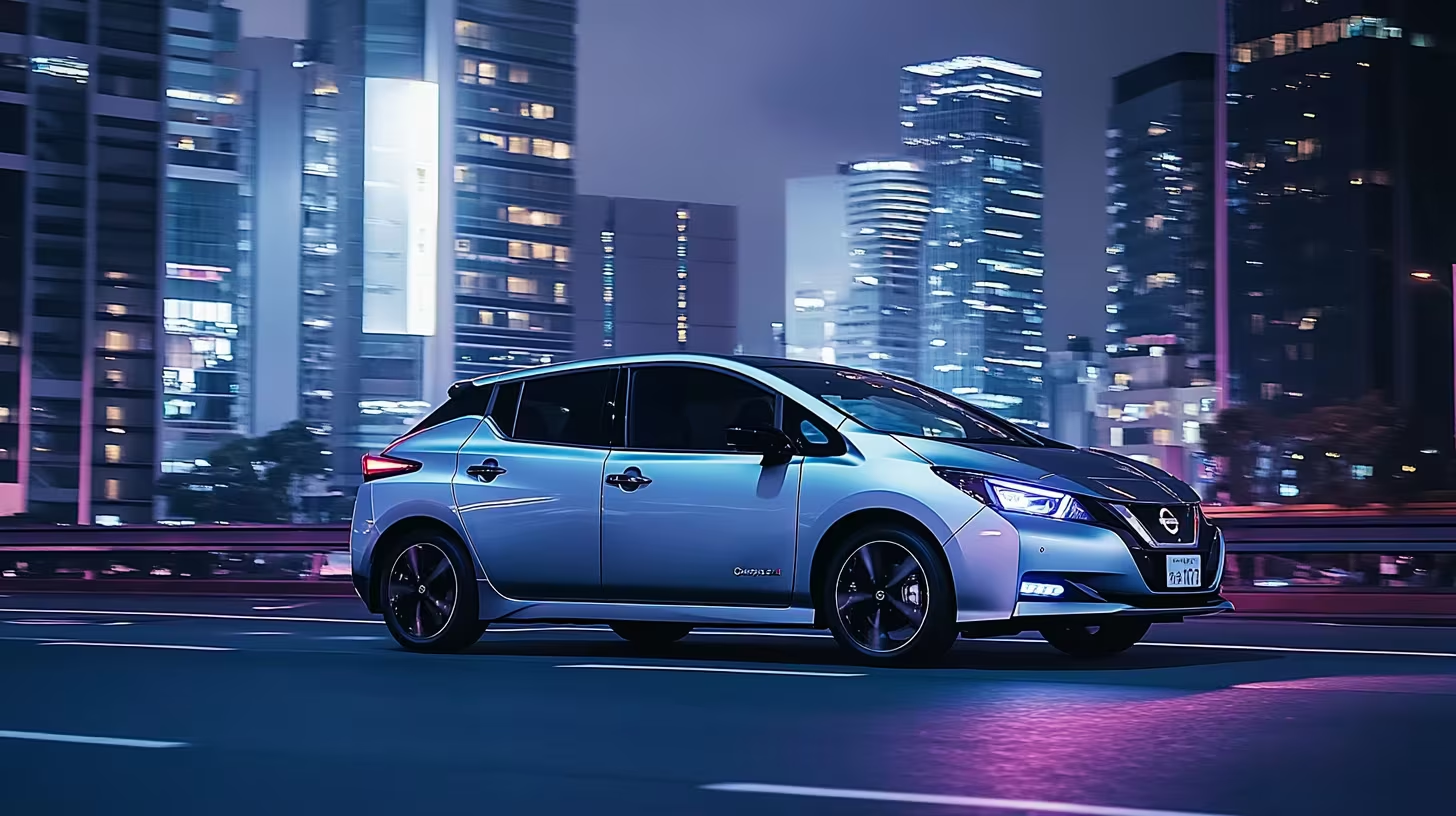
The Leaf’s base 40 kWh battery recharges (0–100%) via 6.6 kW AC in ~6.6 hours; e+’s 62 kWh battery is full in 10–11 hours. DC fast charging (CHAdeMO, up to 100kW) covers 10–80% in about 45–60 minutes, allowing easy city top-ups and mid-commute range boosts. “DC fast charging enables a one-hour 20 to 80 per cent fast charge in the base Leaf, or 1.5 hours in the Leaf e+” (Glenn Butler, Drive). Real-world range sits at 230–260 km (base) or 320–350 km (e+) in Aussie city/highway driving, with around 17 kWh/100 km energy use in practice.
Battery warranty is 8 years/160,000 km; typical battery life is above eight years, with local support for replacement and diagnostic work. Servicing is every 20,000 km or annually, and the five-year unlimited km vehicle warranty adds peace of mind. Replacement batteries have supported AU and resale values.

Leaf & Solar Power
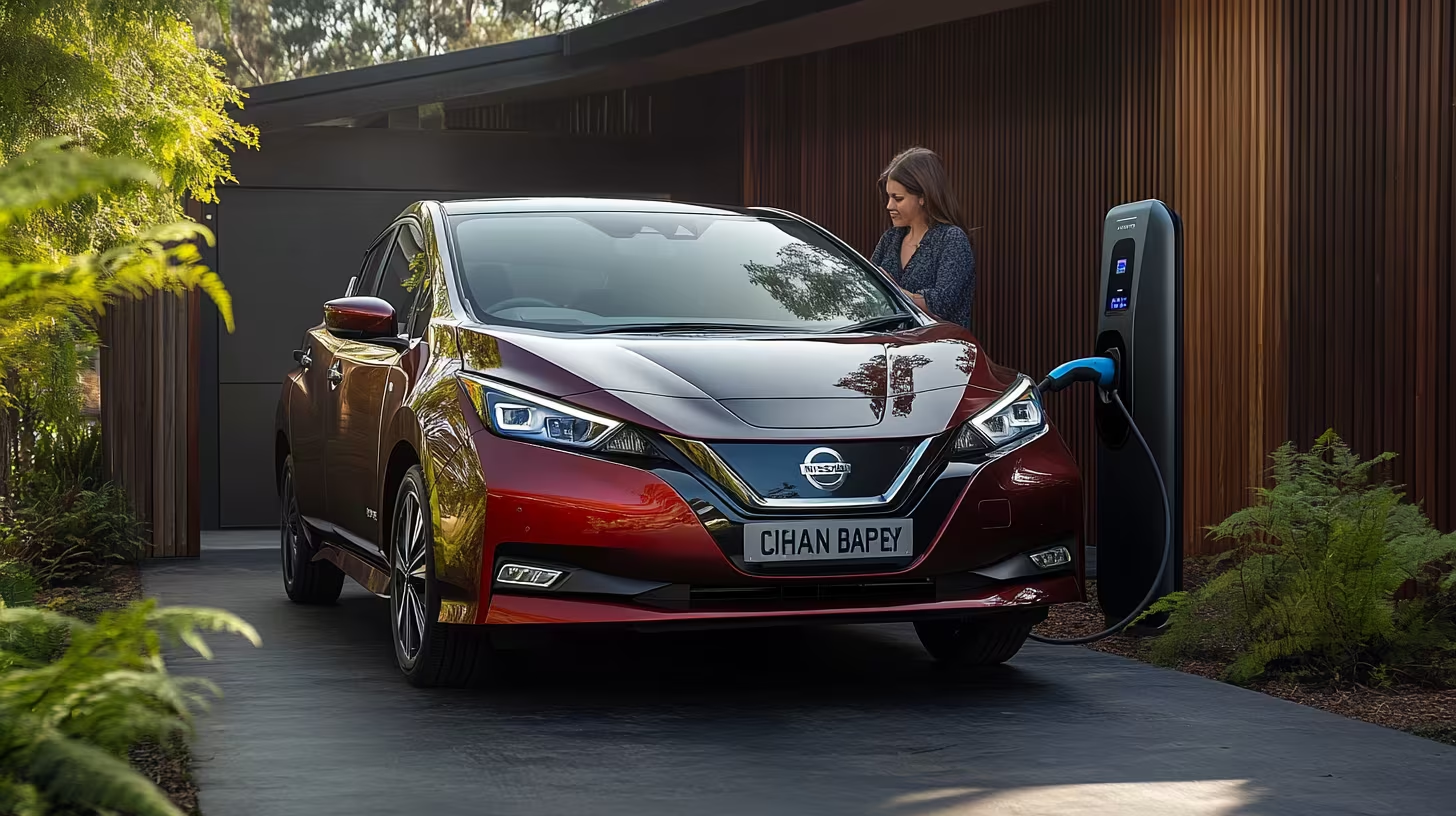
Homeowners running a Nissan Leaf on solar panels cut home EV “refueling” bills to near-zero. Solar roof charging with a companion EV charger lets drivers wake up to a full battery, skip public charger queues, and enjoy year-on-year running cost reductions. For regular commuters, nighttime off-peak charging or a tailored solar plan makes ownership cheaper than petrol—especially in city or school run duty cycles. More business fleets now opt for solar-scheduled charging to hit ESG targets. Owners pair solar with V2G (vehicle-to-grid) for home energy resilience and further savings.
FAQ - Nissan Leaf
What is the price of a new Nissan Leaf in Australia?
Base model Nissan Leaf is priced at $50,990 drive-away, while the Leaf e+ is $61,490 (before on-road costs or incentives). “Nissan leaf price”, "price Australia", and “cost” are high-intent queries. Batteries, paint, and charging hardware can affect the delivered price. State and federal EV subsidies may lower your outlay. Always check with your Nissan dealer for demo, fleet, or lease offers.
How far can the Nissan Leaf and Leaf e+ travel on a single charge?
The standard Leaf delivers up to 270 km WLTP, while the e+ (62 kWh) claims 385 km, with Aussie testers achieving 230–260km (Leaf) or 320–350km (e+), depending on driving and climate. “Range”, "ev range", and "battery" are must-compare queries for urban/family buyers. Range dips with highway speeds, heavy loads, or cold weather but covers most commutes for a week. The trip computer offers accurate range prediction for trip planning.
How fast can I charge the Nissan Leaf at home or public chargers?
Home AC charging at 6.6 kW will refill the battery from empty in 6.5–10 hours, depending on variant. Public DC (CHAdeMO) charging at up to 50–100 kW gets 10–80% top-up in 45–60 minutes. “Leaf charging”, “fast charging”, and “EV charger” are high-intent buyer searches. Scheduling night or off-peak/weekend charges lowers electricity costs. Bringing your DC charging cable is essential for road trips.
What is the Nissan Leaf battery warranty and real-world lifespan?
Nissan covers all Leaf batteries for 8 years/160,000 km against defect or excessive degradation (below 75% capacity). "Battery warranty", "battery replacement Australia", and “battery life” are popular worry points. Surviving batteries often last 8–12 years in local conditions, with replacement or upgrade options available via dealers. Modern Leaf packs offer thermal management and regular software updates. Owners get peace of mind with included vehicle and roadside warranty.
How reliable is the Nissan Leaf, and what do owners report about problems?
Long-term reliability is strong, with early cars still running in AU cities. “Nissan leaf problems”, “issues", "battery”, and “used buy” are high-traffic validations. A small minority of first-gen cars reported battery wear; most later models see little range loss if serviced. Glitches are rare: some infotainment or sensor errors do occur but are covered by warranty. Owners praise minimal running costs, durable seats/interior, and straightforward dealer fixes.
How practical is the Nissan Leaf boot, and how comfortable is the interior?
The Leaf holds 435L in the hatch—a clear win in the small EV segment. “Nissan leaf boot space”, “interior", and “size” lead family and fleet research. Split-fold seats expand cargo for prams or camping gear. Seating is plush, with heating, soft cloth or leather accents, and a high riding position for city comfort. Rear seat is surprisingly spacious for two.
What are running costs, service, and insurance like for the Nissan Leaf?
Annual servicing is $200–$350/year; no major repairs needed thanks to simple EV powertrain. “Nissan leaf cost”, “servicing”, and “service cost” are at the top of owner FAQ. Insurance is typically $1,000–$1,500 for metro drivers. Battery, main systems, and roadside assist are covered for five to eight years. Energy bills can drop below $10/week with home or solar charging.
What features, tech, and safety come standard for the Nissan Leaf?
All variants include AEB, lane-keep, blind spot alert, rear cross-traffic, 8” touchscreen with CarPlay/Android Auto, climate, heated seats, and remote nav/app updates. "Leaf safety", "tech", “propilot” and "features" are trending for new buyers. Around View 360 Camera, adaptive cruise, and Bose audio (e+) improve higher trims. Nissan’s safety suite scores highly for city/urban duty, but some find USB/charging options limited.
Can the Nissan Leaf charge at home on solar or with green power?
Yes—[solar panels](https://topproperty.eco/solar-power) and home-provided green power now fuel thousands of AU Leaf drivers. "Nissan leaf solar", "solar charger", and "EV charger" spike among eco-owners. Timed, mid-day loads match grid or sunlight for free, emissions-free mileage. Nissan-connected EV chargeres make at-home charging seamless for most busy families. Off-peak rates fill gaps on cloudy or overnight weeks.
How does the Nissan Leaf’s performance compare to MG4, Tesla Model 3, or BYD Atto 3?
Leaf is slower (0–100km/h: 7–8s, e+ 6.9s) than a Model 3 or MG4 but feels more planted and practical than Atto 3 for heavy city use. "Leaf vs MG4" and "Leaf vs Model 3" are frequent comparison searches. Tesla offers more range/performance; MG4 is cheaper, Atto 3 is more SUV-like. For simplicity and support, the Leaf still leads affordable urban EVs.
Is the Nissan Leaf able to use Tesla Superchargers or CCS2 fast chargers?
Leaf is compatible with CHAdeMO public DC chargers only—most Tesla or fast-charging networks in AU are gradually shifting to CCS2 or require adapters. "Leaf charger type" and "Tesla charging" are hot owner research queries. Carrying a cable and using PlugShare ensures you stay covered for most city and highway trips. CHAdeMO remains supported in most metro and major regional areas.
Does the Nissan Leaf have V2G or V2H (vehicle-to-home) capability?
Yes—recent Leaf models can export power (via CHAdeMO bi-directional charging) for home battery backup or grid sharing (V2G/V2H). "Leaf V2G", "V2H", and "vehicle-to-grid" are popular business, fleet, and home eco queries. Availability of hardware, power export laws, and utility take-up vary by state/region. Consult your dealer and local electrician for compatibility before purchasing.
Can I buy a used Nissan Leaf or get parts/battery upgrades in Australia?
Yes—Nissan Leaf is one of Australia’s most available used EVs, with strong resale values. "Leaf used", "battery replacement", "used battery", and "replacement battery Australia" are common post-purchase owner queries. Battery health inspection before buying used is essential; local shops offer replacement/upgrade for earlier model Leafs. Nissan supports battery swaps and upgrades for newer models.
What is the warranty for Nissan Leaf in Australia?
New Leaf cars come with a five-year/unlimited km full vehicle warranty and an 8-year/160,000 km battery warranty. "Leaf warranty", "battery cover", and "support" are key queries for lease/fleet/business users. Roadside assistance is included in warranty coverage. Regular service and battery checks required to sustain coverage. Connected app, MyNissan, and Nissan EV tech support add confidence.
What maintenance and service is needed for a Nissan Leaf?
Annual checkups (or 20,000 km) replace cabin air/pollen filter, check brakes/tyres, and update software. No oil or spark plug changes needed, keeping service costs low. "Leaf service schedule", "service cost", and "Leaf maintenance" regularly trend. Service intervals, parts, and labour rates are listed by all major AU dealers. Proper service helps preserve resale and battery health.
How does the Nissan Leaf perform in hot or cold Australian conditions?
Range is best at 17–20ºC; summer (hot) reduces to ~230km (standard) or ~320km (e+) with AC on; winter sees only minor drops in city traffic. "Leaf hot weather", "cold driving range", and "battery climate" rise for regional drivers. Built-in battery thermal management on latest models helps keep capacity stable. One-pedal mode and regen help city drivers recover energy efficiently.
What is the Nissan Leaf’s boot and cargo space—does it work for families?
435L of boot space is above average for compact electric hatches; split rear seats add flexibility for strollers or shopping. "Leaf boot space", "interior comfort", and "family electric car" are common new-buyer searches. Roof racks and boot organisers are available from Nissan or aftermarkets. The Leaf EV hatch is a favourite for parents/urban couples needing green, flexible cargo.
Where is the Nissan Leaf made for Australia and how is it supported?
Japanese-manufactured, the Leaf comes with strong Nissan Australia sales, service, and roadside support. "Leaf Australia", "dealer support" and "parts" are popular queries. Metro and regional service is handled by Nissan’s regular dealership network. Owners typically report fast fixes and comprehensive warranty claim responses nationwide.
Is the Nissan Leaf being discontinued or is it reliable for long-term use?
Despite global model changes, new Leafs remain available in AU for 2025 and warranty/replacement support is secure for current and past buyers. "Leaf discontinued", "years made", and "long-term issues" are hot-buying queries. With eight-year battery warranty and routine upgrades, Leaf is still one of the most reliable and affordable EV hatches in Australia.
Can the Nissan Leaf drive with solar charging at home, and what’s the payback time?
Yes—charging via [solar panels](https://topproperty.eco/solar-power) on a [home EV charger](https://topproperty.eco/solar-installers) lets many families run on cheap or free power, especially for city commutes. Solar owners often pay back install costs in 4–8 years, per feedback. Public tariffs and off-peak green power also slash bills. Future upgrades (V2G/V2H) can make solar-powered Leafs part of home back-up storage, further lowering TCO.
Find EV Chargers & Solar Power by State
Discover charging infrastructure and solar power options for your NISSAN Leaf in your state:
*Disclaimer: This page includes information, descriptions, and images that may have been created or enhanced with the assistance artificial intelligence, powered by our proprietary Ray-i (AI) technology system. While we do our best to ensure accuracy, specifications and details can vary between models, regions, and over time as manufacturers make updates. Images are for illustrative purposes, and the content is provided for general reference. For the most up-to-date specifications or features, we recommend checking directly with the manufacturer or your local dealer.