

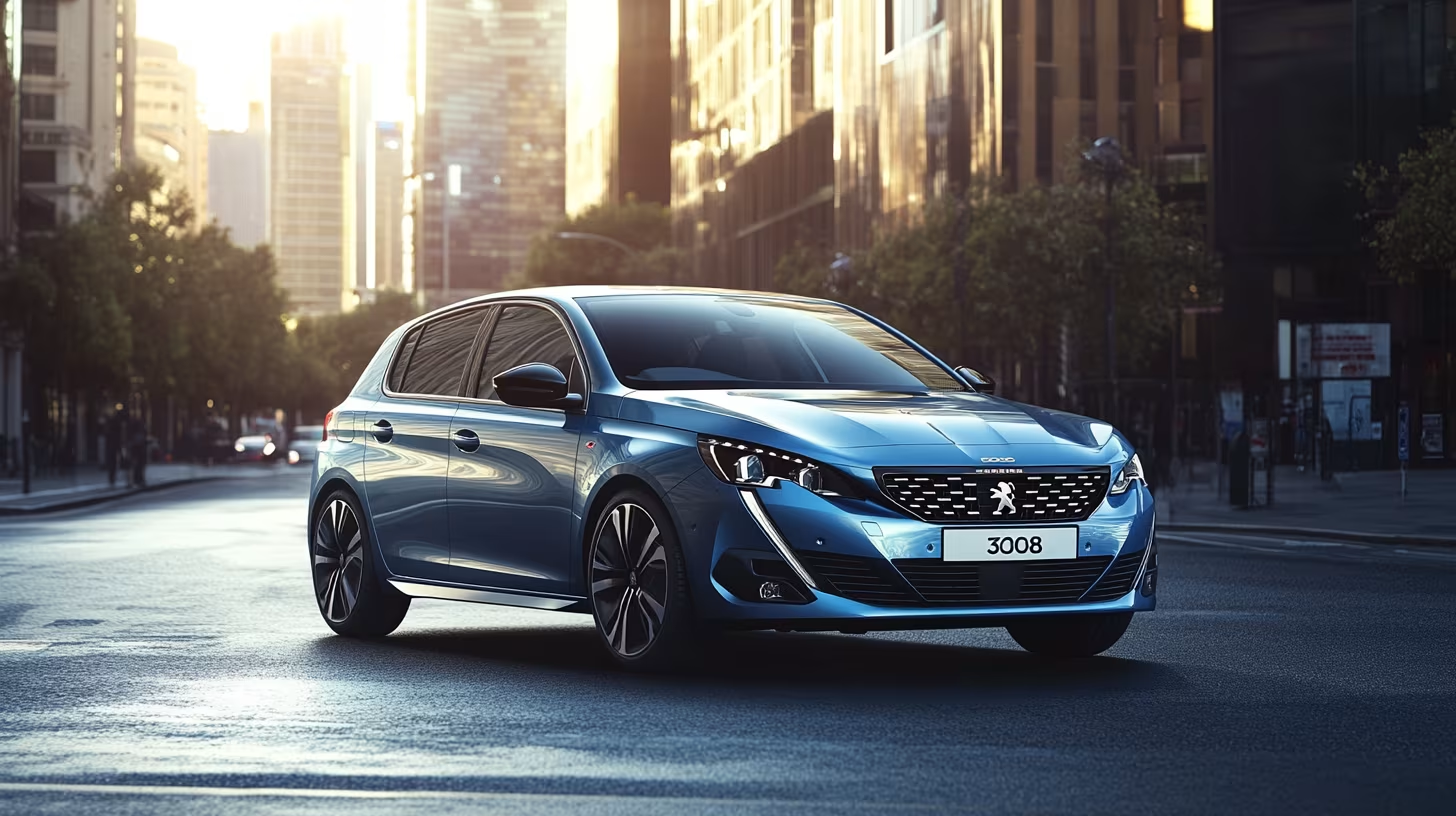
308
PEUGEOT
308 Introduction
The Peugeot 308 brings French flair and sharp style to Australia’s small car market, with a range that now includes petrol, mild-hybrid, plug-in hybrid (PHEV), and all-electric e-308 variants. Available as a hatch or capacious 308 Wagon, the 2024–2025 range puts a premium focus on upscale cabin design and driver-oriented tech, from the signature i-Cockpit layout — with a high-set 10-inch digital display and compact wheel — to its plush Nappa leather options and Focal 10-speaker sound. Boot capacity, lively powertrains, and five-seat practicality make it a standout for city professionals, young families, or anyone after more flair than a Corolla or Golf.
Buyers can opt for an efficient turbo-petrol, an eco-friendly 1.2L mild-hybrid, the swift 165 kW PHEV (up to 60km EV range), or the all-new e-308 BEV with up to 400 km (WLTP) from a 54 kWh battery and fast charging. All variants are packed with comfort: massaging/heated seats, panoramic sunroof, navigation, adaptive cruise, and a 5-year unlimited kilometre warranty (8-year battery warranty for electrified models). The 308’s standout Euro design and premium materials are matched by safety features like AEB, blind spot monitor, and a 360-degree camera on high trims. Family-friendly size and flexible interiors make the 308 a versatile, tech-rich hatch or wagon with genuine upmarket appeal.
Available models

Want Solar Finance Options?
Compare lenders and get tailored loan offers.
308 Performance & Power
Depending on trim, the 308 sports a punchy 1.6L turbo-petrol (133–165 kW), a 1.2L 48V mild-hybrid (100 kW), a smooth and highly efficient PHEV (1.6L turbo plus 81 kW motor, 165 kW/360 Nm total), or the e-308 with 115 kW/270 Nm for instant torque. “On the road, the 308 PHEV is a peach to drive,” says Andrew Sluys (Chasing Cars); fast off the line and brisk in city traffic, the PHEV claims 0–100 km/h in around 7.4 seconds, while the e-308 does it in about 8.0 seconds. Real-world reviewers praise “strong, smooth electric torque for city commuting,” with petrol engines remaining lively for highway runs and overtakes.
Handling is agile, steering sharp, but testers note battery weight dulls hybrid hot-hatch edge; still, the 308 is always comfortable and secure for day-to-day use. Electric-only PHEV mode is great for silence but transitions to petrol can feel abrupt at full throttle. All powertrains excel in fuel efficiency compared to rivals.
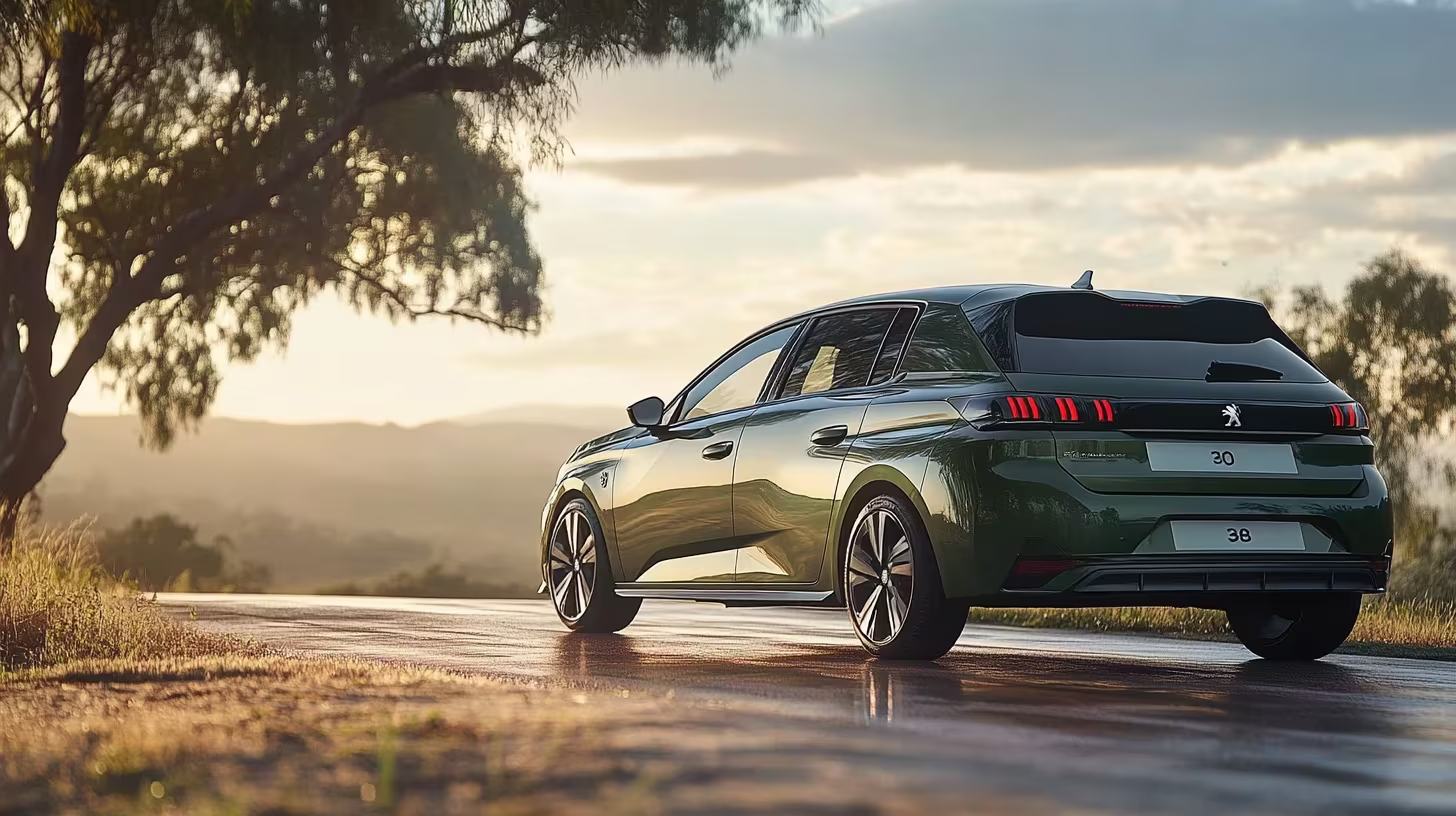
308 Interior & Design
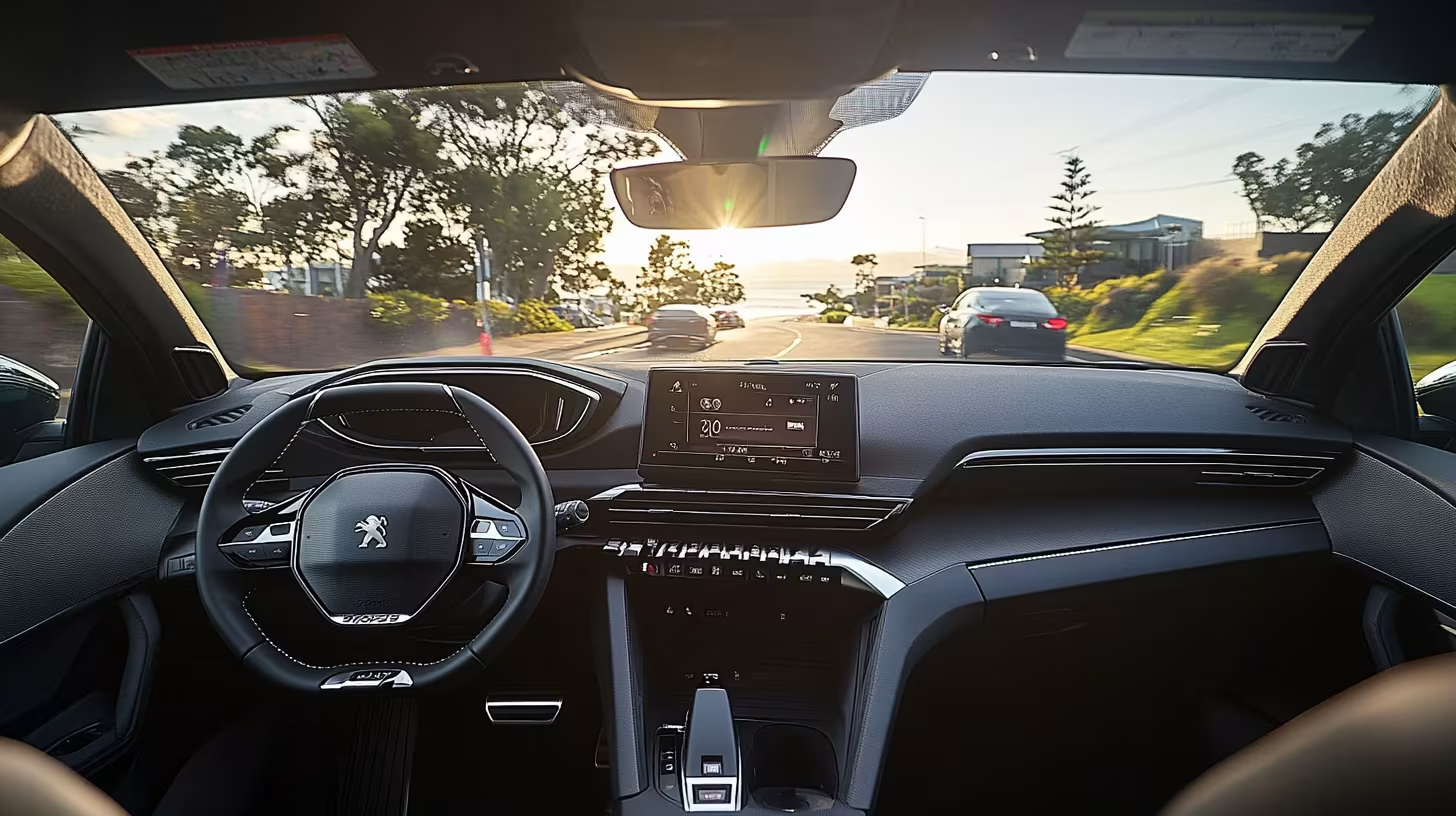
The Peugeot 308’s “beautiful design philosophy” (Rob Margeit, Drive) delivers a cabin with soft, upmarket materials, subtle leather and piano-black finishes, a compact wheel, and dramatic ambient lighting. Twin 10-inch screens (digital dash and infotainment) headline a minimalist but ergonomic centre console. Massaging, heated, and electrified seats are available with the GT Sport PHEV and e-308; Focal 10-speaker premium audio, wireless phone charging, and panoramic sunroof complete a luxury-feeling kit.
Front seat adjustability, broad colour and customisation choices, and the option of a practical 308 Wagon with 361/412L boot (up to 1,634L seats folded) highlight the flexible Euro approach. Reviewers call the boot class-competitive and the cabin “lavish,” though rear legroom and high-gloss touch surfaces draw minor owner nitpicks. Storage and space are a match for Mazda 3 or Corolla.
308 Technology & Safety
All Peugeot 308s feature a 10-inch touchscreen, CarPlay/Android Auto, and a digital driver cluster, with physical “piano key” shortcuts for climate. The PHEV and BEV pack high-tech driver aids: AEB, adaptive cruise, lane keep, blind-spot and cross-traffic, 360-camera, driver attention monitoring, and traffic sign recognition. “Comprehensive ADAS suite (AEB, blind-spot, 360° camera) works unobtrusively,” notes Andrew Sluys (Chasing Cars).
Critics report infotainment and camera can lag or bug out but praise sharp resolution and navigation tools. Safety is strong, though a missing centre airbag keeps ANCAP rating at four stars; every other assist is available for peace of mind. The flexible suite and quick screen response with hard-key climate access give the Peugeot 308 a tech lead over many rivals.
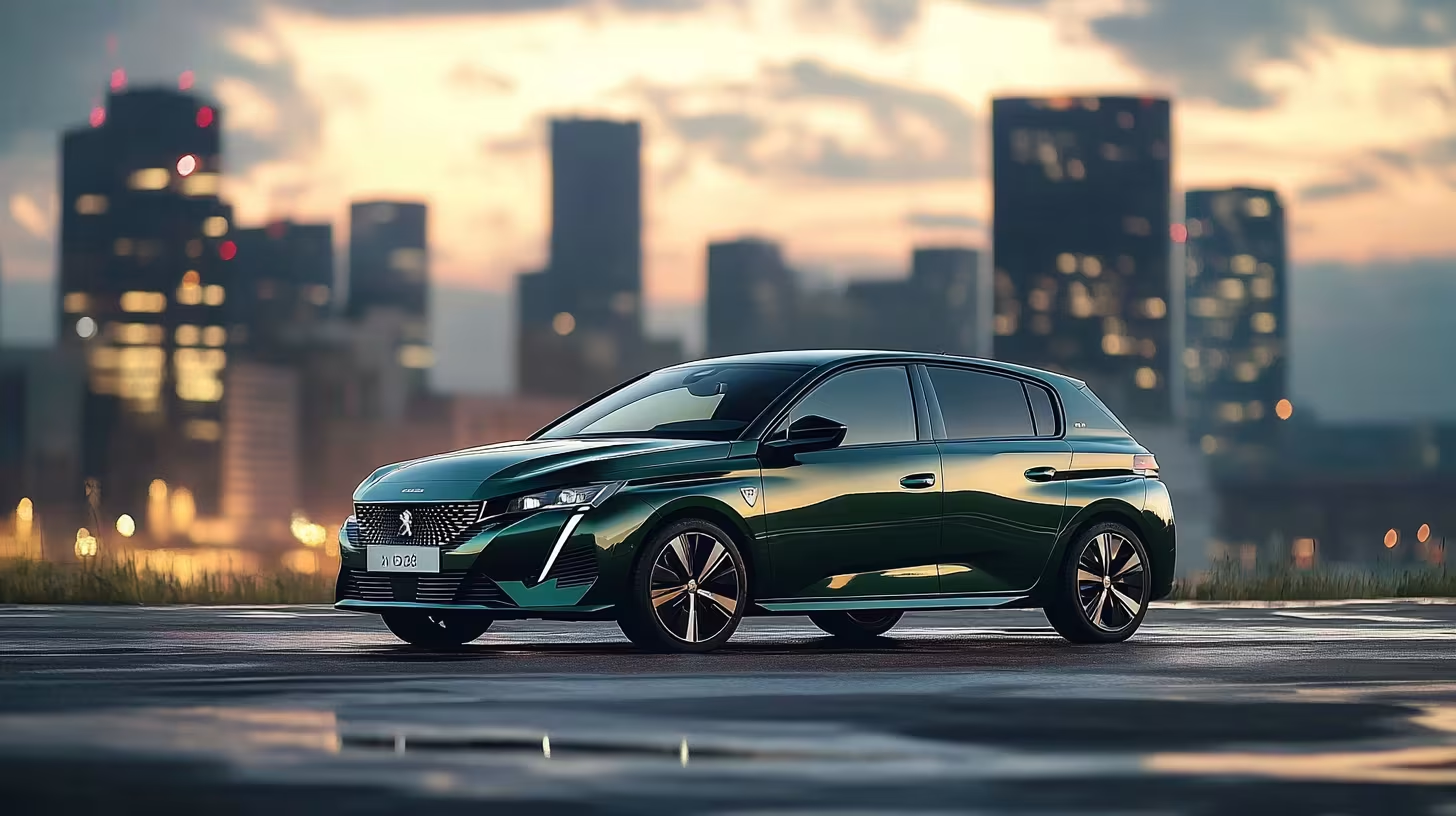
308 Range & Charging
The PHEV offers up to 60 km electric range (WLTP) on its 12.4 kWh battery, with reviewers noting 40–45km real city range and fuel use as low as 1.3–2.5 L/100 km when plugged in nightly; once the battery empties, petrol use rises to 5–8 L/100 km. The e-308’s 54 kWh battery supplies an official 400 km (WLTP), achieving 300–350 km in mixed AU use. No DC charging means home or office AC recharging at 3.7–11 kW is about 3.5–6 hours full.
Turbo and mild hybrid 308s average 4.2–6.5 L/100 km. Charging is simple at home with onboard scheduling; public charging is available for BEV, while PHEV does best on a EV charger overnight. Real-world costs and efficiency are better than most petrol hatchbacks, making the Peugeot 308 a savvy pick for city users.
308 & Solar Power
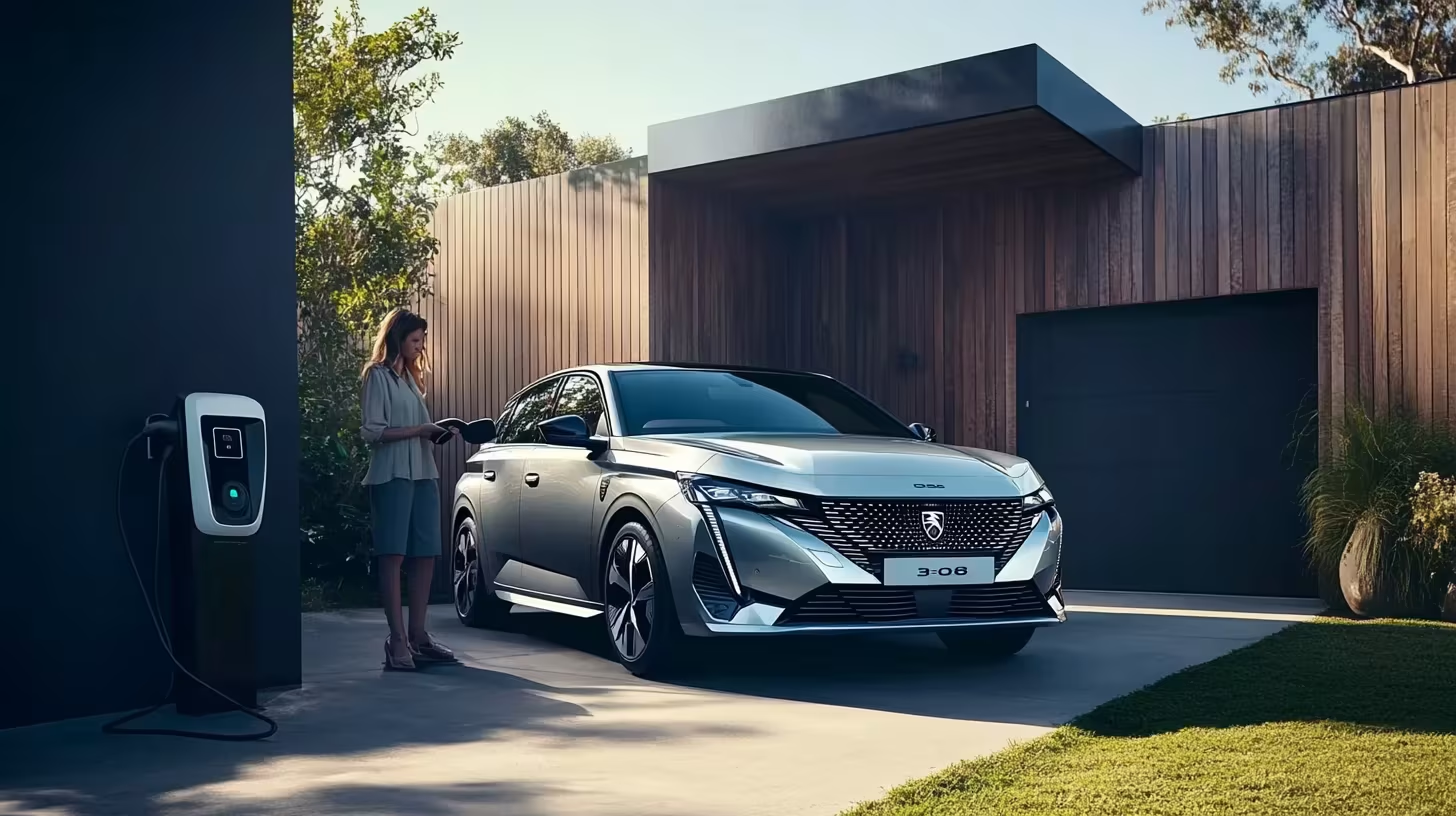
Charging a Peugeot 308 PHEV or e-308 BEV from solar panels at home dramatically reduces weekly running costs. Solar-ready EV chargeres enable scheduled, emissions-free charging for school runs or commutes—most owners see nearly free daily driving. Regular solar top-ups keep battery warranty and health strong on PHEV/BEVs. Many family and business owners now future-proof their garage by fitting a solar-compatible charger, lightening costs for both motoring and household energy. For best savings, match charger and solar setup with daily drive habits.
FAQ - Peugeot 308
What is the price of the Peugeot 308 in Australia?
The 2024 Peugeot 308 GT Sport PHEV is priced from $64,990 drive-away; the e-308 GT electric starts from $59,990, while petrol and mild hybrid models are expected below $45,000. “Peugeot 308 price”, "for sale", and "price Australia" are popular Google searches. Final price changes with paint, premium audio, and trim. Dealers may offer demo discounts or low-rate financing from time to time. Capped five-year servicing lowers total cost.
How much boot space does the Peugeot 308 offer, and is it practical for families?
The 308 hatch holds 361–412 L depending on hybrid spec; wagons stretch cargo to 512–608 L seats up, over 1,600 L seats down. “Boot space", "wagon", and "size" are prime family and commuter questions. Flat loading floor and foldable bench seats make bikes, prams, shopping or luggage easy. Rear seat and storage space matches rivals like the Golf and i30. PHEV battery slightly trims boot space but still overall roomy for class.
What real-world electric range can I expect from 308 PHEV and e-308 BEV?
The PHEV provides 40–60 km (WLTP says 60 km); most Aussies see 41–48km per full charge, while the e-308 achieves 300–350 km vs. its 400 km claim. Range varies with speed, climate, and load—city and stop-start travel best maximises EV distance. “308 plug-in range", "e-308 EV range", and "real world range" are crucial for planners. Both models use about 13–19 kWh/100km in daily drive. Regular charging locks in savings.
How does the Peugeot 308 drive compared to Golf, Mazda 3 or Corolla?
308 is punchier and more agile than Corolla Hybrid or most i30s, with nimble steering and strong off-the-line pep. Reviewers call PHEV and BEV electric drive “responsive, smooth and quietly quick," while base petrols are lively for the segment. Cornering feel is better in lighter petrol or mild-hybrid trims. “Versus Golf", "versus Mazda 3", and "mini hot hatch" are trending test searches. Only battery weight dulls some PHEVs at full clip.
What interior and tech features are standard on the Peugeot 308?
All 308s feature a 10" digital cluster, 10" touchscreen (with sat nav on GT), CarPlay/Android Auto, dual-zone climate, and wireless phone charging. PHEV/BEV include 10-speaker Focal audio, heated/massaging seats, panoramic roof, and adaptive cruise on GT trims. “308 interior", "i-cockpit", and "tech" spike for validation. High-adjust driving position divides buyers—some love, others want a lower wheel. Physical buttons remain for volume and demister.
How often do I need to service the Peugeot 308 and what does it cost?
Annual or every 20,000km, whichever comes first—five-year capped price plan keeps cost predictable (around $400/service). “Service cost", "schedule", and "warranty" are common research terms. Battery and drivetrain checks are included for PHEV and BEV at each visit. Roadside assist covers new cars for five years. Owner reviews call the maintenance plan affordable next to rivals.
Is the 308 Plug-in Hybrid or EV covered by extra warranty?
Yes—PHEV and BEV batteries are covered for eight years/160,000km, alongside five-year unlimited km car-wide warranty. "Warranty", "battery warranty", and "coverage" are major new-buyer queries. Free roadside assist, cap-price servicing, and Audi-level aftersales support add value. Routine dealer battery checks are needed for full cover. Used market supports good resale for well-serviced electrics.
How safe is the Peugeot 308, and what are its main collision avoidance features?
All 308s include AEB, lane keeping, blind spot monitoring, adaptive cruise control, and a 360-degree camera (on hybrid/BEV GT). ANCAP awarded four stars due to lack of front centre airbag, but every other major safety feature is included. “Safety", "ANCAP", and "driver assist" are must-know for families. Reviewers find warning alerts well-tuned but mention that camera and display lag can sometimes frustrate. Rear seat ISOFIX and anchors are standard.
Can I charge the 308 PHEV/e-308 at home using solar, and is the charger included?
Absolutely—[solar panels](https://topproperty.eco/solar-power) plus a [solar-ready EV charger](https://topproperty.eco/solar-installers) lets owners fuel daily drives for free. EV charger not always included, but dealers assist with install and subsidy where available. Charging at 3.7–11 kW AC is simple overnight; fast-charging is BEV only. Solar charging drops energy costs, improves battery warranty, and helps with ESG targets for business.
How reliable is the Peugeot 308 battery, and what about replacement cost?
Australian 308 PHEV and BEV batteries have proven robust, with minimal early-life failures and few real-world degradations. “Battery life", "reliability" and "replacement" spike in owner data. Coverage is up to eight years; battery replacement cost varies but expected to drop as industry scales. Dealers and techs test battery annually to ensure warranty. Most users report minimal range drop at five years’ use.
Which 308 trim—GT, GT Sport, PHEV, or e-308—is best for my family?
Most pick GT or GT Sport for balance of features, price, and resale. PHEV is ideal for city and short-range drivers with charging at home, while e-308 is the best for all-electric buyers. "Best trim", "GT vs GT Sport", and "comparison" rank in top FAQ. Lower-cost mild-hybrid is great for budget conscious. All trims have strong safety, tech, and family boot/practicality.
What about the 308 Wagon—how does it compare for boot, space, and running cost?
The 308 Wagon is longer, adds 50–100 L more boot, and expands to nearly 1,650 L with rear seats down. Still averages 5.0–6.5 L/100 km (petrol/hybrid) or 360–400 km in e-308 spec. "308 wagon", "boot space", and "touring" are rising among family researchers. Cost of running stays low with mild-hybrid or PHEV; total cost of ownership is below European rivals.
Is the 308 good for road trips or urban family use?
Absolutely—city dwellers appreciate the car’s compact size and tight turning circle; highway drivers celebrate comfort, fuel economy, and cruise tech. “Family car", "long road trip", and "urban running" see consistent user praise. EV range handles most commutes; long trips may require careful planning for fast-charging. Rear air vents, USBs, and storage keep kids and parents happy.
Are there common issues or reliability complaints with the Peugeot 308?
Latest-gen models are mostly reliable, with main issues focused on infotainment lag and the odd battery sensor glitch—usually resolved under warranty. "Reliability", "issues", and "owner review" trend among used buyers. Dealer support has improved with recent launches. Software/firmware updates cover most complaints.
What is the annual insurance and running cost for an Australian Peugeot 308?
Yearly insurance is about $1,100–$1,600 in most metro states; service costs average $350–$450, less for electrics. "Insurance cost", "service cost", and "TCO" are high-viewing terms. Registration, fuel, and brake servicing are all at the low end for fancy Euro hatchbacks. PHEV/e-308 drivers see major savings, especially with solar at home.
Can I fit roof racks, mats, or buy genuine accessories for the 308?
Yes—Peugeot dealers and major outlets offer roof racks, mats, liners, bike racks, dash cams, and child seat covers as factory-fit or aftermarket upgrades. "308 accessories", "boot mat", and "roof racks" peak every back-to-school season. All are warranty-covered if dealer fitted.
Where is the Peugeot 308 made and how is it supported in Australia?
Most 308 models are built in France or Spain, with all new cars covered by five-year, unlimited km warranty and Peugeot’s fast-expanding AU dealer network. "308 made", "dealer support", and "parts" are key new-buyer questions. Service, battery replacement, and aftersales are routinely rated positive—urban, regional, and remote locations alike.
Does the 308 plug-in need a special charger or cable, and what about public infrastructure?
Most PHEVs and BEVs use a standard Type 2 cable for home AC charging (EV charger best for PHEV/BEV), usually included. "Charger type", "cable", "public charging", and "infrastructure" are new EV queries. Public fast-charging (for BEV) is spreading in AU cities and regional sites via Chargefox and Evie.
How does Peugeot 308 hybrid or EV compare to Toyota Corolla Hybrid or VW Golf eHybrid?
308 PHEV and BEV offer longer pure-electric range (up to 60km and 400km respectively) than Corolla or Golf, and matches on tech. "308 vs golf", "vs corolla hybrid", and "PHEV compare" all spike in value and buying research. Boot and cargo fit are even, but Peugeot runs cheaper when plugged in nightly. Safety and comfort comparable; Peugeot offers more flair for the money.
Find EV Chargers & Solar Power by State
Discover charging infrastructure and solar power options for your PEUGEOT 308 in your state:
*Disclaimer: This page includes information, descriptions, and images that may have been created or enhanced with the assistance artificial intelligence, powered by our proprietary Ray-i (AI) technology system. While we do our best to ensure accuracy, specifications and details can vary between models, regions, and over time as manufacturers make updates. Images are for illustrative purposes, and the content is provided for general reference. For the most up-to-date specifications or features, we recommend checking directly with the manufacturer or your local dealer.