

E Transit
FORD
E Transit Introduction
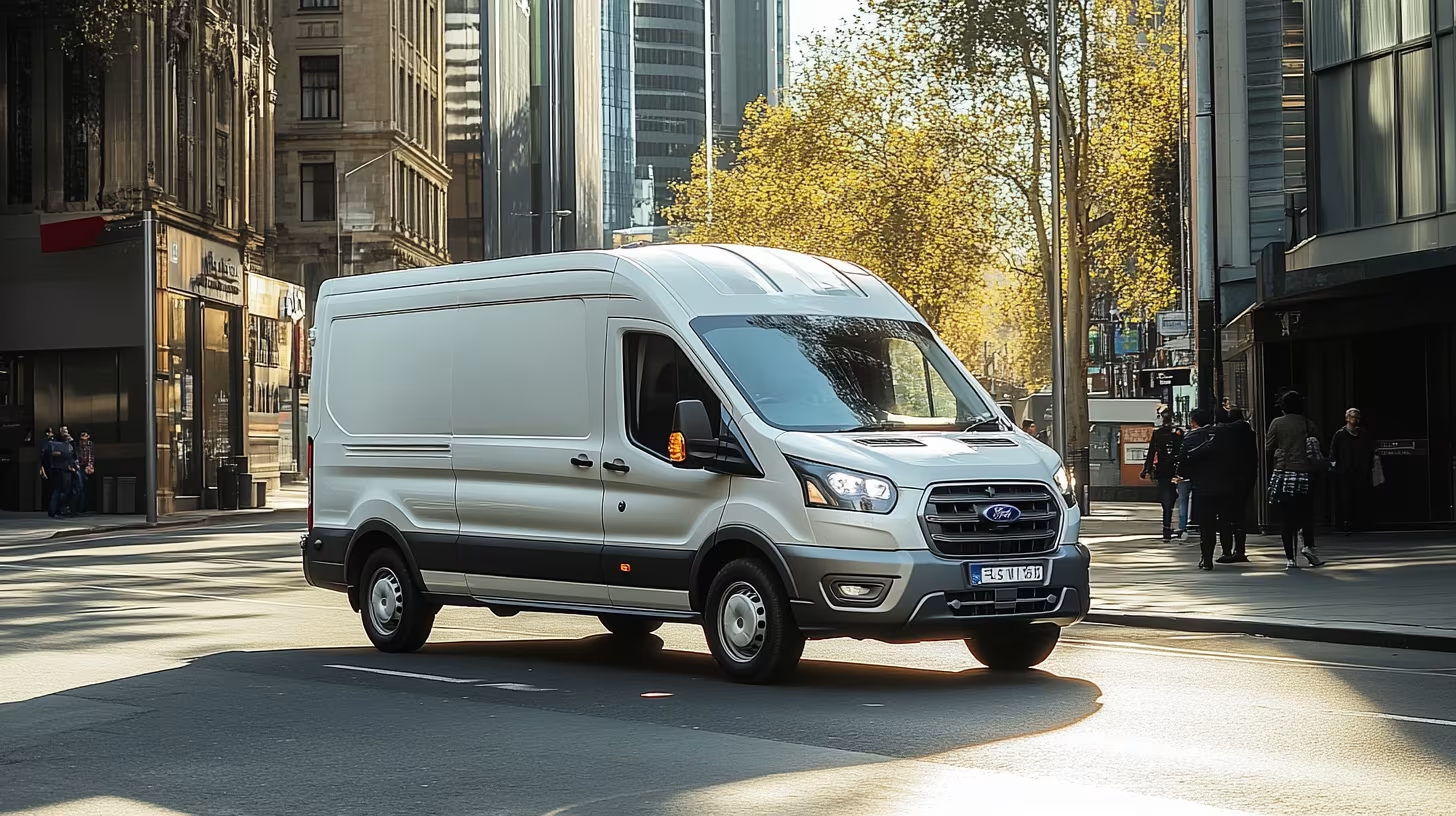
The Ford E-Transit Custom is the game-changer for tradies, couriers, and businesses needing full-size van capability with the benefits of electric driving. As Ford's first electric Transit van for Australia, it builds on decades of trusted commercial van experience and brings a 198kW electric motor, rear-wheel drive, and up to 256km WLTP range, powered by a big 89kWh battery. Whether you’re after the standard cargo configuration, need a mid-roof or custom-length van, or want the full connectivity of Ford’s SYNC 4 and wireless CarPlay/Android Auto, the E-Transit Custom is tailored for modern work. Its payload tops out at 1,616kg, making it one of the most practical e-vans in its class. Smart, intuitive tech like a 12-inch touchscreen, adaptive cruise, and innovative driver aids ensure your daily grind is safer and easier.
On the road, the E-Transit’s instant torque brings brisk acceleration at any traffic light, and regenerative braking recoups energy, offering city-friendly one-pedal driving. Fast AC/DC charging capabilities mean less downtime, with 10–80% top-ups in as little as 34 minutes on a rapid charger. An eight-year battery warranty backs up Ford’s commitment to commercial buyers, integrating with the brand’s established service network. While its range won’t suit cross-country couriers, for metro and regional fleets, the E-Transit Custom is a ruggedly built, future-proof answer to rising emissions rules and fuel costs.
Available models

Want Solar Finance Options?
Compare lenders and get tailored loan offers.
E Transit Performance & Power
The E-Transit Custom stands out for its brisk, silent driving experience—especially in city traffic. Reviews like Rod Chapman (Carsales) say, “It’s fast enough for an LCV, and with acceleration that sees many other vehicles shrinking in your mirrors.” Alex Misoyanis (Drive) highlights near-instant pedal response, especially in Normal and Sport modes, and says the van delivers "performance that is brisk compared to a diesel van." Output is a headline 198kW and 430Nm—making it the most powerful regular Transit Custom variant ever offered in Australia.
With a single-speed automatic and well-weighted rear-wheel-drive platform, low-speed handling is reassuring and acceleration is surprisingly strong for a vehicle of its size and weight. Regenerative braking modes (including one-pedal driving) take only a few minutes to master, helping extend the real-world range. Scott Collie (CarExpert) cautions, "Put your foot down and there’s no Tesla-style shove in the back," but most reviewers agree the E-Transit Custom offers all the urgency and drive-ability that daily couriers demand. Traction is well-managed, even with maximum payload.
E Transit Interior & Design
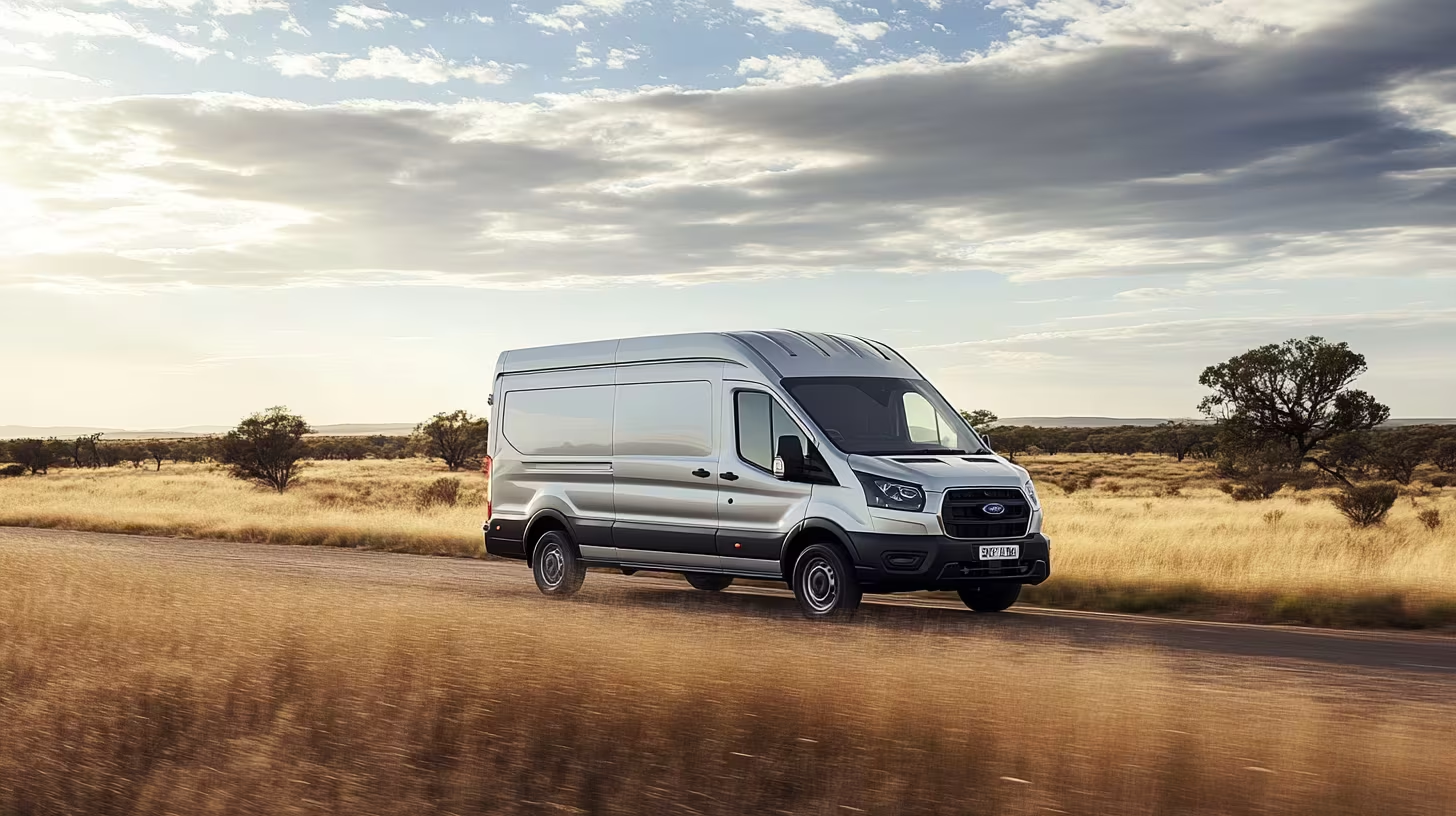
Despite a functional exterior, the E-Transit Custom’s cabin is one of the most practical and refined in the segment, showing Ford’s deep trade-van engineering experience. Rod Chapman (Carsales) calls attention to “near car-like refinement,” with wide cross-cabin access, impressive foot-room, and robust yet thoughtfully appointed materials. Alex Misoyanis (Drive) was impressed by clever tricks like a tilt steering wheel rim doubling as a laptop table or lunch tray. Scot Collie (CarExpert) highlights the commanding high-seating position, ideal for city and depot use, and notes "you sit high, looking down over a stubby little bonnet…”
Cargo space and payload remain the van’s strong suit, with up to 11.3 cubic metres in the largest versions—ready for bulky gear or pallet delivery. There’s a row of storage cubbies, generous door pockets, and a modern adjustable driver’s seat, although some lower interior plastics feel less plush than similarly priced SUVs. The Mobile Office and MS-RT packs are a hit among reviewers, giving urban delivery drivers the tech and comfort they’d expect from a modern office car.

E Transit Technology & Safety
Ford’s SYNC 4 system with a 12-inch central touchscreen sets the tech tone—fast, modern, and loaded with business-relevant EV features. Peter Watt (quoted by Rod Chapman, Carsales) calls it “the next generation of connected, electrified vehicles… like smartphones on wheels.” Wireless Apple CarPlay/Android Auto, crisp navigation, and a tidy 180-degree rear camera mean less fuss and safer city reversing. Scott Collie (CarExpert) notes fleet managers and drivers can "check on their remaining range/charge status from their phones,” making logistics easier.
Alex Misoyanis (Drive) acknowledges that “key climate-control functions... require the driver to take their eyes off the road,” a minor gripe with the otherwise intuitive dash layout. Safety tech covers adaptive cruise, automatic emergency braking, lane keep assist, blind-spot, and available 360-degree camera (varies by trim). Cabin air-conditioning, simple keyless start, and active range monitoring all help cement the E-Transit Custom as an up-to-date transport tool.
E Transit Range & Charging
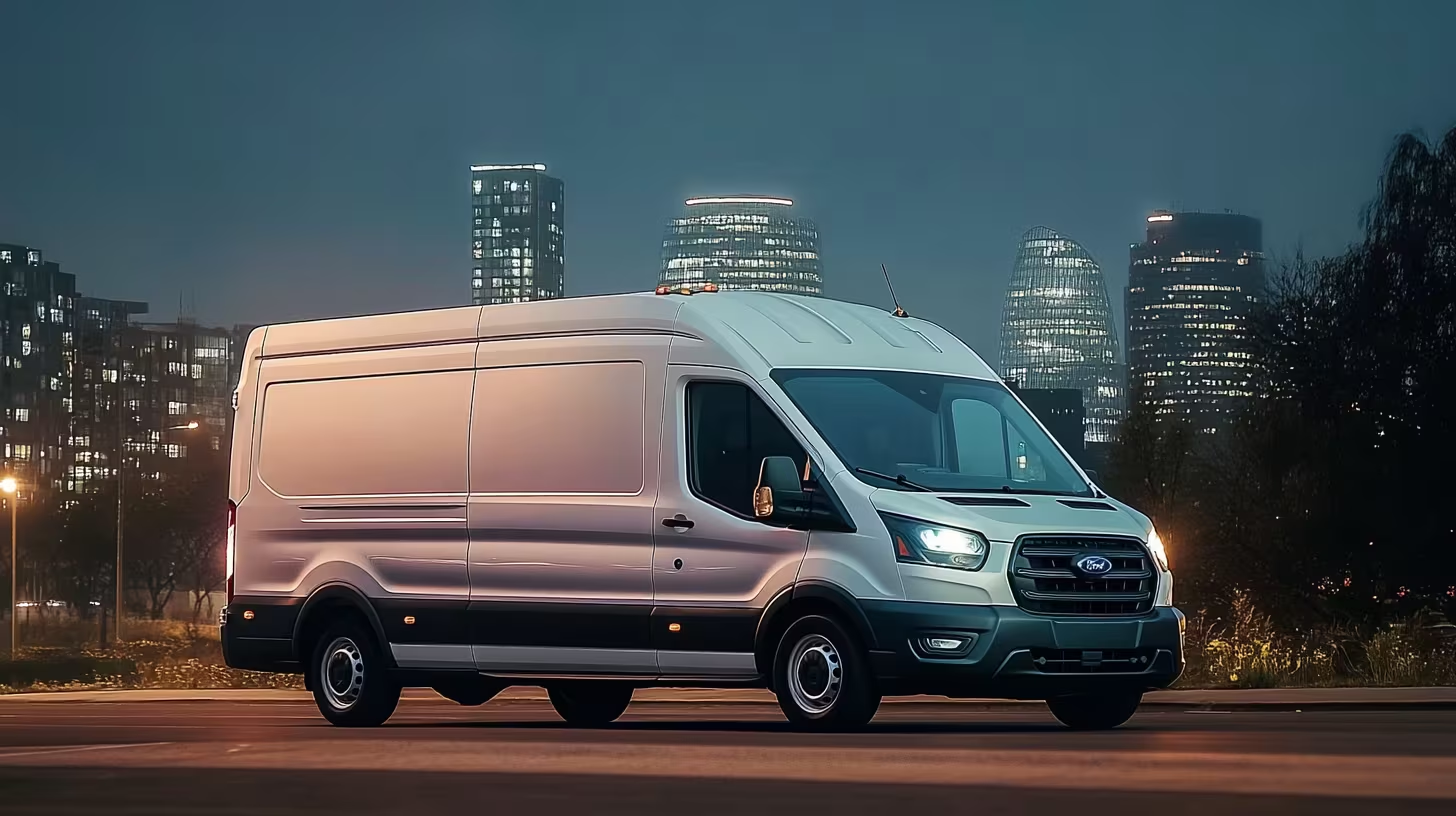
Real-world range for the E-Transit Custom hovers between 250–320km depending on load and conditions—easily enough for urban and regional commercial runs. Alex Misoyanis (Drive) reports, “Ford Australia claims a driving range of 337km for the E-Transit Custom.” At an average consumption of around 20kWh/100km (Tom Place, Chasing Cars), most drivers should cover a day’s work with range to spare. DC fast-charging at up to 115kW gets you from 10–80% in roughly 34 minutes (or about 82km from a 10-minute top-up, per Rod Chapman, Carsales), and 11kW AC charging suits overnight or depot use.
Charging at a regular wall socket is slow—best reserved for overnight fills at the depot or in emergencies—but every van comes with all the cords needed for home or work. Drivers can schedule charging for off-peak hours, helping keep bills down. Heavy towing or highway loads can affect range, so most operators will plan routes with payload and logistics in mind. For fit-out and charger install, find a local solar installer EV specialist.
E Transit & Solar Power
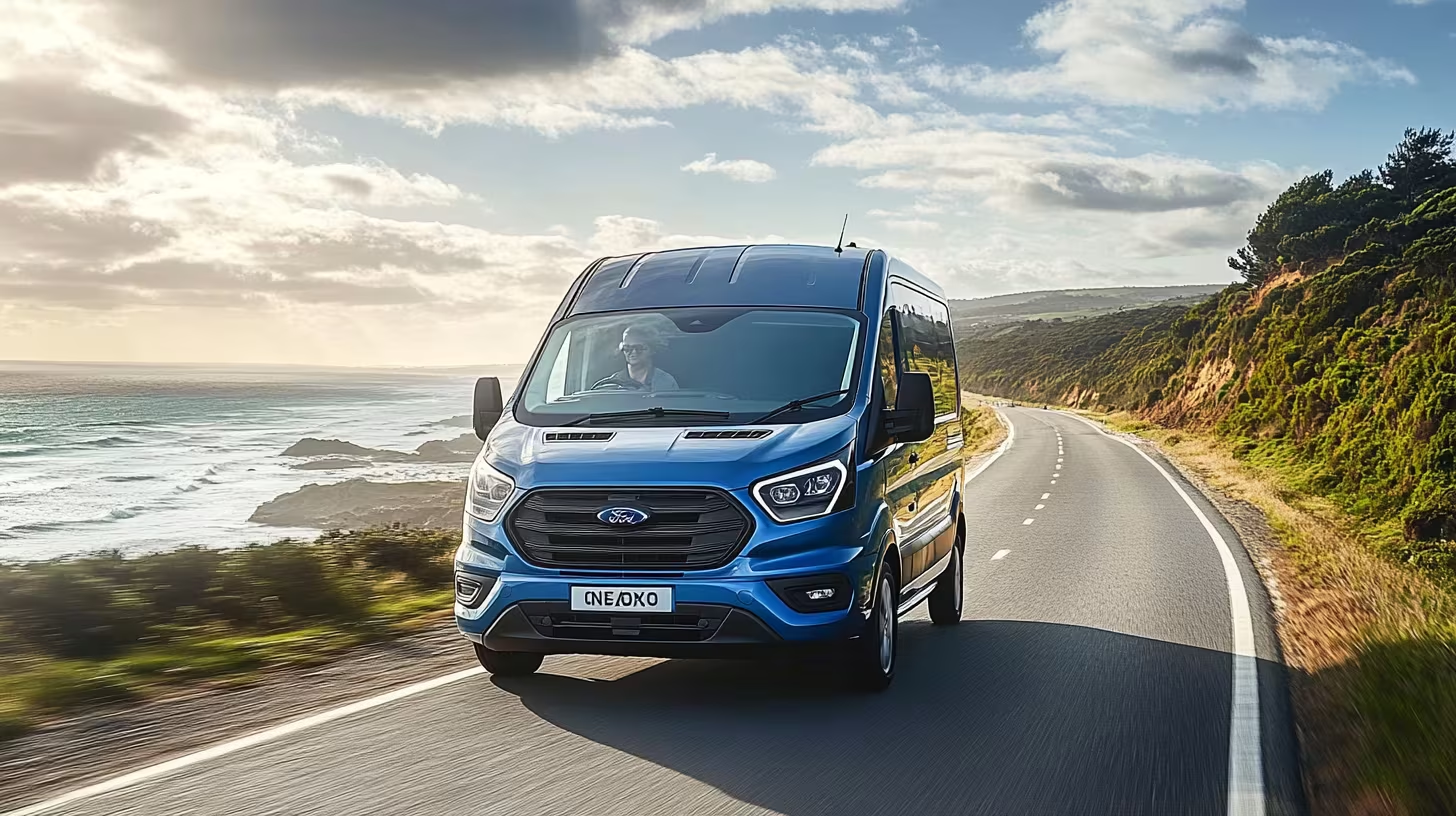
For many Australian businesses, pairing the E-Transit Custom with depot or home solar makes long-term sense—enabling most daytime deliveries or service calls to run on free sunlight. With an average 89kWh battery and modest daily use, most commercial solar systems can manage full or partial recharging during work hours or overnight. Charging during sunny weather shrinks utility bills and helps businesses meet growing emissions targets.
Smart depot chargers or home EVes can be linked with rooftop panels, enabling scheduling to soak up the most generation and reduce grid reliance. For buyers planning solar integration, get a tailored quote or find a solar installer here. As cities tighten emissions zones and offer more EV incentives, running on solar is a practical payback solution for forward-looking trades and fleets.

FAQ - Ford E Transit
What is the price of the Ford E-Transit Custom in Australia?
Prices start from $89,990 for the base 420L and up to $104,990 for the mid-roof 425L, both before on-road costs. These numbers are competitive for a full-size electric van but are higher than petrol/diesel variants. Dealer offers and government rebates can reduce effective price. “ford e-transit price” and “ford e-transit australia price” are popular for current offers.
How far can the Ford E-Transit Custom travel on a single charge?
Ford claims up to 256km (WLTP) range—real-world testing by Australian reviewers sees up to 320km with moderate loads and city driving. Energy use rises with heavy payloads or highway runs. Most urban routes are easily covered on one charge,"ford e-transit range" is a standard research topic for business/fleet buyers. Quick DC charging helps top-up during the workday.
Is the Ford E-Transit van practical for Australian tradies and fleet work?
Absolutely, thanks to its 1,616kg payload (variant-dependent), spacious cargo hold (up to 11.3m³), and robust build quality. Reviewers love the high seating position, cross-cab access, and smart interior storage. It handles city jobs, depot runs, and even light regional hauling with ease. The only caveat is planning for range and charging downtime.
How fast does the E-Transit Custom charge at a public fast charger or home EV?
Fast DC (115kW) recharging achieves 10–80% in about 34 minutes, perfect for depot breaks or quick top-ups en route. AC charging at 11kW fills the battery overnight (or 7–9 hours total). A regular power socket works in a pinch but is slow for daily operation. “Ford e-transit charging” and "specs" cover plug type, timing, and charging plan.
Are there different versions of the E-Transit Custom available?
Yes; buyers can select from two main wheelbase/cargo configurations—the base 420L and higher-roof 425L—with trim and feature packages suited to different trades. More variants, heights, and fit-outs may be added as demand grows in Australia. "ford e-transit custom ms-rt" and "camper" variants are rising queries online. Check with your Ford dealer for the latest AU line-up.
What warranties does Ford provide for the E-Transit Custom in Australia?
You get a five-year, unlimited-kilometre vehicle warranty and an eight-year/160,000km battery warranty for peace of mind. These match or beat many rivals and underpin Ford’s commitment to commercial EV support. All servicing and warranty work is covered through accredited Ford workshops. Buyers value the local support network and regular software updates.
What is the payload capacity and cargo space for the Ford E-Transit?
Payload maxes out at 1,616kg for top variants, and total cargo volume is as high as 11.3m³—among the best in its segment. Buyers can spec layouts for shelving, refrigeration, or mobile workstations. The van is built for large tools, appliances, or multiple pallet delivery. Internal tie-downs and tough materials keep loads secure.
How does the Ford E-Transit Custom perform compared to a diesel van?
Most reviewers say the E-Transit is faster, smoother, and more enjoyable at low speeds, with instant torque for traffic or park maneuvers. It’s very quiet and refined (Rod Chapman, Carsales) but less suitable for cross-country driving due to range. Regenerative braking (with one-pedal mode) and custom drive settings are popular features. The extra weight is managed well but affects energy efficiency compared to lighter ICE vans.
Can the E-Transit Custom be converted into a campervan or used for off-grid work?
Yes—electric vans are increasingly popular as campers or mobile workshops, using their big batteries for off-grid power. Provided you plan routes and charging stops, the E-Transit supports many conversion options. Solar-compatible workshops or chargers can be added easily. For vanlife options, check "ford e-transit camper" or MS-RT packages.
Is the Ford E-Transit Custom eligible for Australian EV grants or tax breaks?
Many state governments now offer rebates, lower stamp duty, or road tax savings for new commercial EVs including the E-Transit Custom. Business buyers should discuss instant asset write-offs and ongoing FBT or fuel savings with their tax advisor. Policy and incentive size depend on your location and use case. Always look up "ford e-transit australia" rebates and grants before you buy.
What safety tech is offered on Ford E-Transit Custom?
Key features include adaptive cruise, lane keep assist, AEB, blind-spot alert, rear-cross traffic alert, and a high-def 180° reverse camera; a 360° camera is available in some trims. Cabin airbags, robust structure, and advanced EV monitoring are standard. Ford’s safety suite makes the E-Transit a top pick for urban drivers and fleets. Features may vary by exact model and order.
How does the Ford E-Transit Custom compare with other electric vans in Australia?
It matches or leads in cargo space and payload, and outperforms competitors for on-road refinement, tech, and aftersales support. BYD and LDV electric vans offer longer claimed range, but E-Transit’s drive experience and Ford’s dealer/service reach are a plus. For price and feature comparisons, search “ford e-transit vs transit” or compare with major fleet platforms.
Can I charge the Ford E-Transit Custom using solar at home or depot?
Yes—home or depot solar systems can cover daily charging needs, helping slash running costs. Mid-day charging is optimal for solar use, while overnight rates stay low with smart scheduling. Businesses often see payback in 3–4 years through energy savings compared to fuel. [Connect with a local commercial solar/charger installer here](https://topproperty.eco/solar-installers) for advice.
What is the service interval and cost for the Ford E-Transit Custom?
Annual (or 15,000km) maintenance covers general checks and digital battery/EV system scans. Electric vans require less maintenance than diesels due to fewer moving parts—owners save on oil, belts, and engine service. Most Ford dealers offer tailored commercial plans. “ford e-transit warranty and service” is a regular fleet manager question.
Which businesses are best suited to the E-Transit Custom?
Best for metro/fleet courier, delivery services, mobile trades (plumbing/electrician), and public sector fleets with a daily fixed run under 250km. Trades needing refrigeration, clean air, or quiet operation will benefit most. Rural/country or heavy towing operations should consider range, payload, and charger access in their plans. Ask for demo models or trials if unsure.
Can you fit shelving, refrigeration, or custom racking in the E-Transit Custom?
Yes—the flat floor, tough tie-downs, and ample internal height mean almost any mobile fit-out is possible for trade, catering, or parcel delivery. Ford’s partner network can help tailor vans for each business, including solar or battery upgrades. Custom builds add some cost but may qualify for tax write-offs. Advanced EV integration supports power tools and mobile data use.
Does the driving experience differ from regular diesel Transit Custom vans?
Drivers say the EV is smoother, quieter, and accelerates faster at low speeds—making city traffic less stressful. Ride height, space, and handling are familiar to regular Ford van users. Battery weight affects efficiency but not load capacity for most jobs. Traders enjoy reduced fatigue and running costs.
Are quick “one-pedal” driving and strong regen available?
Yes—multiple levels of regenerative braking and genuine single-pedal driving let users recapture range in stop/start traffic. Modes are easy to select via the touchscreen. Most find the system easy to learn and efficient for courier work. Drivers can always revert to coast or blending braking if preferred.
Is the warranty and support network extensive in Australia?
Yes—Ford’s five-year, unlimited-kilometre warranty and established dealer network ensure most repairs and support are never far away. Battery and EV drivetrain have a dedicated long-term warranty. National parts supply and workshop coverage is a Ford strong point versus new market entrants.
Where is the Ford E-Transit Custom built, and does that matter?
E-Transit Customs for Australia come from advanced Ford facilities in Turkey or Germany (depending on year and supply chain). Build quality, safety, and tech are global-standard. Location is less critical than warranty and service support—which Ford ensures locally across all states.
Find EV Chargers & Solar Power by State
Discover charging infrastructure and solar power options for your FORD E Transit in your state:
*Disclaimer: This page includes information, descriptions, and images that may have been created or enhanced with the assistance artificial intelligence, powered by our proprietary Ray-i (AI) technology system. While we do our best to ensure accuracy, specifications and details can vary between models, regions, and over time as manufacturers make updates. Images are for illustrative purposes, and the content is provided for general reference. For the most up-to-date specifications or features, we recommend checking directly with the manufacturer or your local dealer.