

Forester Hybrid
SUBARU
Forester Hybrid Introduction
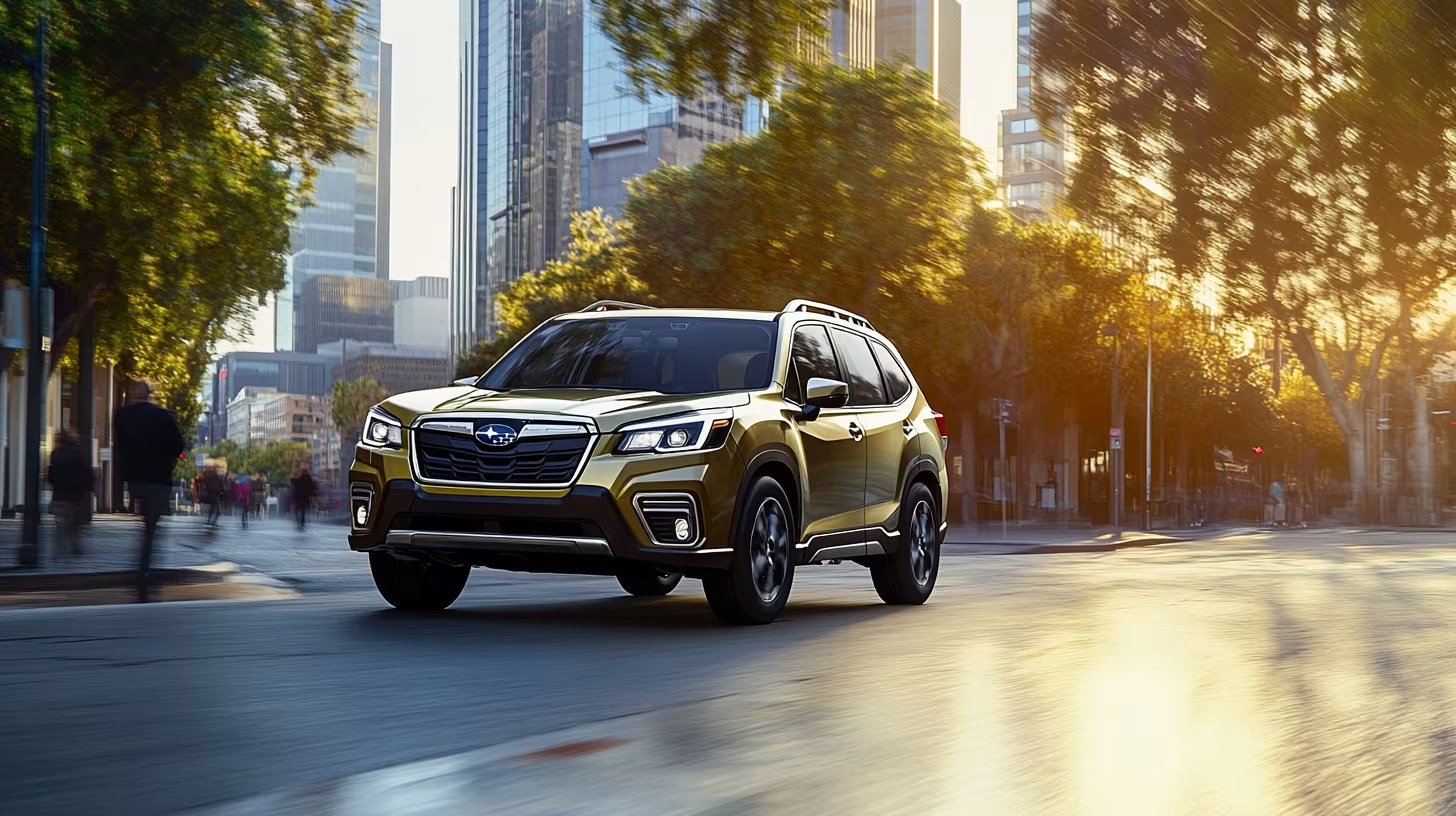
The Subaru Forester Hybrid is one of Australia’s best-known AWD SUVs, offering rugged crossover practicality alongside better city fuel economy and lower emissions than its petrol-only siblings. Built around Subaru’s signature symmetrical AWD and the EyeSight® safety suite, the latest Subaru Forester Hybrid (also known as the e-Boxer) features a 2.0L four-cylinder engine paired with a 12.3kW electric motor, adding electric torque at low speeds for smoother city takeoffs and traction on slippery roads. This mild hybrid setup improves urban efficiency—helping the Subaru Forester Hybrid achieve a combined fuel consumption of 6.7L/100km—while retaining 220mm ground clearance and the go-anywhere spirit that sets the Forester apart.
Owners can pick from well-equipped L AWD and the more luxurious S AWD, both with 5 seats, a 498-litre boot (up to 1,779L with seats folded), and a split-folding rear bench. The cabin’s pin-sharp 11.6-inch touchscreen, Apple CarPlay/Android Auto, heated seats, adaptive cruise, blind spot and rear cross-traffic alert, and a full suite of airbag and camera-based safety systems ensure safety and connectivity on the go. All Subaru Forester Hybrid models come with a five-year/unlimited km warranty, an eight-year/160,000km hybrid battery warranty, and 12-month/12,500km service intervals. Suitable for adventurers, families, and urban commuters alike, the Subaru Forester Hybrid stands out for combining future-focused hybrid tech with genuine off-road and towing ability for the Aussie lifestyle.
Available models

Want Solar Finance Options?
Compare lenders and get tailored loan offers.
Forester Hybrid Performance & Power
Power in the Subaru Forester Hybrid comes from a 2.0L flat-four engine and a compact electric motor, blending for 110kW and 196Nm through a CVT to all four wheels. James Fossdyke (CarExpert) notes, “When pushed hard, our 2.0-litre test car made quite a lot of noise and didn’t have that much power on hand,” and John Cadogan (AutoExpert) refers to the electric system as “a hybrid in name only.” Around town, reviewers appreciate how electric torque smooths out stop-start and boosts efficiency, making short commutes noticeably quieter.
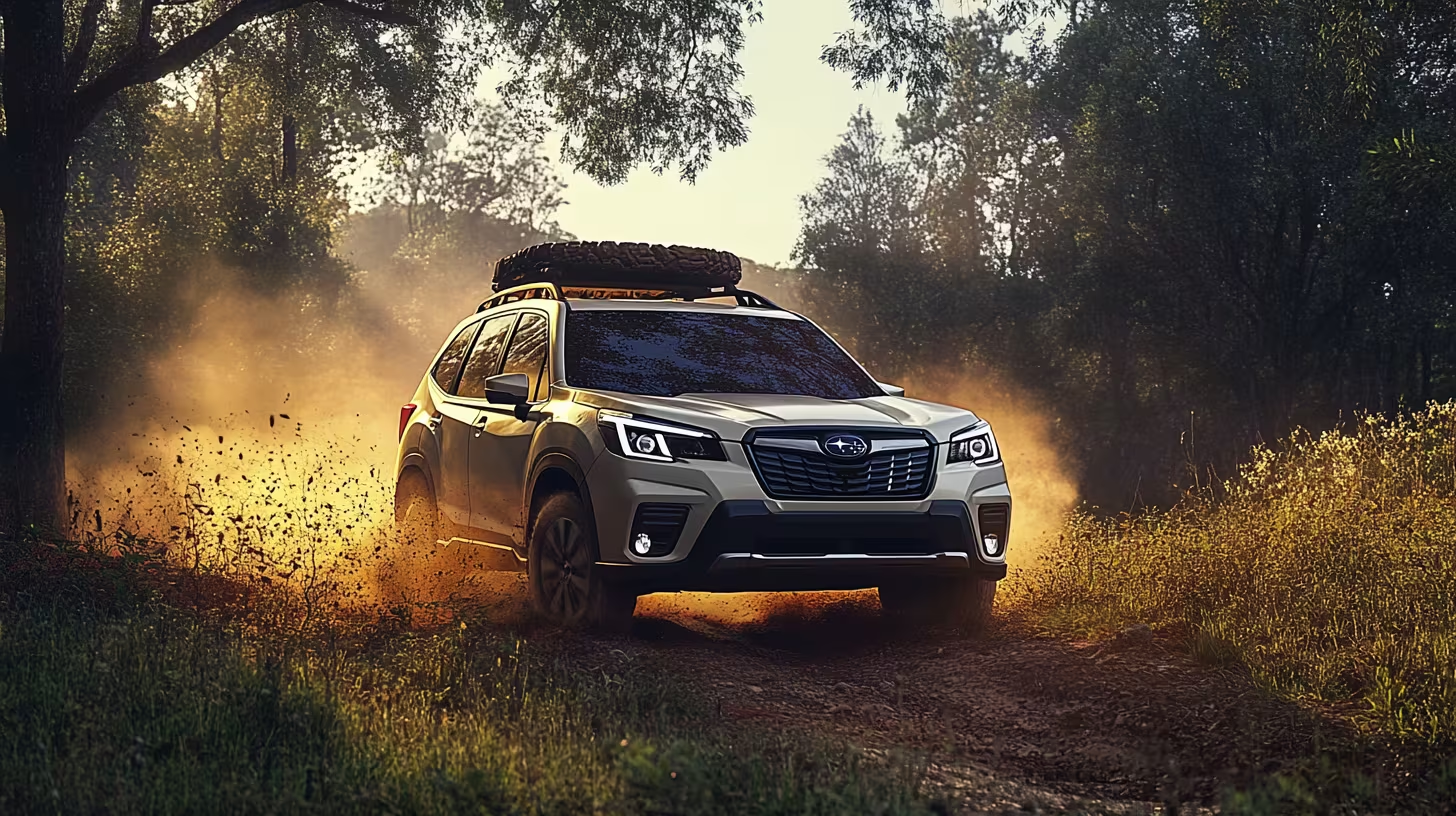
AWD grip is always present, and low-end torque helps the Subaru Forester Hybrid gain traction on gravel or when towing up to 1,200kg (braked). The hybrid’s response at highway speeds and during overtakes remains a step behind turbocharged or large-capacity petrol SUVs. Still, reviewers agree the Forester Hybrid’s refined, sure-footed handling in poor weather or light dirt outpaces most crossovers.
Forester Hybrid Interior & Design
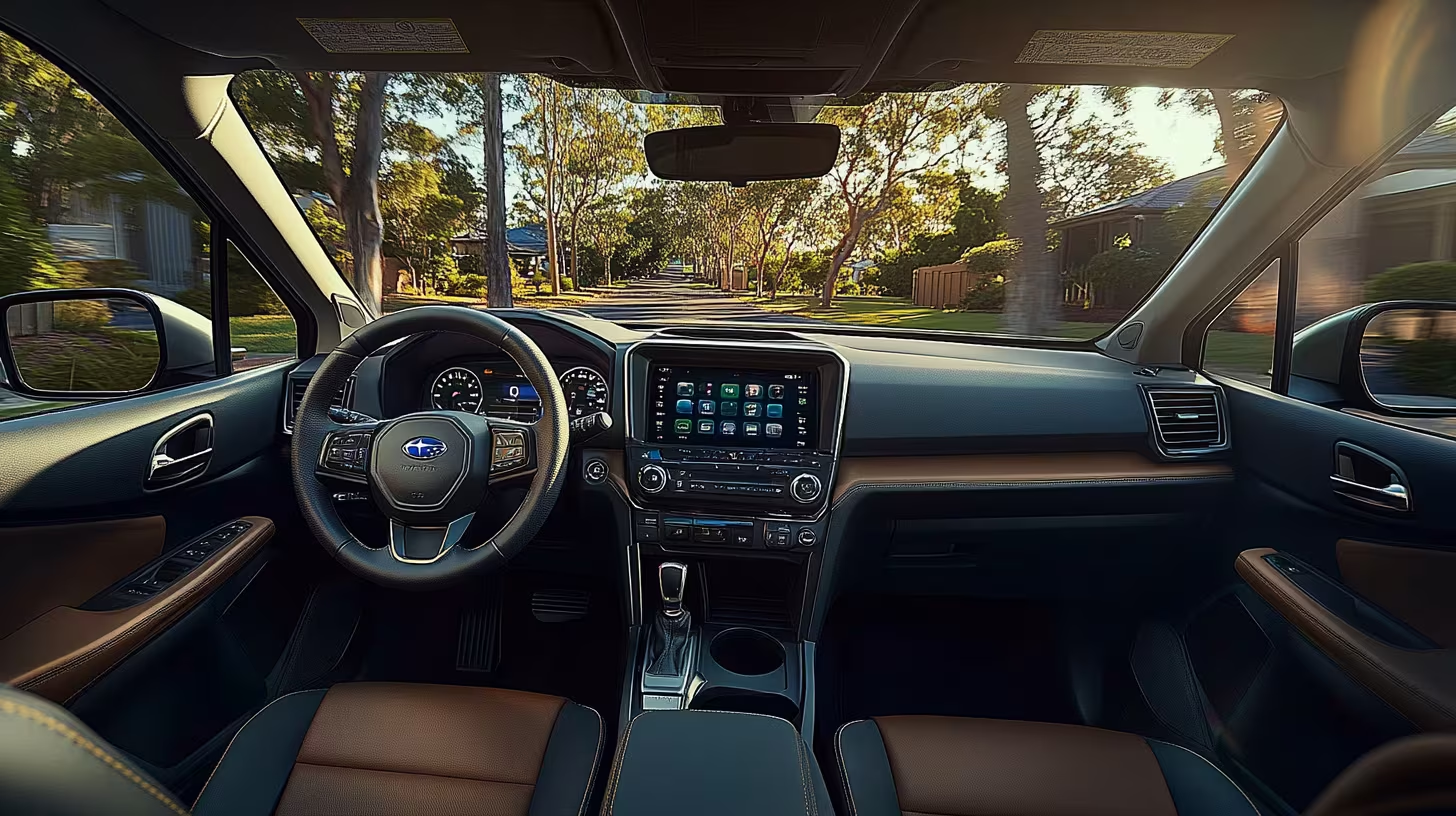
Practicality and visibility are hallmarks of the Subaru Forester Hybrid’s cabin, with Emily Agar (CarsGuide) remarking, “It’s a bit old-school inside, with the traditional gearshifter, CD player... but it just makes this look more capable.” While the style is sturdy and functional, critics like Fossdyke (CarExpert) and Cadogan (AutoExpert) ding dated infotainment graphics and hard plastics for feeling more utilitarian than plush. Still, reviewers consistently praise the comfort and space for five adults, the low load lip for boot access, and ample cubby storage.
The S AWD brings leather-accented seating, power tailgate, heated seats, and a sunroof for a family-friendly upmarket vibe. Forester’s wide-opening rear doors—plus a seat design mapped for child seat anchors—make pram loading and kid wrangling notably easier than in most rivals. LED lighting and soft ambient details freshen the look, but luxury car seekers may find the finish behind RAV4 Hybrid or Mazda CX-5.
Forester Hybrid Technology & Safety
All Subaru Forester Hybrid models (L, S) use an 11.6-inch portrait touchscreen, digital/integrated instrument display, wireless Apple CarPlay/Android Auto, and DAB+ radio. Subaru’s EyeSight® Driver Assist tech is “robust… with fatigue monitor, AEB, adaptive cruise, lane keep, blind spot, and rear cross-traffic,” (Emily Agar, CarsGuide). Reviewers still call the camera-based suite effective, but John Cadogan (AutoExpert) highlights that “the [Forester] current version... was tested in 2019… and is not as safe as newer-platform rivals.”
Physical climate dials are retained for usability; infotainment isn’t as quick as some rivals and lacks over-the-air updates. Standard cameras, 5-star ANCAP (adults and child >85% score), and seatbelt reminders suit family buyers. Only high-end variants add 360-degree camera; all models feature robust structural protection and full curtain airbags.
Forester Hybrid Range & Charging
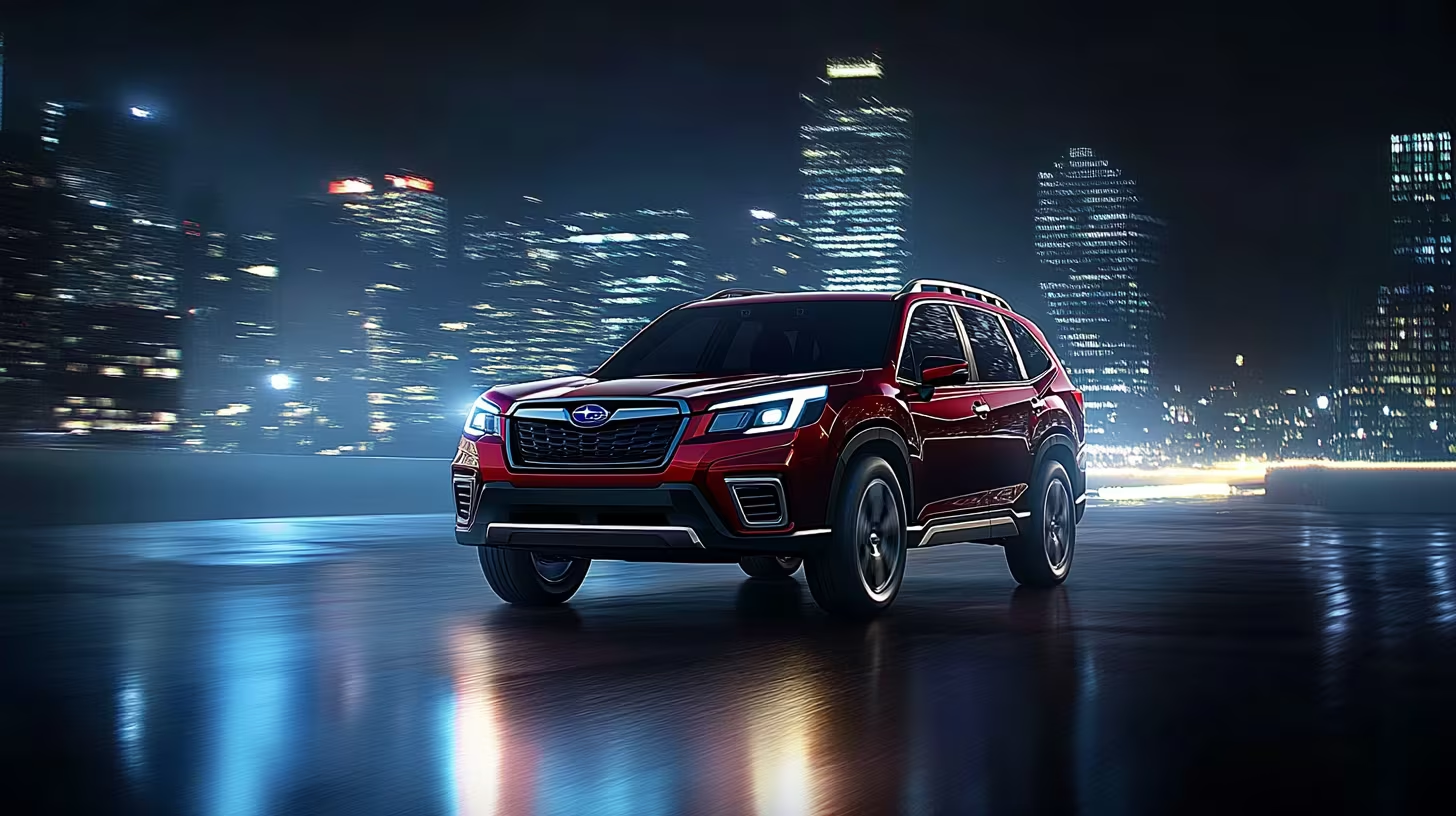
Official combined use for the Subaru Forester Hybrid is 6.7L/100km; reviewers like Fossdyke (CarExpert) and Cadogan (AutoExpert) note that urban use can dip into the low 6’s, while highway and loaded runs climb to 7.5L/100km or higher. Around town, the hybrid system is “up to 40 per cent more efficient than the standard model” (Fossdyke, CarExpert), though the electric motor is modest and provides limited ‘EV-mode’ solo driving.
With a 48L tank, range is typically 650–700km per fill; the battery recharges on the go via engine overrun/braking. There’s no plug-in capability; it’s self-charging only. Maximum braked towing is 1,200kg—lower than turbo or full-petrol 4WDs but in line with most hybrids. Forester’s proven AWD is a standout for dirt, snow, or holiday hooks.
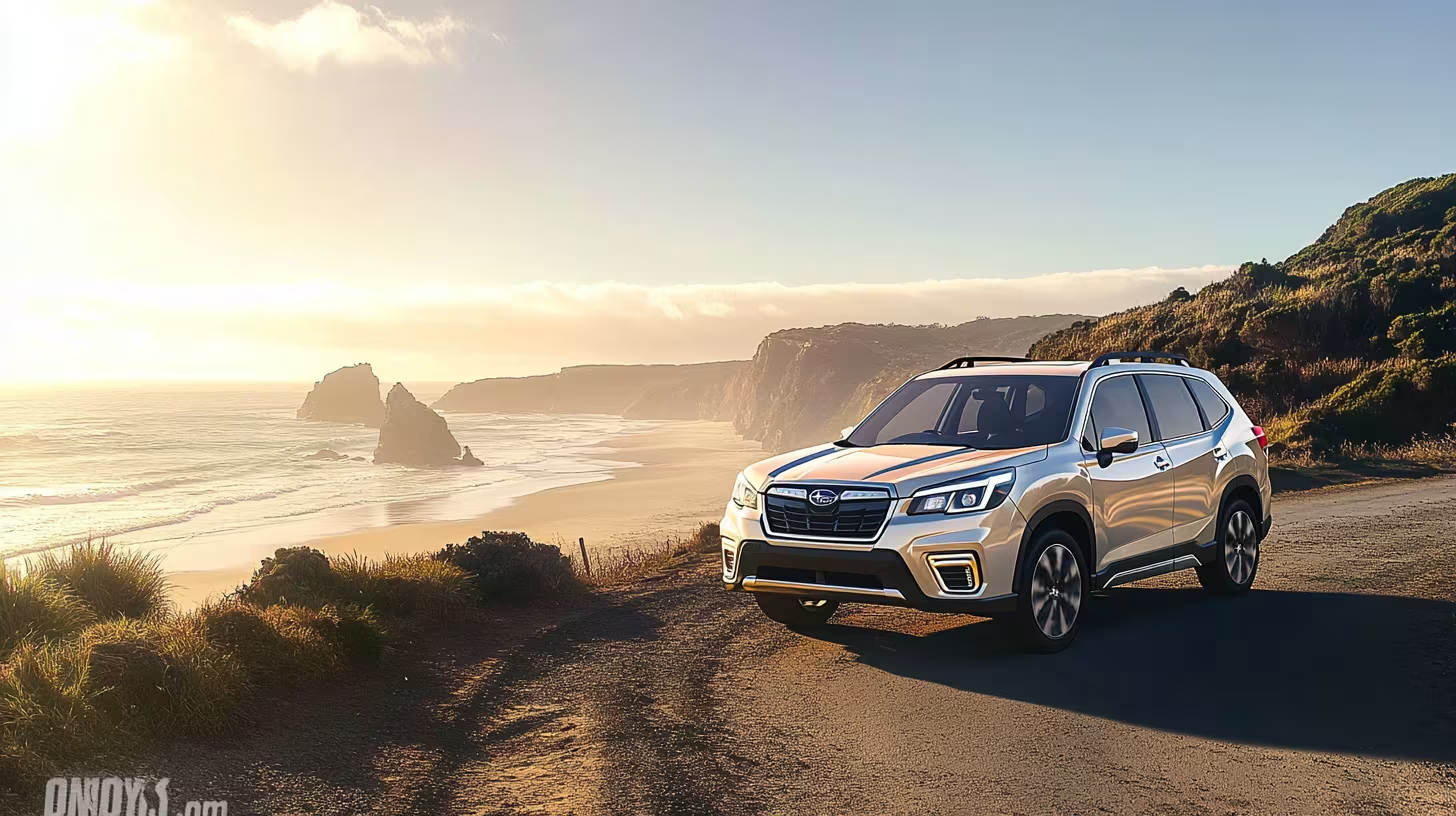
Forester Hybrid & Solar Power
Pairing a Subaru Forester Hybrid with home solar panels is one of the best ways to keep fuel bills and emissions down as an urban family or fleet owner. By running your household appliances or charging station on solar energy, you effectively cut the “refueling” cost for your Forester Hybrid—even though it’s not a plug-in, savings on home energy leave more in your pocket compared to petrol-only SUVs. This synergy pays off fastest for commutes and errands, with typical Aussie households recouping their solar investment in 2–3 years against rising power and petrol prices. If you’re looking to future-proof your family car with hybrid efficiency and a solar home, find a local installer for tailored solar solutions and charger prep. Combining a Subaru Forester Hybrid with renewable energy strategies creates a ready-made path to lower running costs for years ahead.
FAQ - Subaru Forester Hybrid
What is the price of the Subaru Forester Hybrid in Australia?
Subaru Forester Hybrid pricing starts from $44,090 for the L AWD and $50,140 for the S AWD drive-away, with promotional pricing, finance, and accessories sometimes available at extra cost. “Subaru Forester Hybrid price,” “price Australia,” and “for sale” are popular queries for city and family buyers. Higher variants include more comfort and tech features; all get five-year/unlimited km warranty and eight-year/160,000km battery cover. Contact your local dealer for the most up-to-date on-road pricing and current offers.
How fuel-efficient is the Subaru Forester Hybrid compared to rivals like the Toyota RAV4 Hybrid?
Official fuel consumption is 6.7L/100km combined, but real-world testers see anywhere from low 6s in city use to 7.5L/100km and above on the highway or with heavy loads. “Subaru Forester Hybrid fuel consumption” and “fuel economy” are rising AU buyer questions. Compared to the Toyota RAV4 Hybrid (≈4.8L/100km), Forester is slightly less efficient due to a smaller hybrid battery and AWD drivetrain. City efficiency is a stand-out for Forester, and AWD gives it more confidence in bad weather or on adventure weekends. For families prioritising economy, both Forester and RAV4 Hybrid are compelling choices.
How does the Subaru Forester Hybrid’s AWD system compare to petrol or Toyota RAV4 Hybrid?
Every Subaru Forester Hybrid uses symmetrical all-wheel drive, giving it constant grip and sure-footed traction on gravel, dirt tracks, or slippery roads—unlike many “on-demand” hybrid SUVs. Marton Pettendy (Carsales) finds the hybrid’s off-road ability “helped by good ground clearance and Subaru’s active X-Mode.” While Toyota’s AWD Hybrid is electric motor-driven at the rear, Subaru’s system is mechanical, proven and more consistent across conditions. Both make for confident family haulers; Subaru fans often prefer the more “real” feel for tow and snow.
Is the Subaru Forester Hybrid as quick as a petrol Forester?
The mild-hybrid setup (2.0L + 12.3kW e-motor) delivers 110kW/196Nm total, with 0-100km/h around 11.8s—less lively than the 2.5L petrol or turbo SUVs. John Cadogan (AutoExpert) says, “Forester Hybrid is a hybrid in name only.” Around town, the electric punch is welcome at low speeds, making acceleration smoother and city commutes quieter. Highway overtakes are less energetic than petrol or turbo rivals but sufficient for most needs. Shop turbo or 2.5L petrol options if you prioritise outright acceleration.
What features, tech, and comfort upgrades set the Subaru Forester Hybrid apart?
All variants include an 11.6-inch portrait touchscreen, Apple CarPlay/Android Auto, dual-zone climate, heated seats, DAB digital radio, and a full digital safety suite. The S AWD brings leather accents, a power tailgate, sunroof, sat-nav, and a premium audio system. Boot capacity is 498L, extending to 1,779L with rear seats folded—top-tier for the class. Wide rear doors and seatback anchors ease kids’ seat installs and load-ins. Cabin finish is practical, clean, and family-tough, though it may lag rivals for outright plushness.
How reliable is the Subaru Forester Hybrid, and what about battery life?
Forester Hybrid models are built in Japan, with new cars covered by a five-year/unlimited km vehicle warranty and an eight-year/160,000km battery warranty. “Reliability,” “problems,” and “battery replacement” are high in search for hybrid owners. Scheduled dealer service intervals (12 months/12,500km) keep systems healthy and maintain warranty. Owner reports and industry data suggest long lifespans for battery and hybrid system. Service network is extensive in metro and regional AU.
Is the Subaru Forester Hybrid a plug-in, and how does the self-charging system work?
No—the Subaru Forester Hybrid is a self-charging hybrid, not a plug-in. The compact hybrid battery is topped up via engine overrun/braking and cannot be charged via AC plug or EV charger. Electric torque comes into play at low speeds (up to 15–30km/h), smoothing starts and short commutes. John Cadogan (AutoExpert) notes the system is modest compared to Toyota’s. For pure-electric commutes, buyers should consider the Subaru Solterra or other PHEVs.
How does solar at home lower the running costs of a Subaru Forester Hybrid?
While you can't plug in your Subaru Forester Hybrid, charging your home with solar panels means lower overall household energy bills, offsetting the cost of your petrol use. Over 2–3 years, many urban drivers see a substantial payback in lower home energy and refuelling expenses. Owners pairing solar with hybrid gain a head start on future-proofing, prepping garage power for a later EV/PHEV. Solar also ensures your “fuel” cost is shielded from grid price rises.
Does the Subaru Forester Hybrid have strong resale value and low ongoing costs?
Resale is typically robust for Subaru Forester Hybrid due to the brand’s reputation, AWD reliability, and strong owner loyalty. Service and running costs compare well against petrol rivals, with capped-price dealer plans helping to keep bills transparent. Insurance rates are on par for the compact SUV class. For best value, maintain digital logbooks and scheduled service intervals.
How safe is the Subaru Forester Hybrid, and does it get a good ANCAP score?
All Forester Hybrids come with Subaru EyeSight® safety (AEB, adaptive cruise, lane keep, driver monitoring, rear cross-traffic alert, and blind spot), plus five-star ANCAP from the 2019 test. Emily Agar (CarsGuide) says, “safety features are robust and the driver fatigue monitor is especially good.” Newer rivals may have more advanced crash structures, but active aids on Forester remain effective. Curtain airbags and wide camera coverage help across the board.
How does the Subaru Forester Hybrid compare to Toyota RAV4 Hybrid (or other rivals) for real-world ownership?
Forester wins on constant AWD, towing, ground clearance, and reliability, with a strong dealer network. The RAV4 Hybrid is more efficient (≈5L/100km) and slightly quicker, but lacks mechanical AWD and the driving feel Subaru loyalists love. "Forester Hybrid vs RAV4 Hybrid" is a top research/compare query. For buyers wanting mountain or rural peace of mind, Forester often wins.
What about the Subaru Forester Hybrid’s towing credentials?
The Forester Hybrid tows up to 1,200kg (braked) or 750kg (unbraked), with 220mm ground clearance and proven Subaru AWD. "Towing capacity," "hybrid tow," and "test drive" are popular queries for buyers towing campers, bikes, or trailers. Petrol-only Subaru Foresters tow slightly more. Check local regulations before loading up.
How roomy is the Subaru Forester Hybrid’s boot, and how suitable is it for families?
Boot space is a generous 498L (up to 1,779L seats down); wide tailgate, low floor, and split folding bench make for fast loading. “Boot space,” "cargo," and "family" are high-volume AU parent searches. Three ISOFIX points and wide rear doors help with baby seats. Despite premium rivals offering more plush finish, the Forester Hybrid is a space and convenience standout.
Does the Subaru Forester Hybrid include Apple CarPlay, Android Auto, and good infotainment?
Yes—an 11.6" digital screen with both platforms, Bluetooth, DAB radio, and voice/camera integration make connections simple. Physical buttons remain for climate/volume control. The system is clear, clean, and responsive, but dealer reviewers like James Fossdyke (CarExpert) criticise graphics and menu depth compared to new RAV4/CX-5. All controls remain easy to reach for drivers and families.
Can the Subaru Forester Hybrid use public charging or Tesla Superchargers?
No—the Forester Hybrid is strictly self-charging; it can’t connect to public AC/DC or Tesla chargers. The battery recharges through engine braking and auto regen during stops. "Plug-in Forester" and "public charger" spike for first-time hybrid researchers. For plug-in capability, check out Subaru Solterra or Outlander PHEV.
What options, accessories, or upgrades suit an Australian Subaru Forester Hybrid?
Genuine Subaru dealers supply roof racks, boot liners, weather shields, heavy-duty mats, and bike carriers. "Accessories," "roof rack," and "upgrade kit" are top queries for city and regional buyers. Floor mats and dash cams are perennial fleet/operator upgrades. All options preserve new car warranty.
How is the Subaru Forester Hybrid’s reliability and is servicing expensive?
Subaru Forester Hybrid is built for reliability: Japanese assembly, strong warranty, and low complaint levels in Australian and global surveys. "Reliability," "problems," and "service cost" top buyer searches. Dealer service plans average $350–$450/year with parts/service widely available across metro and regional Australia.
Where is the Subaru Forester Hybrid built and how is aftersales handled?
Built in Japan, covered by Subaru Australia’s wide dealer/service network, and supported by a digital service record for all major work. "Where made", "dealer cover", and "parts" are assurance queries for new buyers. Regional supports and quick parts mean families and fleets are well taken care of.
What warranty comes with the Subaru Forester Hybrid and how does it address the battery?
Five-year/unlimited km warranty applies to all new cars; hybrid battery/EV motor covered for eight years/160,000km. Service, roadside assist, and loan cars standard with all new purchases. "Subaru battery warranty," "service interval," and "warranty cover" all rank high as hybrid goes mainstream.
Can I lease, business-finance, or novate the Subaru Forester Hybrid in Australia?
Yes—lease, business fleet, and novated finance are widely available, especially in capital city and fleet/SME contexts. "Lease," "novated," and "fleet" all trend as business/family uptake grows. Tax and FBT savings apply for many buyers, especially high-mileage commuters or local council/government pool vehicles.
Find EV Chargers & Solar Power by State
Discover charging infrastructure and solar power options for your SUBARU Forester Hybrid in your state:
*Disclaimer: This page includes information, descriptions, and images that may have been created or enhanced with the assistance artificial intelligence, powered by our proprietary Ray-i (AI) technology system. While we do our best to ensure accuracy, specifications and details can vary between models, regions, and over time as manufacturers make updates. Images are for illustrative purposes, and the content is provided for general reference. For the most up-to-date specifications or features, we recommend checking directly with the manufacturer or your local dealer.