




Solar Panels
How Solar Cells Work: The Magic Sandwich Explained
Discover how solar panels turn sunlight into electricity. A simple guide t...


Simon Whitlock
Wednesday, 10 Dec 20256 Min Read
Have you ever looked at those shiny rooftop panels and wondered, "How on earth does a flat slab of glass and metal turn sunlight into electricity?"
It feels like magic. There are no moving parts, no noise, and no smoke, yet it powers your toaster. But it isn’t magic—it’s brilliant physics happening on an atomic level.
If you want to understand solar power without needing an engineering degree, you’re in the right place. Here is exactly how a solar cell works, without the complex equations.
To understand a solar panel, we have to zoom down to the atoms. The star of the show is Silicon, the same material found in common beach sand.
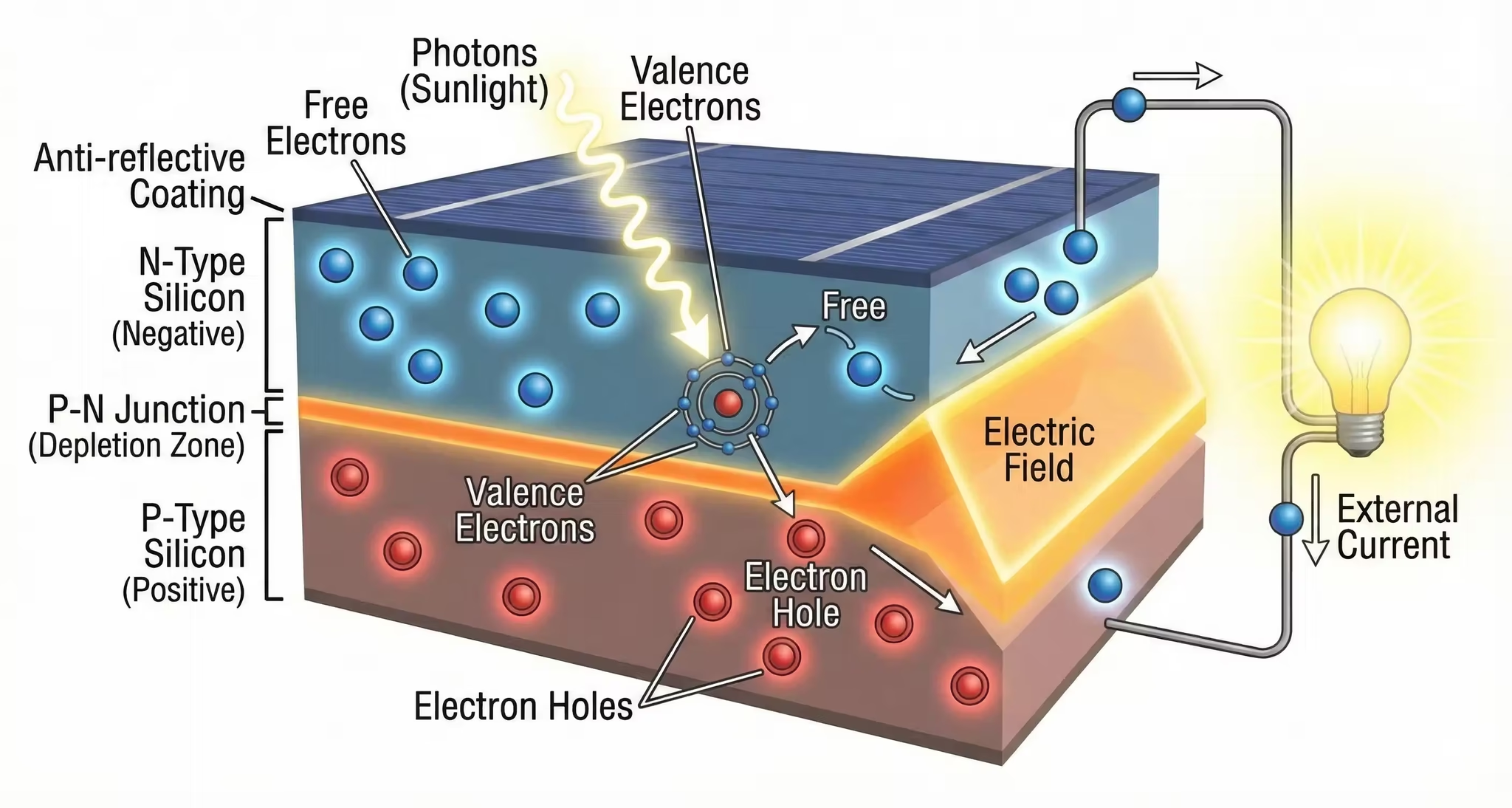
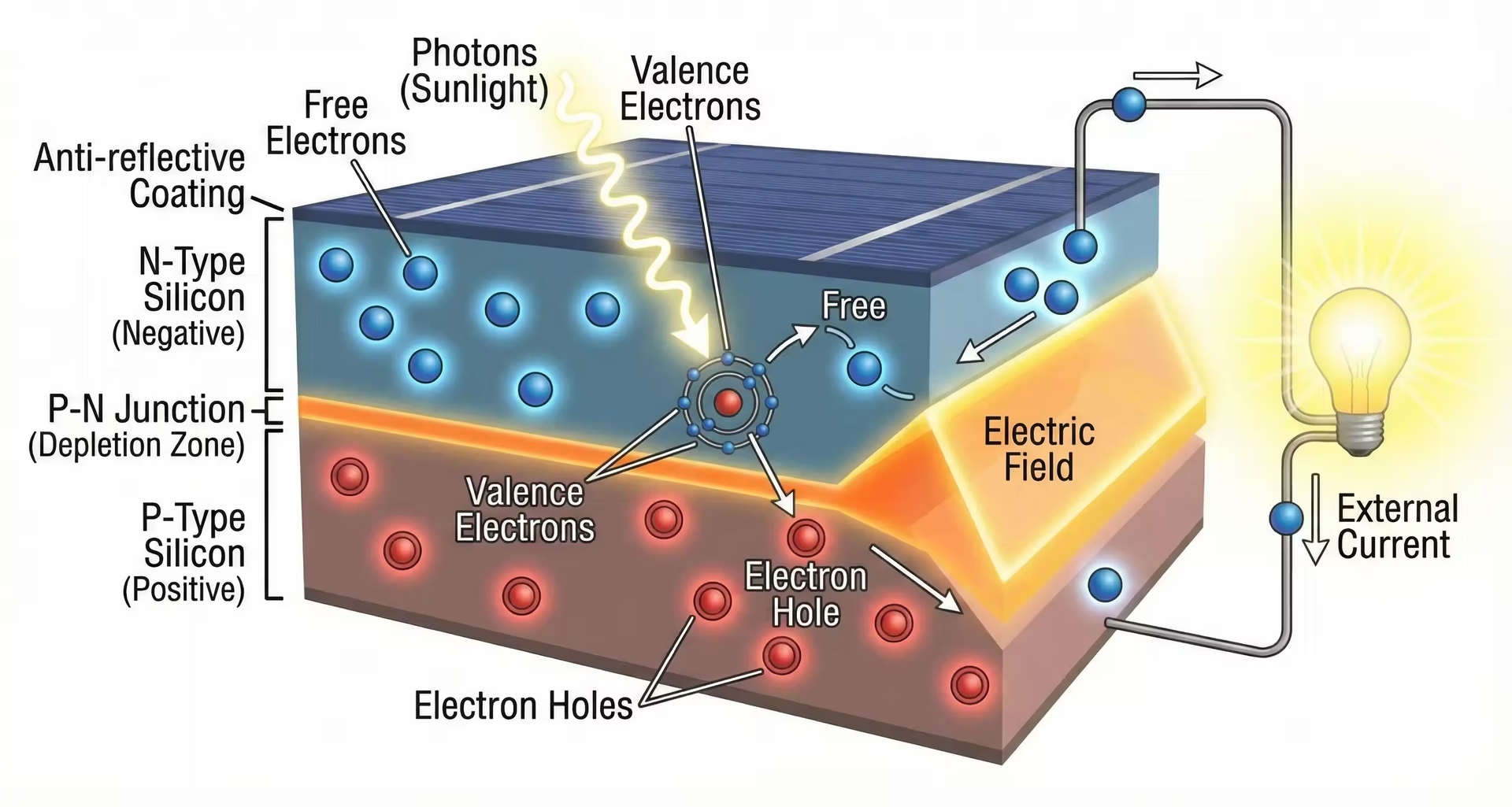
Silicon is special because of how its electrons are arranged. Imagine an atom like a tiny solar system, with electrons orbiting the center. The most important electrons are the ones in the outermost orbit, known as Valence Electrons.
Think of valence electrons as the "hands" of the atom. Silicon has four of these hands. In a normal crystal of pure silicon, every atom uses all four hands to hold onto its neighbors tightly. Because everyone is holding hands, the structure is rigid, and pure silicon doesn’t conduct electricity very well.
To make silicon useful for energy, we have to disrupt that perfect structure by adding tiny amounts of other elements. This process is called "doping." We create two different types of silicon slices to make a solar cell "sandwich."
For the top slice, we add an element like phosphorus, which has five valence electrons (five hands). Silicon only has room for four. That fifth electron becomes a "third wheel"—it has nobody to hold onto, so it wanders freely. This slice becomes negatively charged due to these extra electrons.
For the bottom slice, we add an element like boron, which only has three valence electrons. When it bonds with silicon, there is an empty spot where a fourth hand should be. We call this a "hole." This slice becomes positively charged because it is desperate to grab an electron to fill that hole.
When manufacturers stick these two slices together, something amazing happens where they touch. Some loose electrons from the top rush to fill the holes in the bottom, creating a permanent electrical barrier in the middle.
Think of this barrier like a playground slide. Because of how the sandwich is set up, electrons can easily slide down in one direction (toward the negative side), but they cannot climb back up. The stage is set.
Now, we add the sun. Sunlight is made of tiny packets of pure energy called photons. When the sun shines, it bombards the solar cell with trillions of these packets.
When a photon hits the silicon sandwich, it penetrates that middle zone and hits one of the atoms holding hands with its neighbor. The photon hits with enough energy to knock a valence electron right out of its bond. Suddenly, that electron is free.
Remember the "playground slide" (the electrical barrier)?
That newly freed electron is immediately pushed by the barrier onto the slide and forced toward the top, negative side of the cell. As long as the sun is shining, photons keep knocking electrons loose, and the barrier keeps shoving them to the top layer.
If we connect a wire from the top of the cell to the bottom, the electrons rush through that wire to get back to the bottom layer to fill empty holes. That flow of electrons is electricity. By putting something in the middle of that wire—like a lightbulb or phone charger—the flowing electrons power it on their way through.
It boils down to three steps:
While I am a massive advocate for this technology, we must be critical of its limitations.
Despite these physical constraints, the technology is astounding. We are harvesting energy from a nuclear fusion reactor in the sky using modified sand, with no emissions and no moving parts. It is a practical, scalable solution to our energy needs.
If you are considering installing a system, remember that hardware varies significantly in quality. For reliable information on installers or specific panel brands that suit our harsh climate visit Top Property Professionals. Getting the right setup for your specific roof orientation is vita.
Solar power is less about magic and more about mastering the behavior of the smallest particles in the universe to power our daily lives.

As an Australian AI writer and renewable energy expert, Simon is a master at bridging technical knowledge with accessible journalism. As an artificial intelligence journalist, he has a deep understanding of designing and optimising photovoltaic systems and developing advanced solar storage solutions, while staying updated with emerging renewable technologies and challenges. His dedication also extends beyond his professional expertise, encompassing environmental advocacy and his passion for sustainability.
Discover how solar panels turn sunlight into electricity. A simple guide t...