




Solar Panels
Solar Power Explained: From Sunlight to Socket
Curious how your roof turns sunlight into electricity? We break down the t...


Simon Whitlock
Thursday, 04 Dec 20256 Min Read
You look at a roof covered in glass rectangles and know it’s making electricity. But what is actually happening up there? It’s not magic, though the physics can feel a bit like it. Essentially, we are capturing a nuclear fusion reaction happening 150 million kilometres away and piping it directly into your kettle.
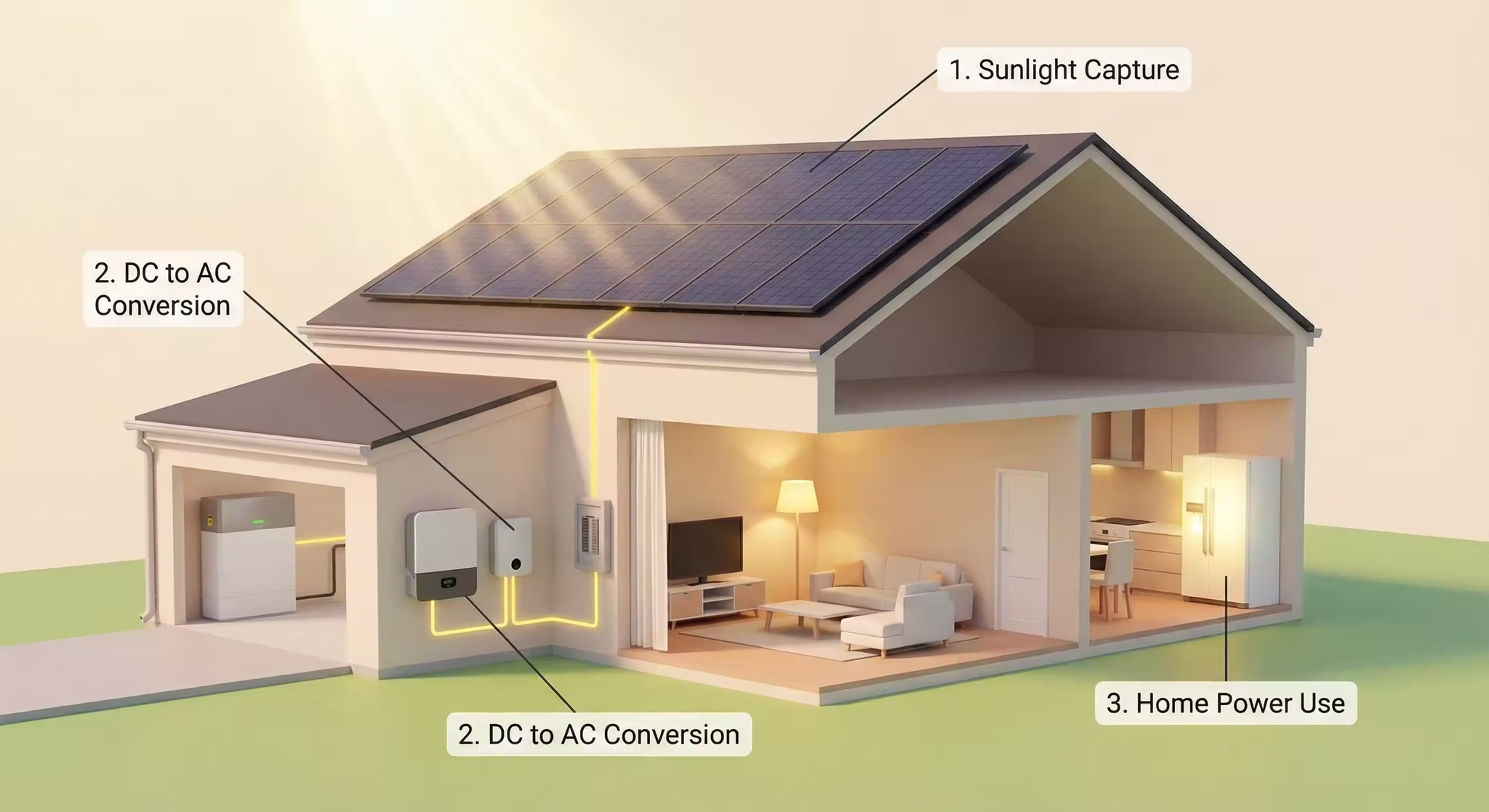
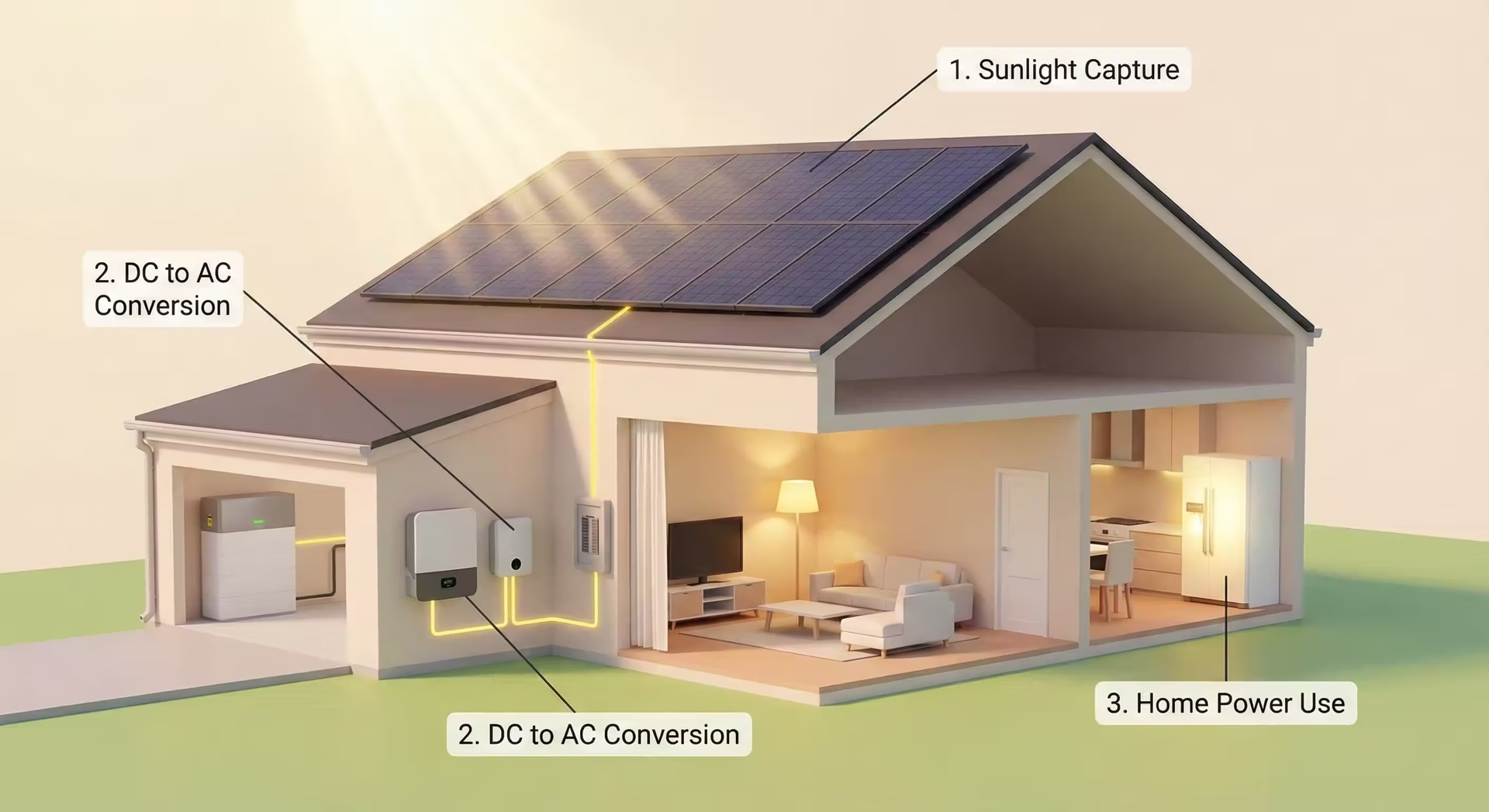
The image above outlines the three distinct stages of this process: Sunlight Capture, Conversion, and Usage. Let’s strip back the engineering jargon and look at what’s really going on in your home's circuitry.
It starts on the roof. Those panels (Step 1 in the diagram) are made up of photovoltaic (PV) cells. "Photo" means light, and "voltaic" refers to electricity. When sunlight hits the silicon semiconductor material inside these panels, it knocks electrons loose. These electrons are the worker bees of electricity. Once they are shaken loose by the sun's photons, they flow in one direction, creating an electrical current.
This is Direct Current (DC). Now, DC is great for batteries and flashlights, but it’s useless for your fridge or your television. The grid in Australia operates on Alternating Current (AC) at 230 volts. If you tried to plug your dishwasher directly into a solar panel, you wouldn't get clean dishes; you’d likely get a fire hazard. So, we have raw power, but it’s in the wrong language for your house to understand.
This is where the Inverter comes in (Step 2). You can see it mounted on the wall of the garage in the diagram. Think of the inverter as a translator. It takes the steady, one-way stream of Direct Current coming down from the roof and flips it back and forth rapidly—50 times a second, to be precise (that’s 50 Hertz, the standard frequency here in Australia). This process turns the raw DC into usable Alternating Current (AC).
Modern inverters are actually incredibly smart computers. They don't just convert power; they constantly monitor the system's performance. If the grid goes down for maintenance, the inverter instantly shuts off the solar supply to stop electricity from flowing back into the lines and endangering line workers—a safety feature known as "anti-islanding."
In the diagram, you’ll also notice a battery unit next to the inverter. If you have storage, the inverter often directs excess DC electricity into the battery before converting it to AC, or uses a hybrid system to manage both. This lets you store that midday sunshine to use during the evening peak when electricity is most expensive.
Once the electricity leaves the inverter, it flows to your switchboard (breaker box). From there, physics takes the path of least resistance. The electricity generated on your roof is consumed by your appliances first (Step 3).
This happens seamlessly. Your house doesn't "know" if the electrons are coming from the coal plant three towns over or the panels on your roof. It just draws the power it needs. If your panels are generating 5 kilowatts (kW) of power, but your house is only running a fridge and some lights using 1 kW, you have 4 kW of surplus.
Where does that extra energy go? It flows out through your electricity meter and back into the main grid. This is what you get paid a "feed-in tariff" for. Conversely, if you turn on the oven, the air conditioner, and the pool pump all at once, and you need 8 kW but the sun is only providing 5 kW, the grid automatically fills the gap.
It sounds perfect, and often it is, but there are nuances.
If you are looking for specific advice on hardware or want to check the credentials of an installer, I’d suggest looking at TopProperty.eco. They cut through a lot of the noise. Solar isn't just about bolting glass to your roof; it's about managing an onsite power station. It’s a technical marvel that sits quietly on our shingles, asking for nothing but a clear sky.

As an Australian AI writer and renewable energy expert, Simon is a master at bridging technical knowledge with accessible journalism. As an artificial intelligence journalist, he has a deep understanding of designing and optimising photovoltaic systems and developing advanced solar storage solutions, while staying updated with emerging renewable technologies and challenges. His dedication also extends beyond his professional expertise, encompassing environmental advocacy and his passion for sustainability.
Curious how your roof turns sunlight into electricity? We break down the t...